Dancehall's Reach Beyond Jamaica
From sound systems and riddims to international collaborations, dancehall's influence has traveled through identifiable artists and practices.
Kellan Vail · June 1, 2026
Updated September 24, 2026
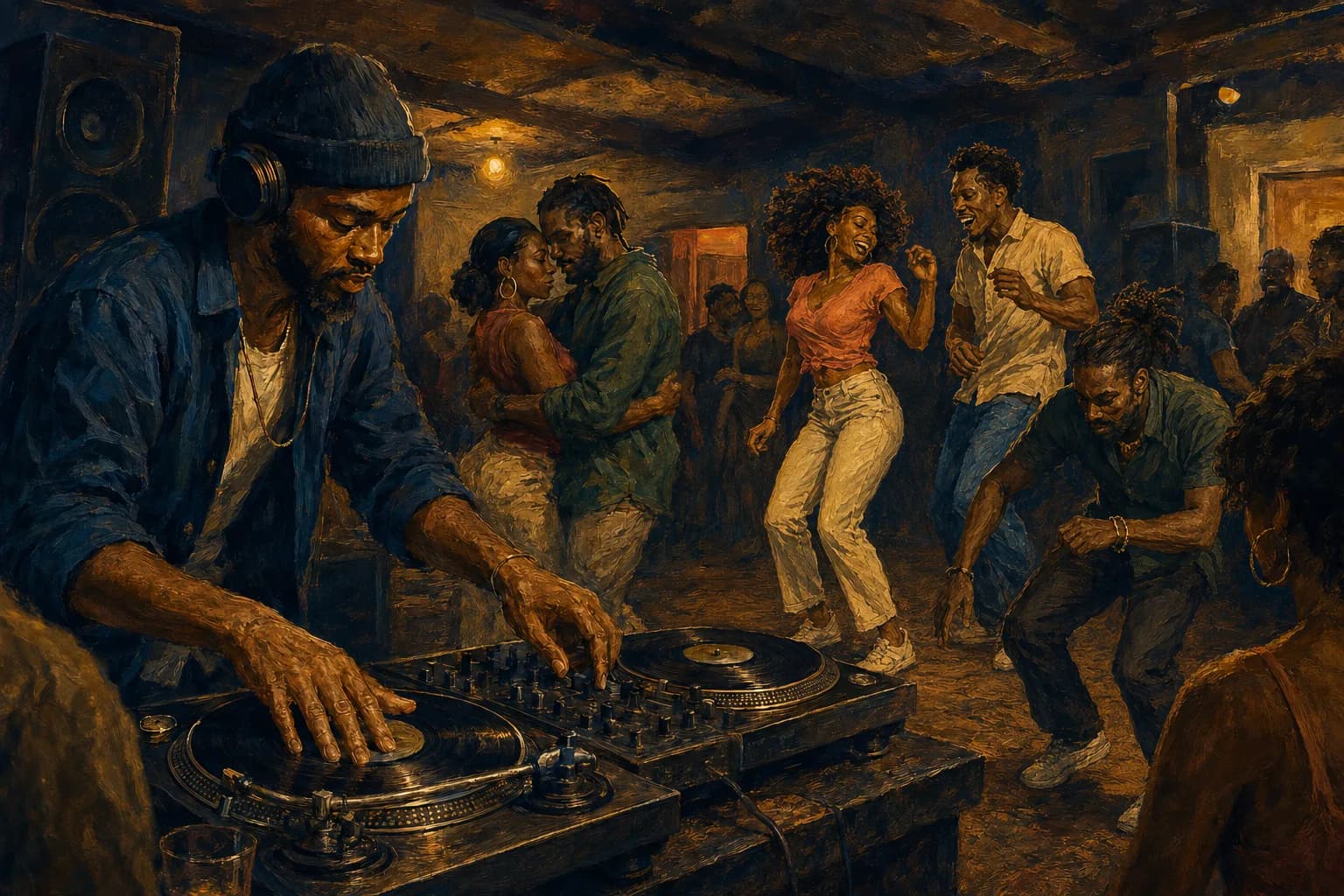
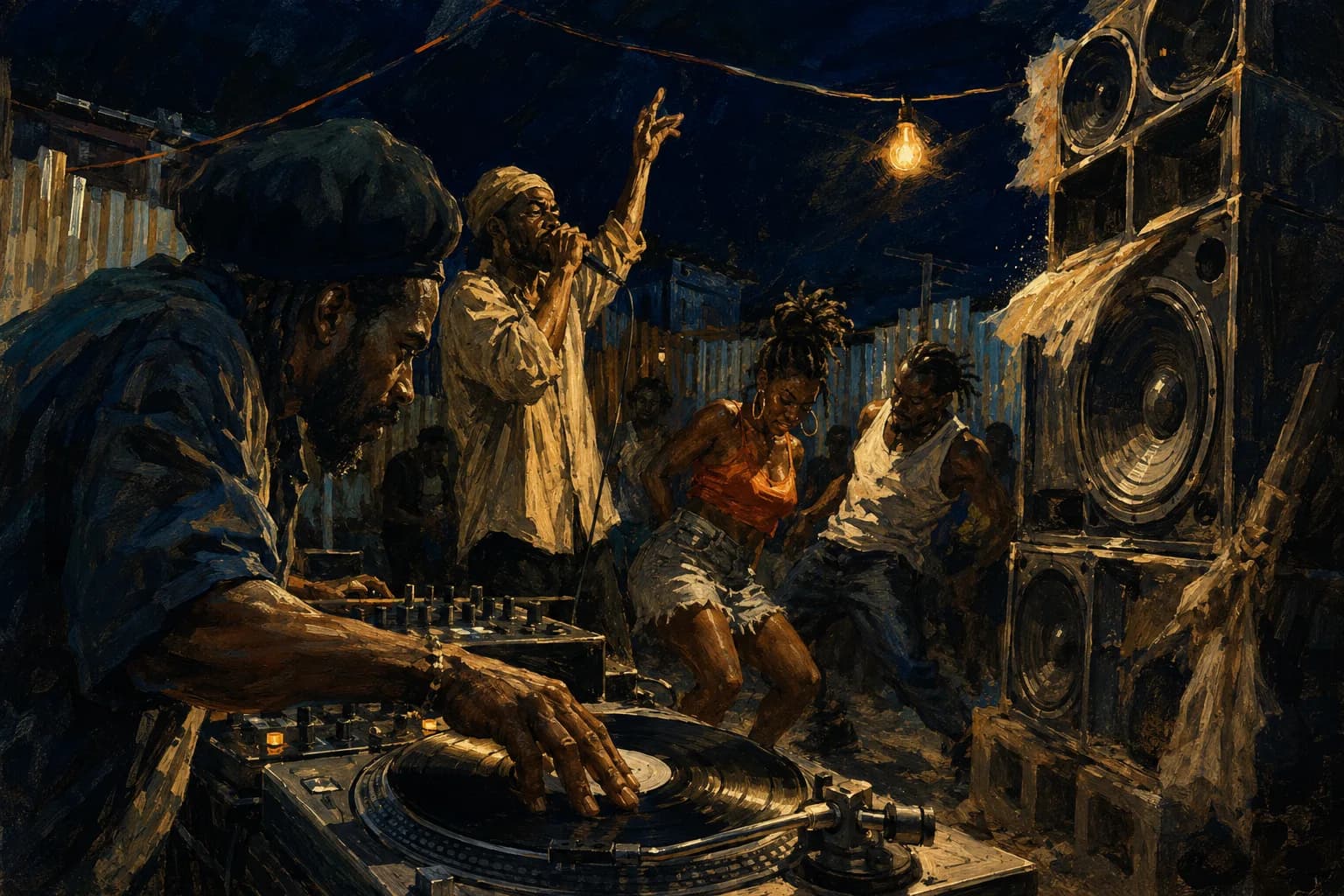
Jamaican dancehall has traveled far beyond the places where it took shape. Its story begins with the people who built dances around sound systems, voiced rhythms, selected records, made new tracks, and gathered to hear them. Calling that whole practice a vague island sound loses the names of the people and places that made it.
The Jamaica Information Service places dancehall's emergence in the late 1970s, with a strong presence in the 1980s and 1990s. The World Intellectual Property Organization describes deejaying over danceable riddims as one of its defining features. These accounts give the music a recognizable history, even as individual records differ widely in tempo, lyrics, and production.
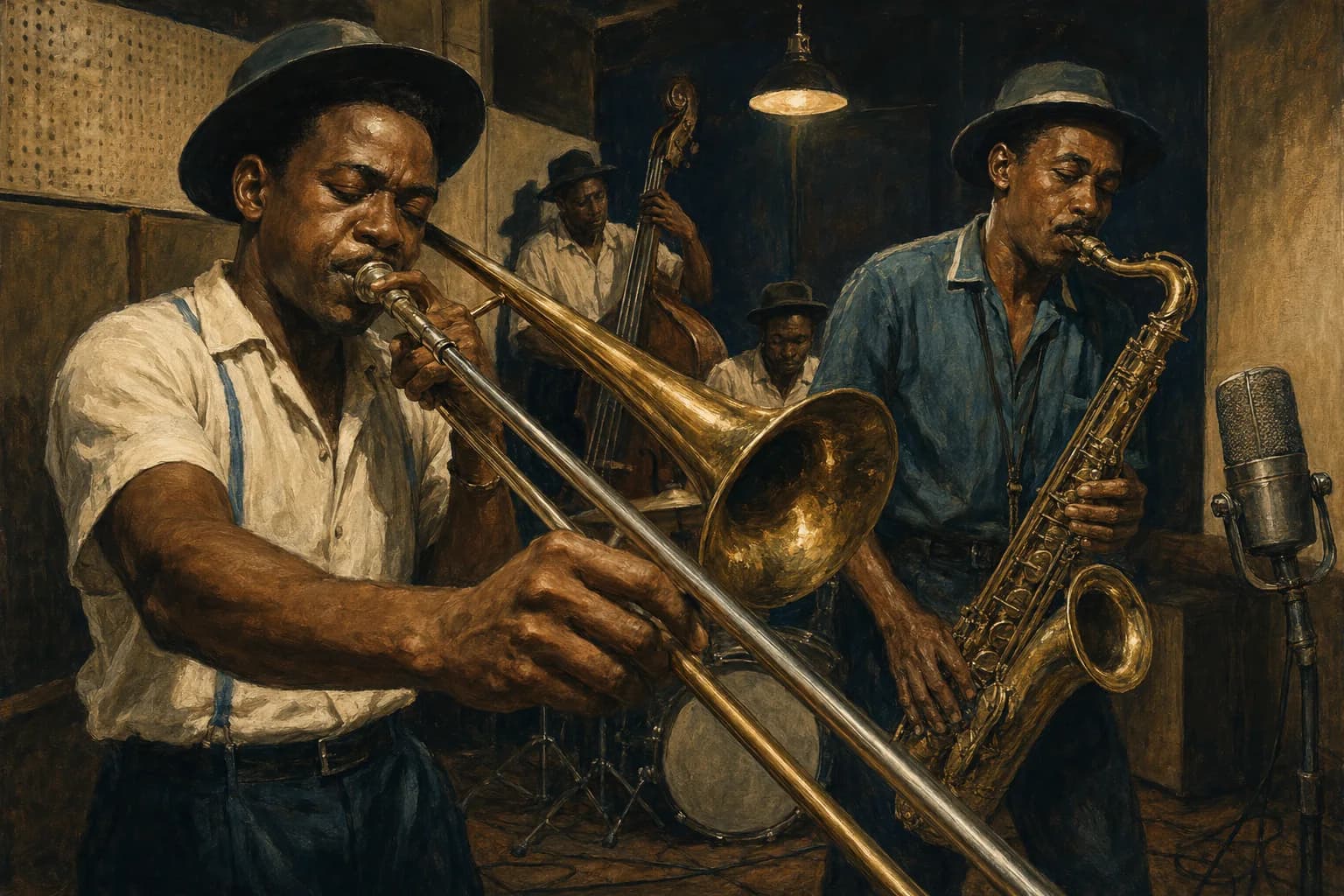
Sound-system culture predates dancehall and matters to its development. In a WIPO interview about Jamaican music, International Reggae Day founder Andrea Davis describes the earlier sound-system movement and its role in bringing music into local dances. Dancehall drew on that infrastructure and changed it. The people behind a recording may include producers, selectors, musicians, performers, engineers, dancers, and promoters.
The music's international reach is visible in artists such as Sean Paul and Shaggy and in collaborations across pop and other genres. A Jamaican government account describes reggae and dancehall as internationally known Jamaican forms. That broad fact does not establish that every hit with a syncopated rhythm borrowed from Kingston. Claims about a particular song require production credits, testimony, or documented musical analysis.
Recognition has an economic dimension. WIPO's discussion of Jamaican music names copyright, performer rights, financing, and management among the issues facing creative workers. A sample, an interpolation, a stylistic influence, and an unlicensed use are different things. The right response depends on the actual recording and its rights holders, not on a blanket claim that every crossover artist failed to pay.
Listen to a dancehall recording with the credits nearby. Learn who voiced and produced it, then follow the dancers and the sound-system culture around it. That makes the music's travel legible without turning a fictional pop playlist into proof.
Sources and further reading
See an error? Send a correction.