Before Reggae: The Restless Brilliance of Ska
Ska grew in Jamaican studios and dance culture before reggae, and its musicians later helped shape Britain's 2 Tone movement.
Kellan Vail · July 14, 2026
Updated September 24, 2026
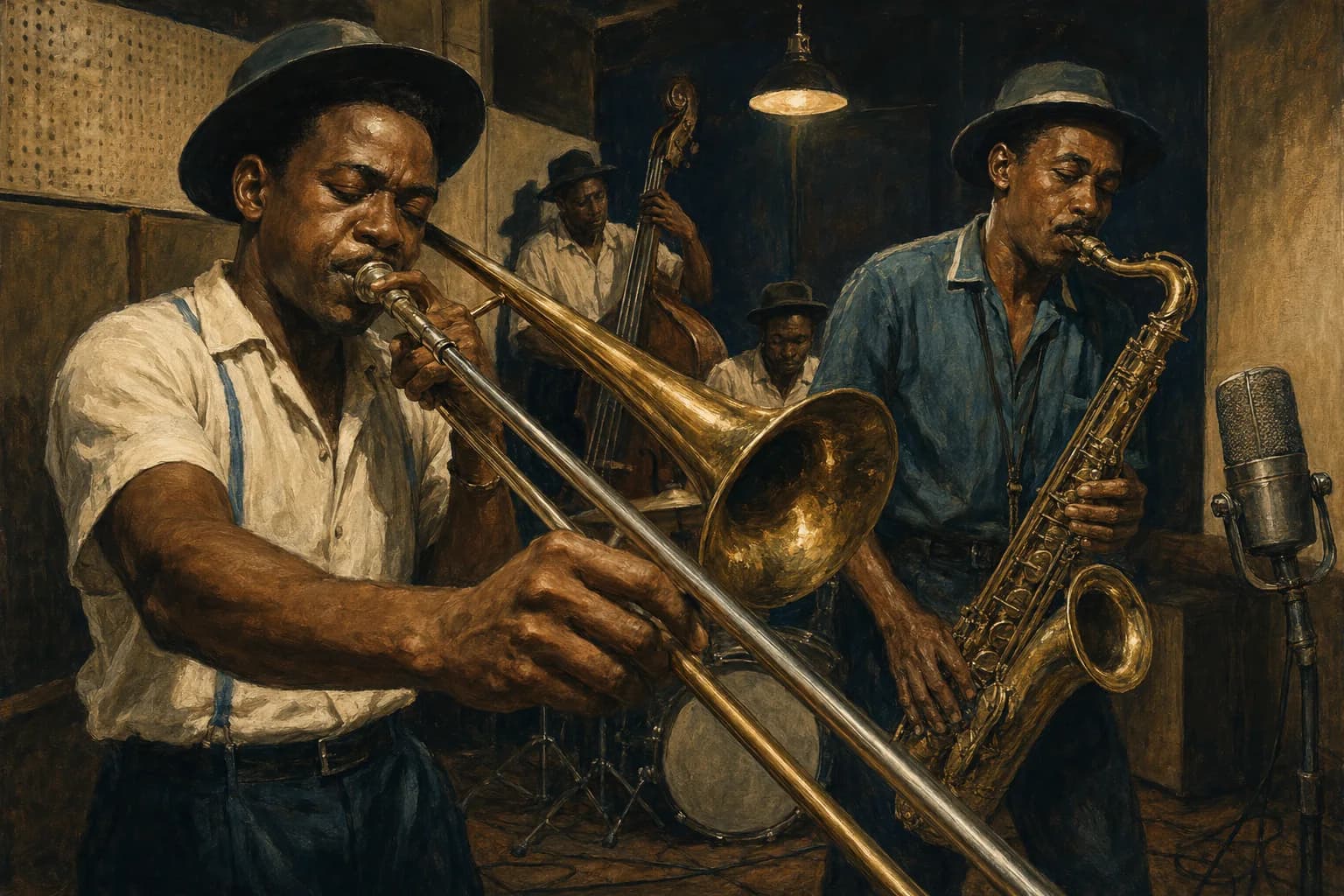
Before reggae came ska: a Jamaican popular sound built around a lively offbeat and the interplay of rhythm section and horns. It took shape through musicians, producers, sound systems and listeners, rather than in a single room at a single moment. The original article placed readers inside a Studio One session with the players' movements and feelings described as though someone had witnessed them. That session was not reported.
The players and the moment
The Skatalites' own history identifies the group as formed in Kingston in 1964, with musicians including Tommy McCook, Roland Alphonso, Lloyd Brevett, Lloyd Knibb, Don Drummond, Jah Jerry Haynes, Jackie Mittoo, Johnny Moore and Jackie Opel. They recorded extensively between 1964 and 1965. Those names give the music a human scale without assigning its invention to any one player.
Ska emerged before that formal group, drawing on musical exchanges that included American rhythm and blues and Jamaican practice. Jamaica gained independence in 1962 while the sound was developing. Its association with that era is meaningful, but the date does not make every ska record a single uncomplicated declaration of national optimism. Musicians worked in a commercial scene and for audiences with varied lives.
Listen to how guitar or piano accents the spaces between main beats, while bass, drums and horns keep the motion going. Recordings differ in tempo and arrangement, so a brief description is a listening guide, not a definition that every track must satisfy. The Skatalites' recordings offer an entry point to hear the group working together.
A changing sequence
Rocksteady followed ska in the mid-1960s, and reggae developed later in the decade. The transition involved musicians, arrangement, production and changing tastes. It cannot be explained solely by a hot summer, and the history need not be a neat chain in which one style simply replaced another overnight. Jamaican artists continued to revisit earlier rhythms.
Coventry hears Jamaica
Ska also traveled. The Herbert Art Gallery and Museum in Coventry records the founding of Jerry Dammers's 2 Tone label in 1979 and its connections to the Specials and the Selecter. The museum places that work amid Britain's racial tensions and draws on objects and interviews from the scene. 2 Tone was a new British conversation with Jamaican music, not a claim that ska began in England.
These histories resist an easy cast list. The earlier version called every 2 Tone player the child of Windrush parents or a white schoolmate. Individual biographies differ, and the generalization obscures the collaboration the museum describes. The musical link is real without assigning one lineage to every member.
Begin with the Skatalites if you want to hear the Kingston ensemble, then hear the Specials or the Selecter to notice how a later generation changed the sound. The connection is audible, while the settings and politics are distinct. Ska's history keeps moving because artists have made different uses of its rhythmic idea.
Sources and further reading
See an error? Send a correction.