LuxTuris
Premium photorealistic Jamaica editorial scene capturing scale, sound, and warm island light
Islands
IslandsJamaica6 min read

The Island That Refused Its Size: Jamaica at Full Volume

Three million people, a landmass you can cross in a day, and a cultural footprint the size of a continent — how Jamaica built the loudest speaker box in modern history.

LuxTuris Editorial Desk · July 10, 2026

jamaicaislandshistoryreggae

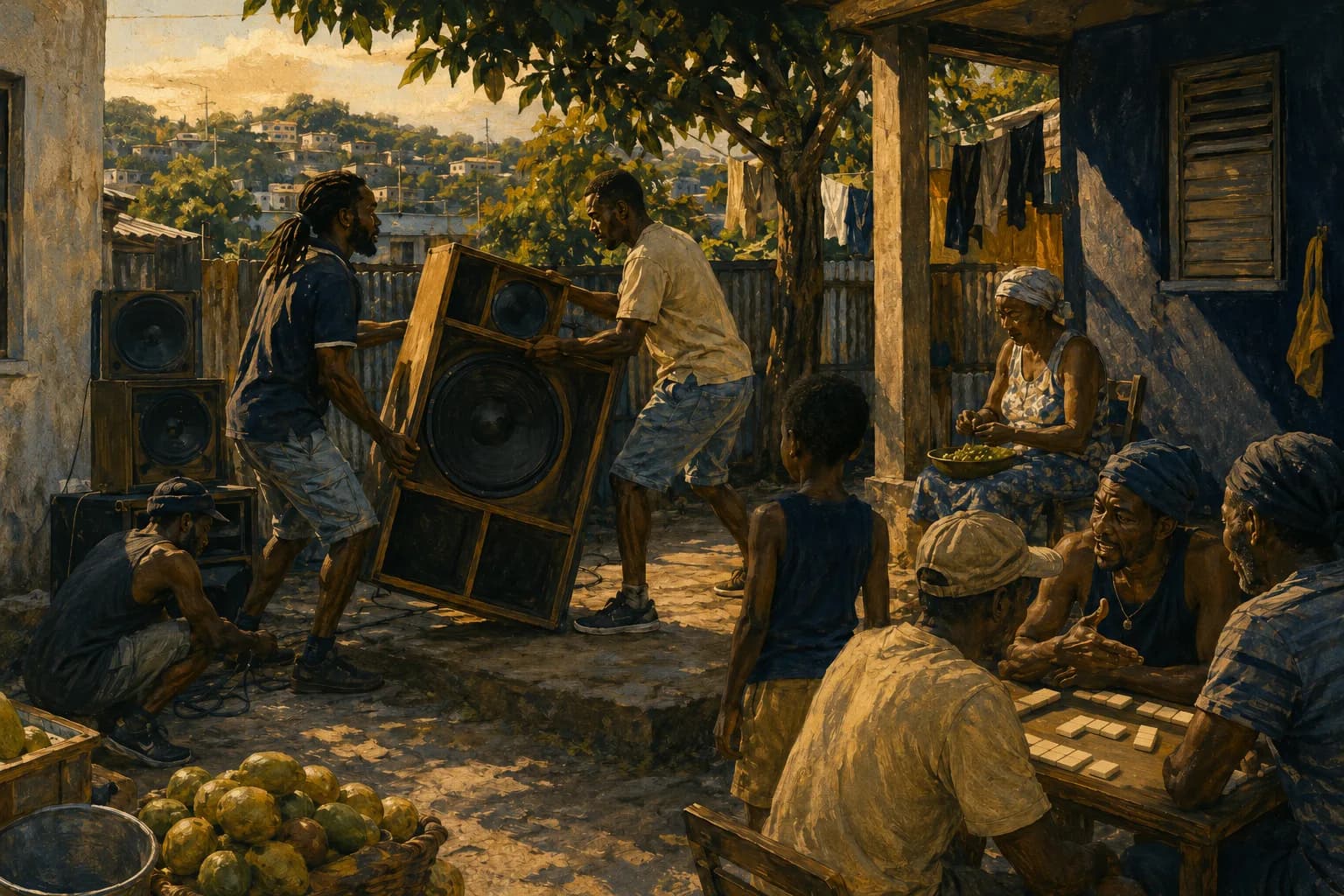
At dusk in many Jamaican towns and districts, sound begins to map the surroundings. It arrives within minutes: bass from a shop three lanes over, a hymn escaping a zinc-roofed church, two men conducting a domino argument at parliamentary volume, a bus horn playing an actual melody. Cover your eyes and you would still never mistake it for anywhere else, because Jamaica's signature isn't a sight. It's a frequency.

Here is the thesis: Jamaica's global cultural influence repeatedly exceeds what its population and geography would predict. Under three million people on a landmass you can drive across in a day, and it behaves, has always behaved, like a cultural superpower, exporting sound, language, faith, food, and sheer style at a scale few small nations have matched. That outsized voice is not an accident of talent. It is the compounded interest of defiance, a place where freedom was seized before it was granted, where every generation rebelled on schedule, and where the descendants of people denied a voice built the loudest speaker boxes in human history. Blindfolded, what you'd feel is a small island transmitting at full power.

Three historical movements help illuminate the argument, although none can explain Jamaica by itself.

First, the Maroons. When the English seized Jamaica from Spain in 1655, enslaved Africans took to the Blue Mountains and the limestone maze of the Cockpit Country and refused to come down. Joined over decades by others who liberated themselves from the plantations, they fought the British Empire to a standstill. Nanny of the Windward Maroons is a national hero for a reason. They forced treaties by 1739 recognizing their freedom and lands, nearly a full century before emancipation.

Maroons occupy a central place in Jamaica's national story, although their treaties, communities and relationships with the colonial state remain more complicated than a single freedom narrative: on this island, freedom was not received. It was taken first, in the hills, and the taking set the national temperament.

Second, the long rebellion that never really stopped. Sam Sharpe's 1831 to 1832 uprising of some sixty thousand enslaved people terrified the empire into accelerating abolition. Freedom came in the 1830s and delivered poverty instead of justice, so in 1865 Paul Bogle marched on Morant Bay and was hanged for it alongside George William Gordon. Both are national heroes now.

In 1938, the island erupted again in labor rebellions that midwifed the modern nation. Out of those strikes came Bustamante and Norman Manley, the unions and the two parties, and the road to August 6, 1962, when the black, green, and gold went up. Independence in Jamaica wasn't a gift of decolonization's timetable. It was the fourth act of a three-century argument.

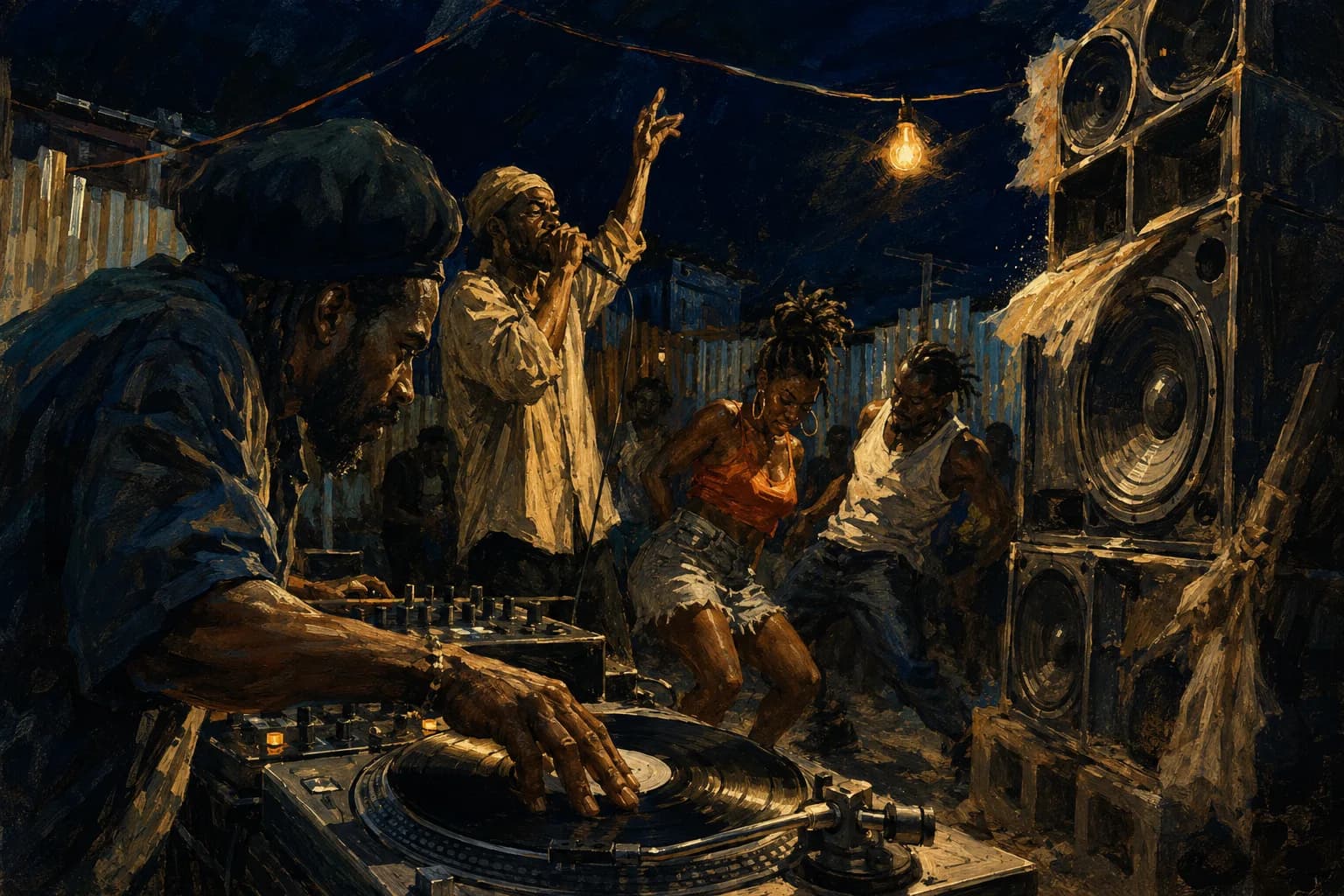
Third, and this is the beat that made the island planetary, the sound system. In 1950s Kingston, men with names like Duke Reid and Coxsone Dodd bolted together amplifiers and speaker stacks and threw dances for people who couldn't afford nightclubs. When the imported records ran thin, they built studios and made their own.

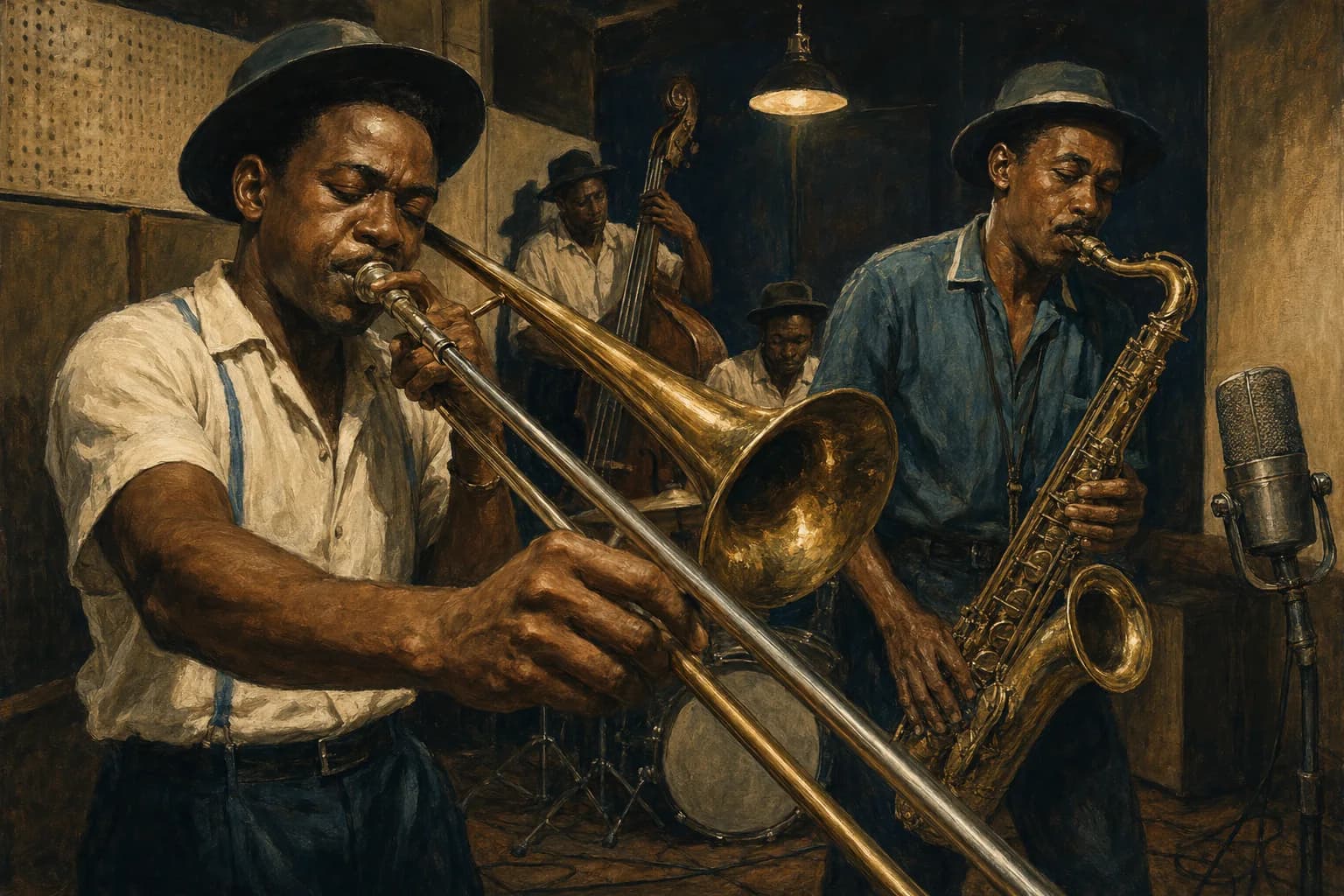
What followed is one of the most consequential sequences in modern popular music: ska into rocksteady into reggae into dub into dancehall, Studio One as the island's Motown, and then Bob Marley carrying a Trench Town sound to every corner of the earth until a Kingston yard's grievances became the world's shorthand for liberation itself.

The Maroons took the hills. The sound systems took the airwaves. Same instinct, new technology.

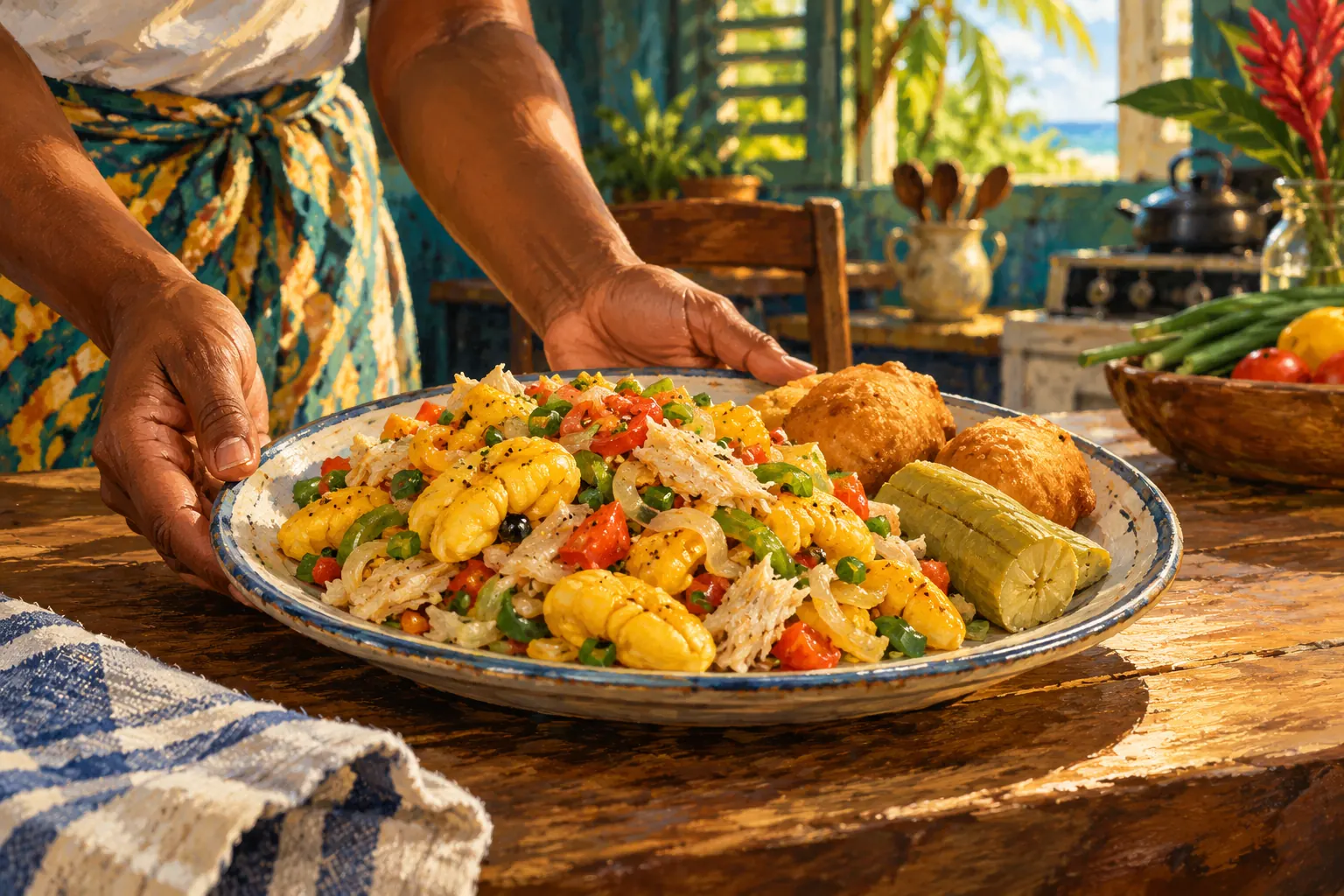
The island's signatures all plug into that thesis. The dish is jerk: pork and chicken cooked the Maroon way, seasoned ferociously and smoked low over pimento wood in covered pits. Jerk is widely connected to Maroon survival and cooking traditions, although simplified claims about concealed fires should be treated as interpretation unless supported by strong historical evidence, and now it perfumes every roadside from Boston Bay to Brixton.

Resistance you can eat.

The sound is the sound system itself, not one genre but the machine that makes genres, still assembling on street corners every weekend, still the most efficient device ever invented for turning a lane into a nation.

The festival is the dance: the session, the round-robin, the stage show, Reggae Sumfest in Montego Bay in July. Jamaica's great gatherings are built around amplification, which is to say around being heard.

Now the misconception. Jamaica suffers a double one. Outsiders see either the hammock or the headline, a "no problem" island of all-inclusive ease or a murder capital to be avoided. Both flatten a harder, better story.

The violence was never fiction. For years, Jamaica carried one of the world's worst homicide rates, concentrated in specific urban communities and fed substantially by guns trafficked from the United States.

But the recent evidence points somewhere the headlines haven't caught up to. The year 2025 closed with 673 murders, the lowest total in thirty-one years and a decline of more than forty percent in a single year. The drop has continued through 2026, with with 2026 figures requiring updated comparison before publication.

Meanwhile, the "easygoing" cliché collapses on contact with actual Jamaicans, who are among the most relentlessly striving people anywhere. This is an island of double-shift nurses, market women with three ventures running, and a diaspora built entirely on the willingness to start over in the cold.

Laid-back is a brochure word. Nothing about Jamaica has ever been laid back.

The present tense is dramatic even by Jamaican standards. In October 2025, Hurricane Melissa struck as the strongest storm in the island's recorded history, devastating the western parishes, killing dozens, and inflicting the costliest disaster Jamaica has ever absorbed.

The response has been the thesis in action. Billions in international financing were secured, parts of the tourism sector reopened within months, while recovery remained uneven across communities, and communities like Treasure Beach were rebuilt largely by their own hands before the government trucks arrived.

Underneath the emergency, the structural story is quietly remarkable. Jamaica spent the last decade executing one of the world's most celebrated fiscal turnarounds, grinding a debt burden that once exceeded the size of the entire economy down to manageable levels, an achievement economists cite the way musicians cite Studio One.

Tourism and remittances, the diaspora wiring home billions a year, carry the economy. Nurses and teachers still leave for wages the island can't pay, and returnees still come back to build, now joined by a remote-work generation discovering that a laptop works in Portland parish.

Who's leaving, who's returning, what's changing? All of it, at once, as usual.

The diaspora mirror shows the voice at full range.

London, where the Windrush generation landed from 1948 and built Black Britain: Brixton's markets, the Pentecostal churches, Notting Hill Carnival's spine, and a sound system culture whose British children include jungle, garage, and grime. Jamaica effectively fathered the UK's music twice.

New York, where Flatbush and the Bronx run on Jamaican labor and flavor, and where a Jamaican immigrant's son named Kool Herc plugged a sound system into a Bronx rec room in 1973 and hip-hop began.

Toronto's Little Jamaica along Eglinton West. Miami's Lauderhill. The nurses in every hospital in the English-speaking world.

What the diaspora built abroad is not a copy of the island. It's the island's method: arrive with nothing, build the institution, turn the volume up. It is the method applied at global scale.

Which returns us to the frequency.

Small nations are supposed to be price-takers in culture, absorbing what the big countries broadcast. Jamaica inverted the arrangement. It took the worst history the modern world could write, conquest, slavery, abandonment, and transmitted back rhythm, theology, comedy, cuisine, and the most recognizable accent on earth.

That's what you'd feel blindfolded. Not heat. Not sea. Signal.

A three-million-person island broadcasting at the wattage of a continent, because it decided, in the hills in the 1600s, in the square at Morant Bay, in a Brentford Road studio, in a Bronx rec room, that it would be heard.

It has never once turned the volume down.

This is us: likkle but tallawah, small but never, ever quiet.

Editorial note

LuxTuris original

This is evergreen editorial context from the LuxTuris desk, not live breaking news or invented social proof.

The Pulse: the Caribbean, in your inbox.

A free letter from the LuxTuris desk. New essays, island stories, and the best of the Journal.

Keep reading

Related stories