DiasporaBrixton After Windrush: The Caribbean Yard That Remade Britain
From the Empire Windrush's 1948 docking to the pardner hand and the front room as embassy, Brixton's Caribbean generation built the institutions Britain refused them.
LuxTuris Editorial Desk · July 15, 2026
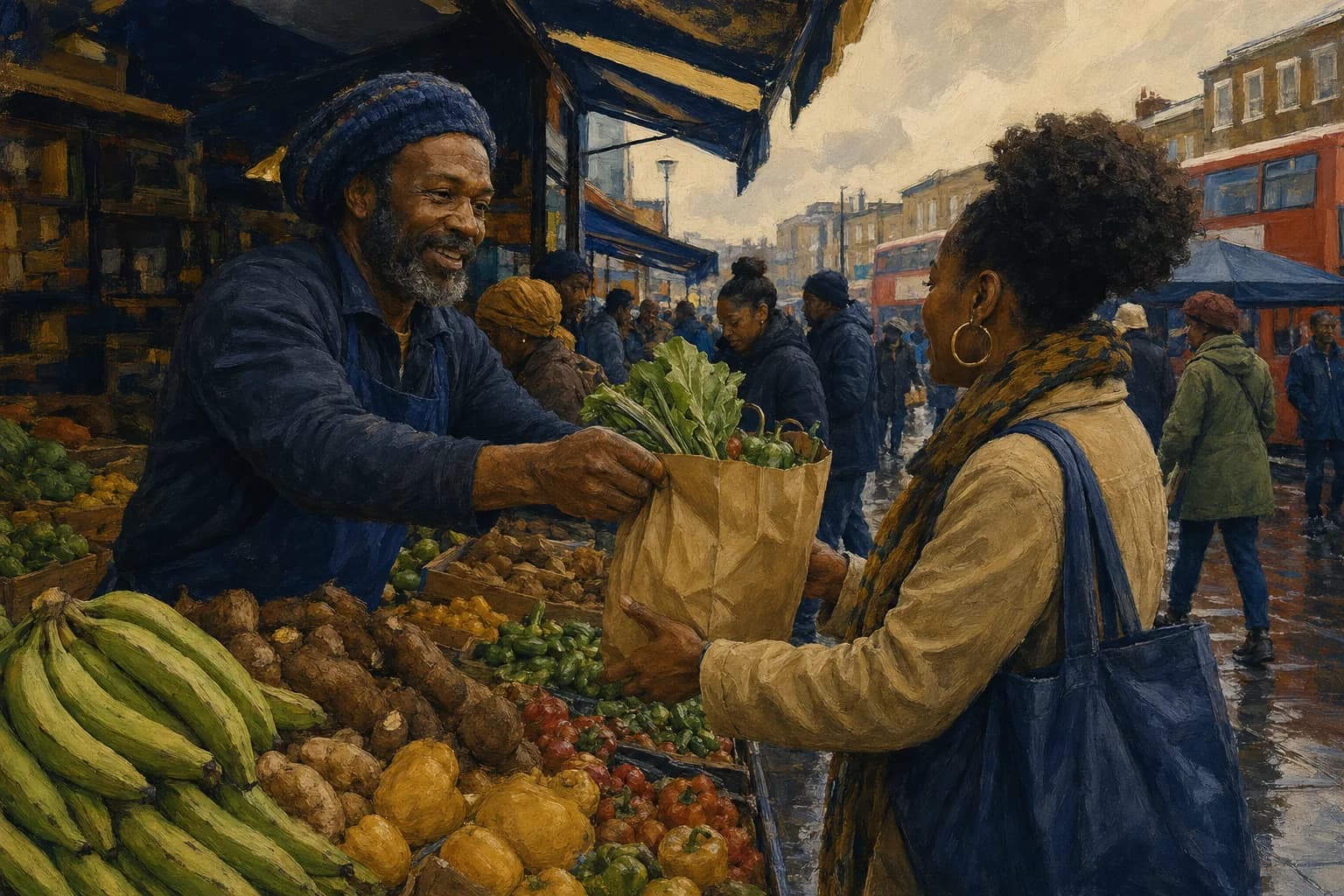
On Saturday mornings, Brixton Village continues the work it has done for generations: sustaining Jamaican and wider Caribbean life at fifty-one degrees north. A fishmonger lays out snapper and parrotfish on ice while a woman inspects them with the unhurried skepticism of someone who grew up choosing fish off an actual boat. The shop two doors down stacks tins of ackee, bags of pimento, and cartons of Nutrament. The bakery moves hard dough and spiced bun. Somewhere, a radio is playing Sunday's gospel a day early.
Outside on Electric Avenue, a grandmother in a church-crown-worthy hat negotiates yam prices in a Clarendon accent that has survived six decades of London weather completely intact. Brixton remains one of the symbolic capitals of Caribbean Britain. The community is more dispersed and the neighbourhood more expensive, but its institutions still work.
The migration story has a date, a ship, and a set of postwar decisions whose consequences Britain did not fully reckon with.
The 1948 British Nationality Act confirmed colonial subjects as citizens of the United Kingdom, and on June 22, 1948, the Empire Windrush docked at Tilbury carrying several hundred Caribbean passengers, most of them Jamaican, into national mythology.
Two weeks later, the National Health Service was founded, and the timing was no coincidence in effect. Postwar Britain was desperate for labor, and for the next decade and a half it recruited the Caribbean systematically. Nurses went into NHS wards, while workers were signed up directly in the islands by London Transport for the buses and the Underground.
The Brixton part was the accident. Some of the Windrush arrivals were housed temporarily in the deep air-raid shelter under Clapham South, and the nearest labour exchange was in Brixton. Brixton is where they found work, then rooms, then each other.
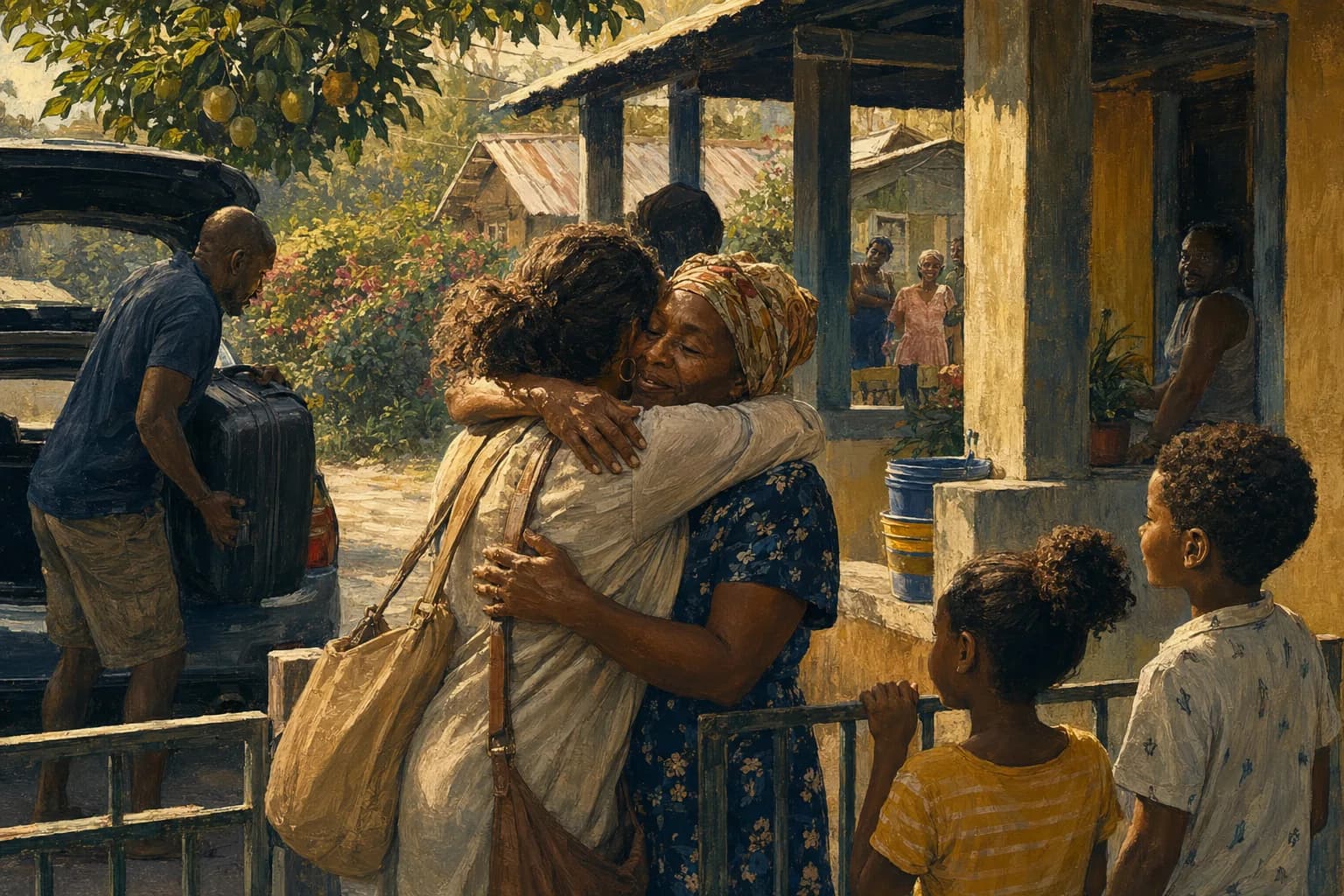
When the 1962 Commonwealth Immigrants Act moved to shut the open door, a final surge beat the deadline. Wives came, children came, and the famous barrels' senders were now sending for the family itself. Caribbean Britain's founding generation was in place.
Much of what they built answered needs British institutions had ignored or rejected.
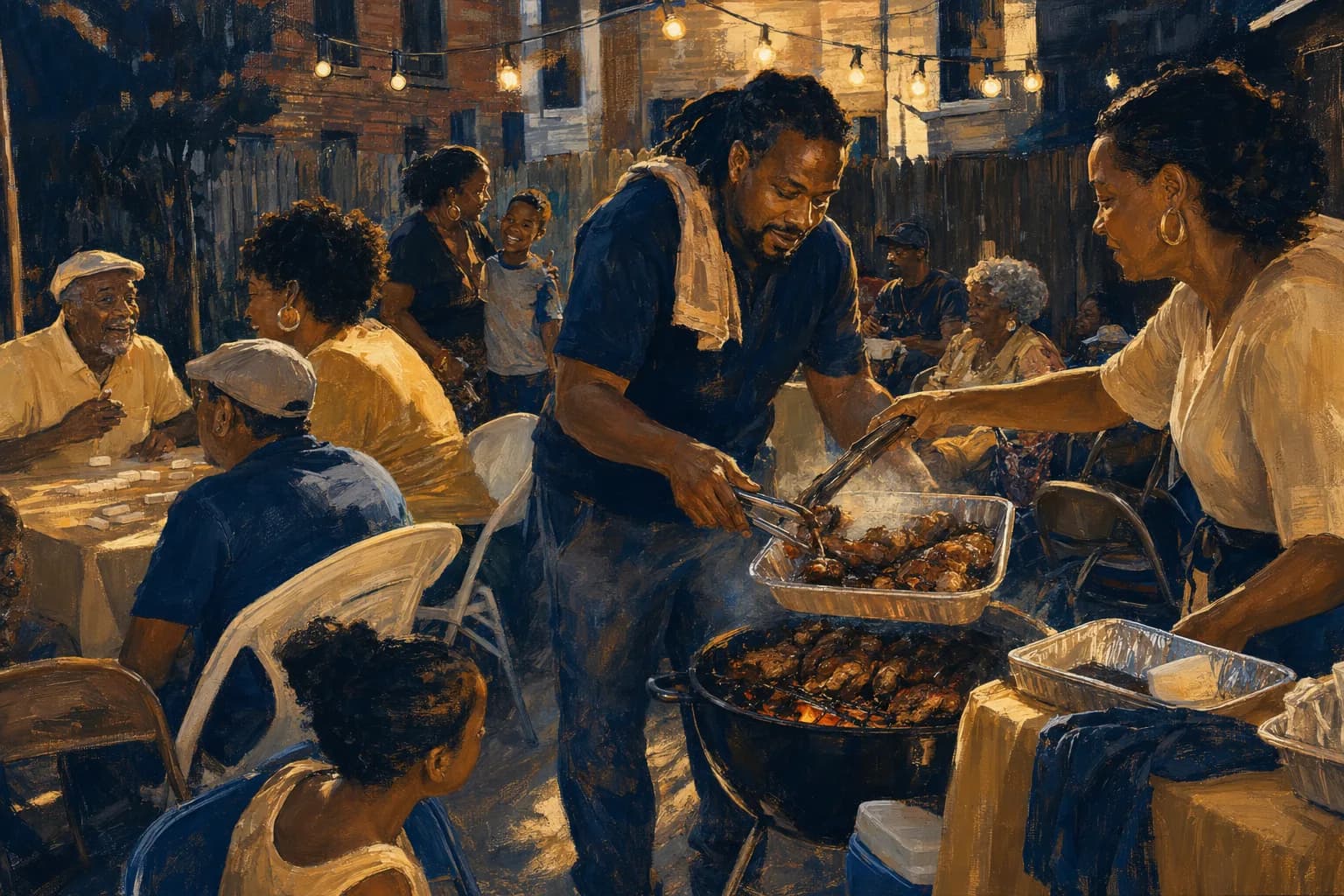
Banks refused mortgages, so Jamaicans ran pardner, the rotating savings hand in which each week's pooled money bought one member's house deposit. For some families, pardner savings helped turn precarious wages into deposits on Brixton's Victorian terraces.
Landlords posted the infamous signs, so the front room became the embassy. A radiogram stood in the corner, crochet covered the armrests, and a drinks cabinet waited for visitors. The room was kept perfect as a declaration of dignity.
Facing racism and cultural exclusion in many established churches, Caribbean Christians founded congregations of their own. The Black Pentecostal churches are now among Britain's largest, and they put the warmth back into Sunday.
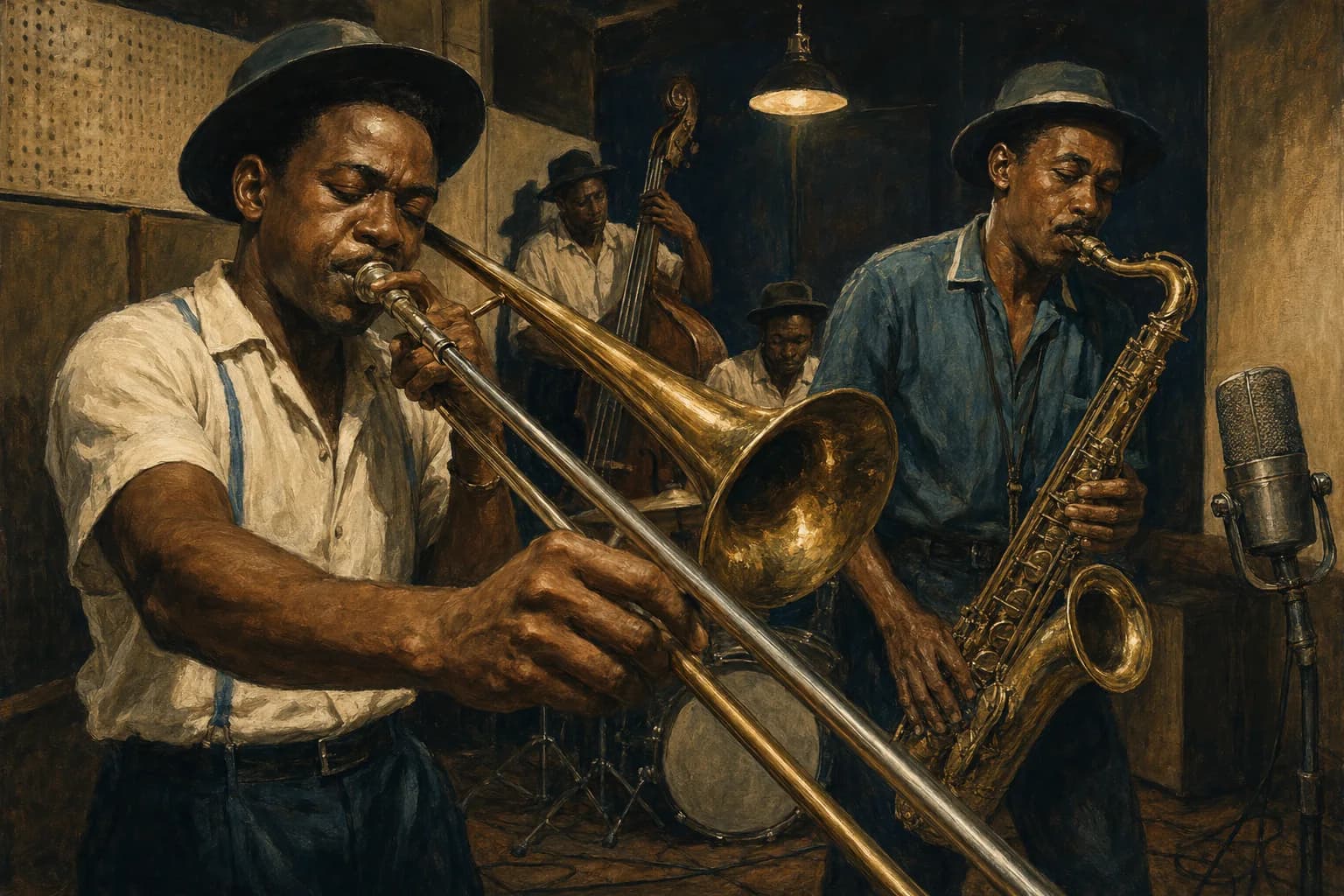
The nightlife barred them, so Duke Vin, who arrived from Jamaica in the mid-1950s, became one of the foundational figures in British sound-system culture. The blues dance was born in basements, with the entrance fee funding the very houses the parties shook.
After the racist violence in Notting Hill in 1958, Claudia Jones helped organize an indoor Caribbean carnival in 1959. The street festival that later developed in Notting Hill emerged through related community efforts and became one of Europe's largest annual celebrations.
The Voice launched in 1982 to report the community to itself. Markets, barbershops, Saturday schools, and cricket at the Oval whenever the West Indies came formed an entire parallel infrastructure of belonging, assembled in one generation, in the cold.
The generational thread pulls exactly as it does everywhere the Caribbean landed, with a British twist of iron.
Many in the first generation protected familiar practices while enduring conditions they had not been promised. The front room, the pardner, the church, rice and peas at one o'clock sharp on Sunday, and underneath it all, the sustaining fiction of "going home soon" that quietly became, "buried over there or here?"
The second generation helped define a modern Black British identity on its own terms.
They were London-born children answering, "Where are you really from?" Their negotiation turned confrontational when the state forced it. The New Cross fire in January 1981 took thirteen young lives, followed by an official indifference the community never forgot. Then came the Brixton uprising that April, when Railton Road burned and Britain met the generation it had been policing instead of raising.
Out of that decade came the poets and organizers. Linton Kwesi Johnson chronicled it in verse. The Race Today collective on Railton Road theorized it. A culture emerged that dropped full patois at work, kept it at home, and built its own institutions on the seam.
Later generations often reach back with a public confidence that earlier migrants were rarely permitted. Steve McQueen's Small Axe films put the blues dance and the uprising on national television as canon. Patois is now a register of London youth speech itself. Heritage trips to Jamaica are booked around Grandma's ninetieth. The eternal online plantain-pronunciation debate stands in for a deeper question: which parts of this are ours to keep?
The pressures land straight, and one of them has a name that became a scandal.
In 2018, it emerged that the Home Office's "hostile environment" had been detaining, sacking, denying treatment to, and in some cases deporting elderly members of the Windrush generation. These were people who had arrived as citizens, often as children, and whose landing records the state itself had destroyed.
The Windrush scandal put a truth the community had always known into the national record: the belonging was built by them, not conferred on them, and it could apparently still be revoked by clerical cruelty.
Compensation has crawled. The wound hasn't closed.
Meanwhile, gentrification works the other flank. Brixton's arcades have been rebranded and rent-hiked. Fish stalls give ground to small-plates concepts. Families cash out or are priced out to Croydon, Thornton Heath, and Luton. The community disperses into the suburbs its founders' pardner hands could never have imagined affording.
The founders themselves are in their eighties and nineties now, and every year the funerals and nine-nights in front rooms and community halls thin the generation that remembers Tilbury.
And yet, go back to the arcade on Saturday.
What persists does so because it answers something rent can't touch.
Carnival still takes Notting Hill every August bank holiday, with sound systems returning to established sites and new generations entering a tradition built over decades.
The churches still fill, now mother-churches to congregations across the country.
The food shops still sell tins of ackee and true hard dough to a third generation that learned Saturday soup by standing in a grandmother's kitchen and being told to move out of the way.
The sound, the deepest export, long ago stopped being immigrant culture at all. Jamaican sound-system practice helped create the conditions from which lovers rock, jungle, garage and grime would emerge, each through its own artists, scenes and historical pressures. The grandchildren of the Windrush built the sound of Britain itself.
The country their elders arrived in pretended they were guests. Their grandchildren wrote its soundtrack, staff its hospitals, and season its food.
That's not assimilation.
That's the pardner hand paying out. The long draw, collected at last, in a city that would be unrecognizable and unlistenable without them.
Editorial note
LuxTuris original
This is evergreen editorial context from the LuxTuris desk, not live breaking news or invented social proof.