DiasporaBrooklyn's Little Trinidad: How a Diaspora Built Belonging
From 1965 nursing recruitment to Labor Day's Eastern Parkway, three generations of Trinidadians built a Brooklyn that runs on doubles, cricket, and Carnival.
LuxTuris Editorial Desk · July 9, 2026
On Saturday mornings, the line at Allan's Bakery joins a longer pattern of Caribbean commerce and community along Brooklyn's avenues.
Steam fogs the glass case, where currant rolls sit in golden rows beside saltfish bakes and patties. A woman in nurse's scrubs, coming off the night shift, orders without looking at the board. The man behind the counter calls her by name and asks about her mother back in Diego Martin.
Allan's is not even Trinidadian, strictly speaking. The founders came from St. Vincent and Panama in the 1950s, and the family will tell you they belong to no single island. That is exactly the point. On this avenue, Trinidadians claimed it anyway.
A few blocks over on Fulton Street, A&A Bake & Doubles handles the island's most specific business: channa and bara wrapped in foil for a line that begins forming before the shutters have finished rising. Flags—red, white, and black among all the others—hang in windows throughout the year, not only during Carnival season.
New York City designated part of the area Little Caribbean, a name that acknowledges a multi-island community rather than assigning the neighbourhood to one nationality. Walk it on a Saturday morning, though, and you can trace Trinidad running through it like a seam.
The migration story has clear hinges.
In 1965, the Hart-Celler Act opened America's doors beyond Europe, just as the expectations raised by Trinidad's oil economy were colliding with limited opportunities at home. New York hospitals, short-staffed and in need of workers, recruited Caribbean nurses aggressively through the late 1960s and 1970s. Teachers and technicians followed.
Earlier arrivals had come through farm schemes and family sponsorship, but the 1965 Act accelerated everything, folding Trinidadians into the wider West Indian migration filling Bedford-Stuyvesant, Crown Heights, and Flatbush.
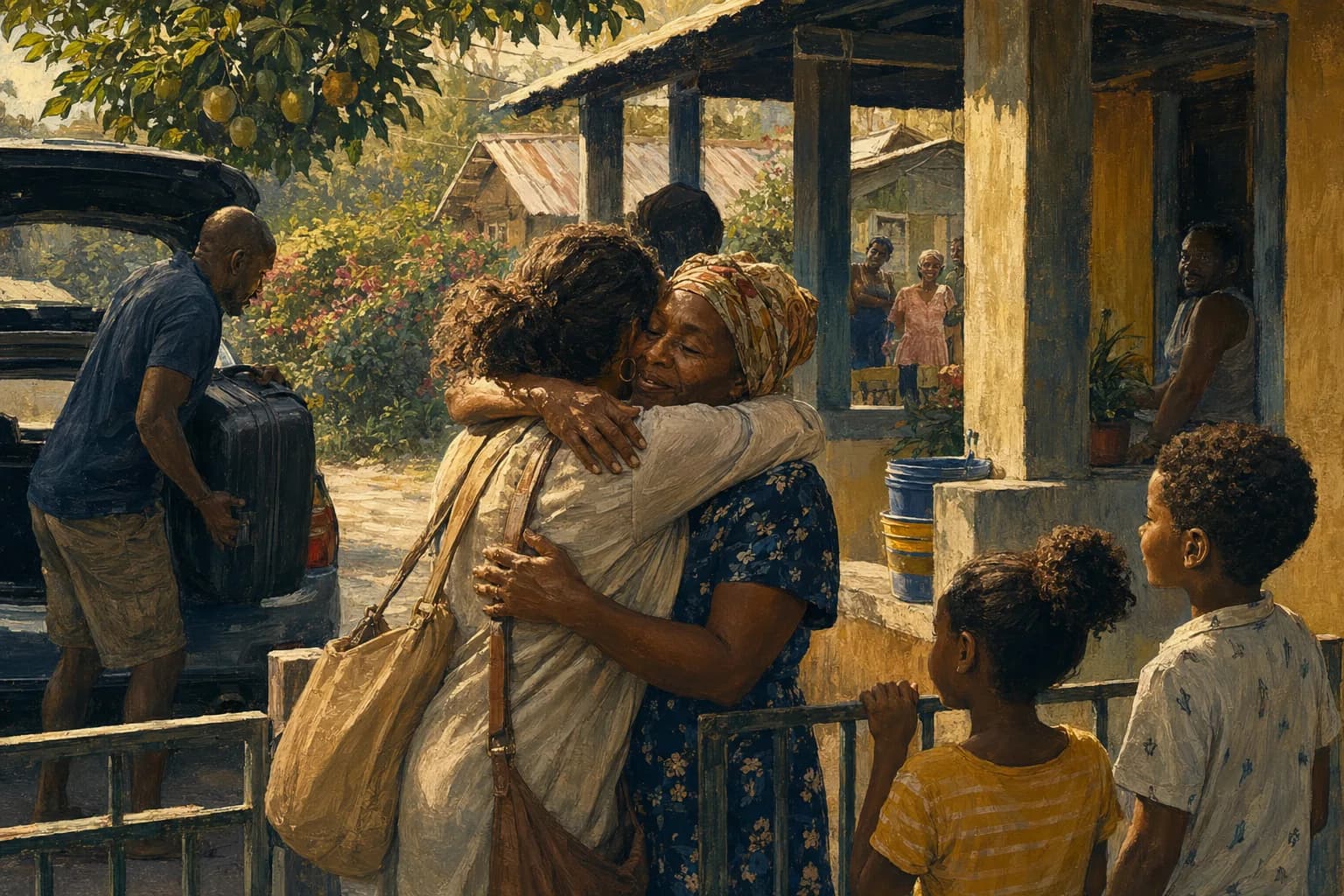
By the 1970s and 1980s, the chain had thickened. One sister working in nursing sponsored another. Uncles were sent for. Cousins arrived with suitcases packed half with clothes and half with spices and records.
They came for better wages, stability, and the chance that their children would not cut cane or spend years waiting for promotions in a system still sorting people by shade and surname. Many exchanged family land and Carnival tents for twelve-hour shifts and basement apartments. They sent barrels home carrying American goods in one direction and Trini longing in both.
They built the infrastructure quickly, and they did it deliberately.
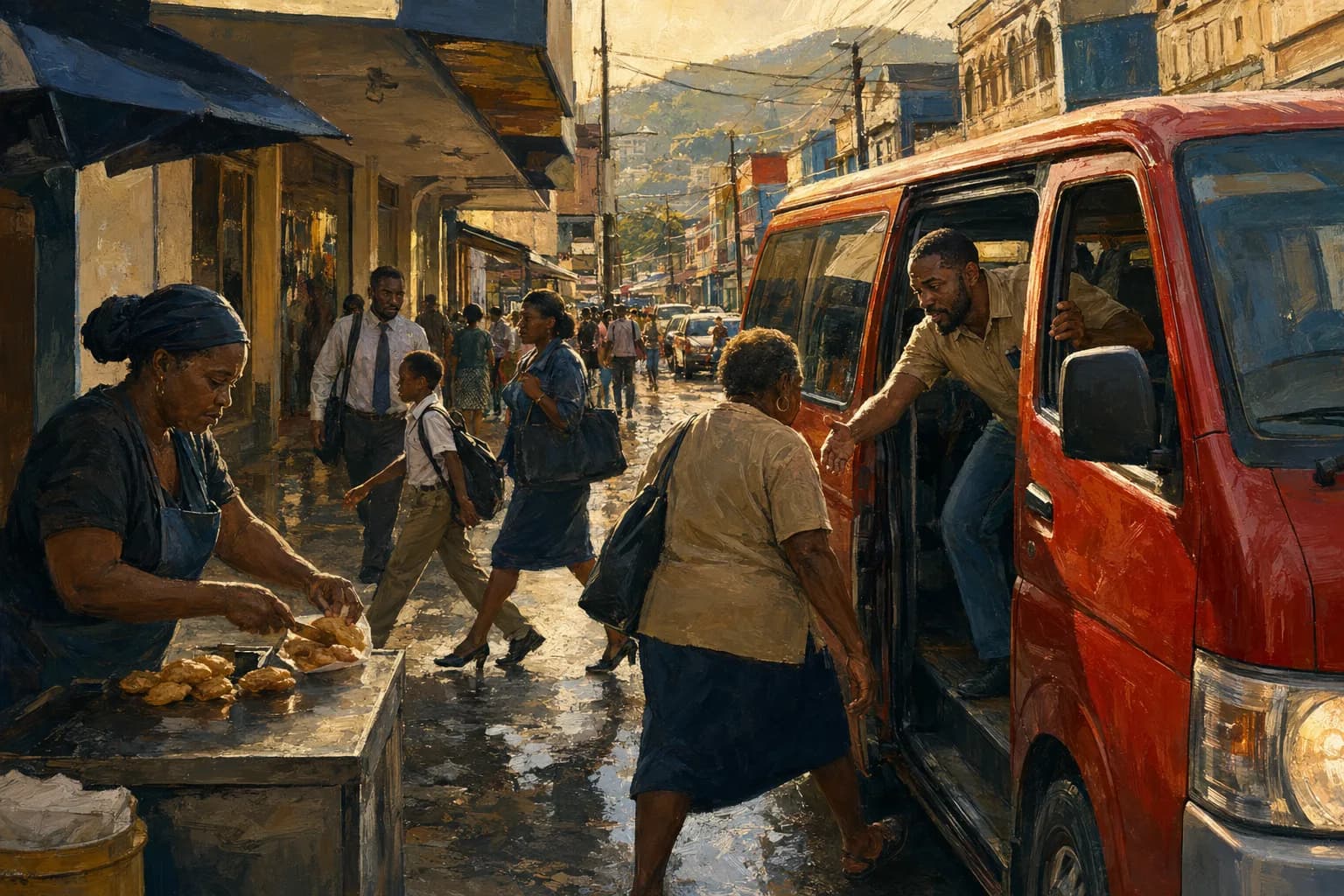
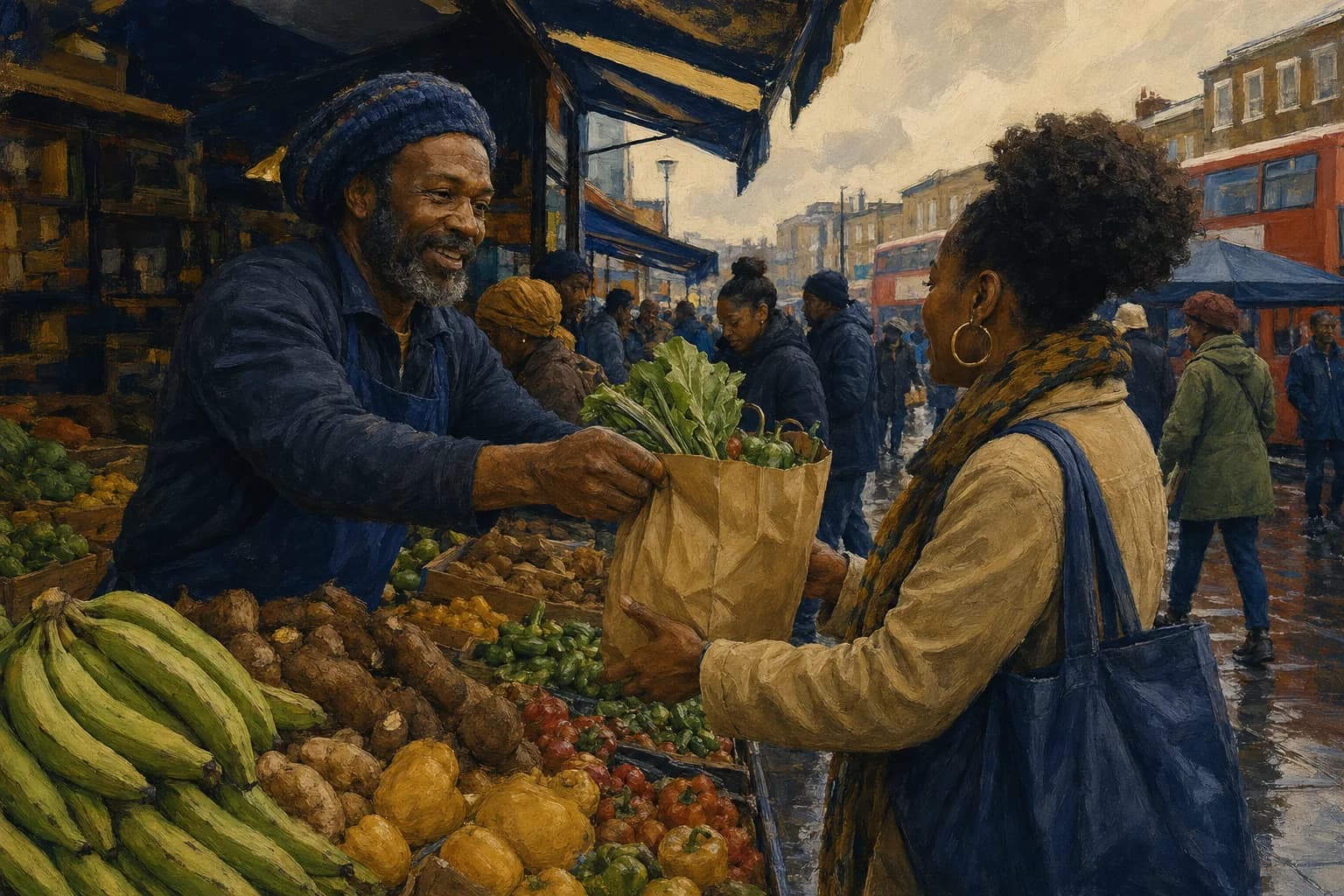
The bakeries opened early enough for hospital workers and brought the tastes of home into a borough that had never heard of a currant roll. Roti shops such as the storied Ali's Trinidad Roti Shop on Fulton Street turned commercial strips into extensions of the Savannah.
Churches anchored Sunday best and Sunday gossip. Cricket at the Parade Ground near Prospect Park kept the bat-and-ball arguments alive through humid summers. WLIB and the Caribbean stations that followed sent calypso and soca into kitchens, announcing deaths back home and upcoming fetes.
Carnival itself, born indoors in Harlem and paraded there for decades, moved to Brooklyn in 1969 and grew into the Labor Day ritual: masqueraders, steelpan, and sound systems transforming Eastern Parkway into a temporary Savannah.
None of it was decoration. It was deliberate belonging. These were places where the accent needed no explanation and the doubles man knew your pepper level without asking.
The generational thread pulls in three directions.
The first generation protected the core: recipes measured by eye, Sunday lunch stretching for hours, costumes planned during the winter and completed in the summer heat. They worked double shifts so their children would not have to, wiring remittances that built houses on the island and paid school fees on both sides of the water.
They kept the stories too: the indenture ships, the hopes of the oil boom, the exact corner in St. James where the fete used to jump.
The second generation negotiated the split. They were American-born with Trini surnames, excelling in classrooms while being asked, "But where are you really from?" They let some things go, including full dialect at work and traditions that began to feel heavy, while defending others fiercely: the parade, the family WhatsApp group blasting new soca, and the Sunday kitchen smells that announced identity louder than any flag.
Many became exactly the professionals their parents had dreamed of and carried the particular weight of being the bridge.
The third generation reaches back differently. With grandparents aging or already gone, they search for old parade footage online, enroll in steelpan classes, and ask which parts of the mix belong to them.
They discard some of the assumptions their elders carried, including narrower ideas about race and respectability, and reach instead for the full convergence the island has always represented.
The thread frays and rebraids. Doubles technique is taught in sixty-second videos. College essays examine Carnival as resistance. Trips home are booked more often now that the laptop can travel too.
The pressures are real and worth naming plainly.
Gentrification has rewritten entire blocks. Rents have climbed, brownstones have been flipped, and old shops have given way to cafés that do not know bake from bread. Flatbush and Prospect Lefferts Gardens still hold their density, but dispersal to New Jersey, Long Island, and upstate New York has stretched families more thinly across the map.
The founders of the associations and mas camps are aging, and succession remains an open question. Some institutions are shrinking as long-serving volunteers grow tired. The pandemic struck hard: elders were lost, gatherings stopped, and the parade was forced to adapt.
Still, the community absorbs and adjusts, just as the island always has.
What persists does so because it answers the need for belonging at a cellular level.
The parade still draws hundreds of thousands, with every island's flag in the air at once. Kitchens throughout the boroughs stage Sunday lunch as ritual; callaloo, pelau, curry goat, transmitting through taste what words cannot carry.
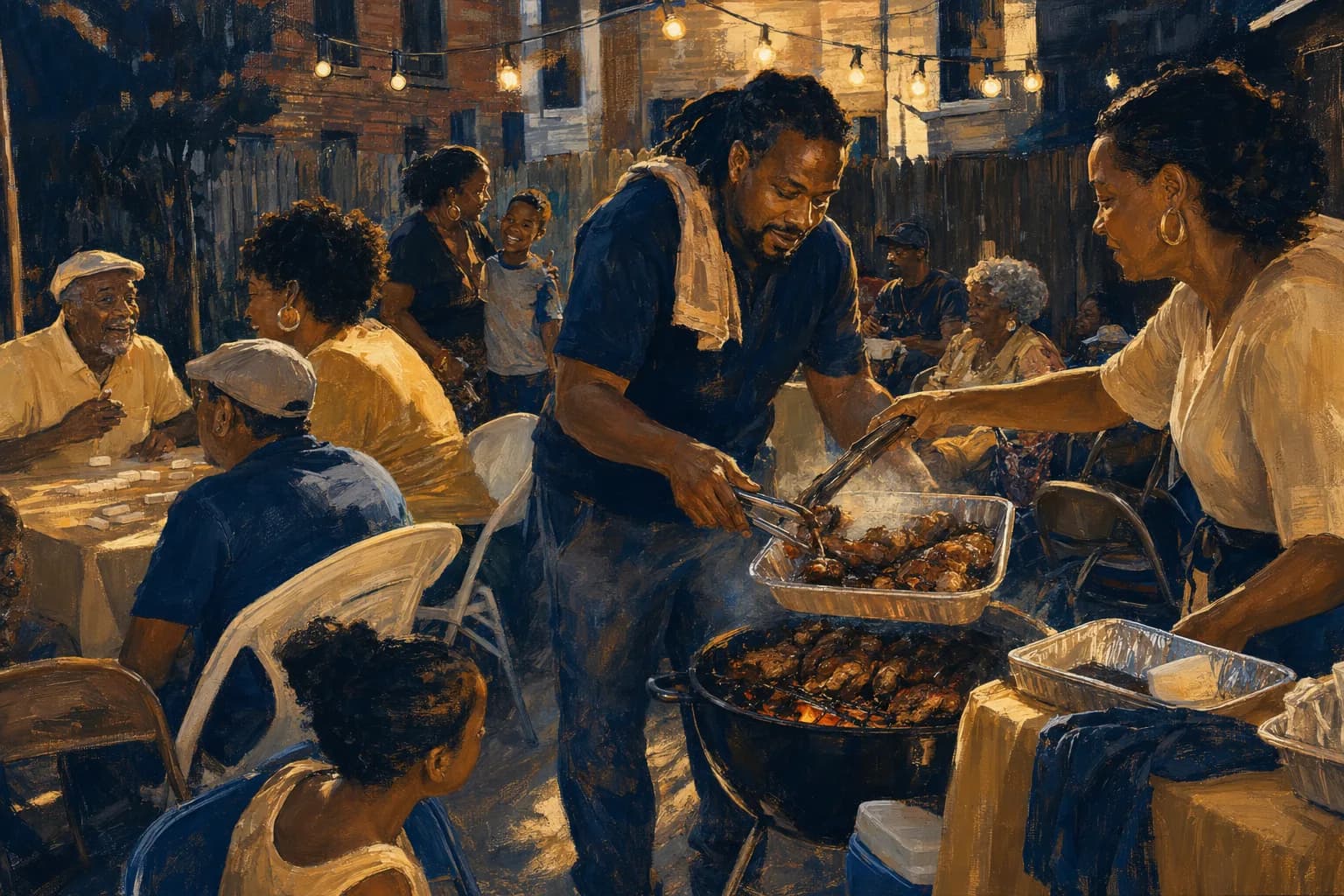
Radio and group chats keep the sound current. Cricket in the park and fetes in backyards keep the lime alive.
It endures because the first generation's sacrifice built the foundation, the second generation's navigation created flexibility, and the third generation's curiosity continues to bring fresh energy.
The mix of African, Indian, and everything else, refuses purity tests in Brooklyn too. Here, it becomes proof that convergence travels.
For those of us raised on a secondhand Port of Spain—the stories, the barrels, the phone calls timed around the rates walking Nostrand Avenue on a Saturday morning collapses the distance.
The doubles taste similar enough to remind you and different enough to mark the journey.
This is the diaspora doing what the island taught it to do: take the parts, remix them, and send something back stronger.
The avenue keeps moving. The line remains outside Allan's. Somewhere, a child is asking why the roti tastes like home when home exists mostly in stories now.
The answer is in the steam, the laughter, and the refusal to let the thread drop.
Editorial note
LuxTuris original
This is evergreen editorial context from the LuxTuris desk, not live breaking news or invented social proof.