Caribbean Creators Behind the Lens
Digital tools give more people a way to tell their own stories, while creative work still needs time, rights, and reliable income.
Kellan Vail · May 24, 2026
Updated September 24, 2026
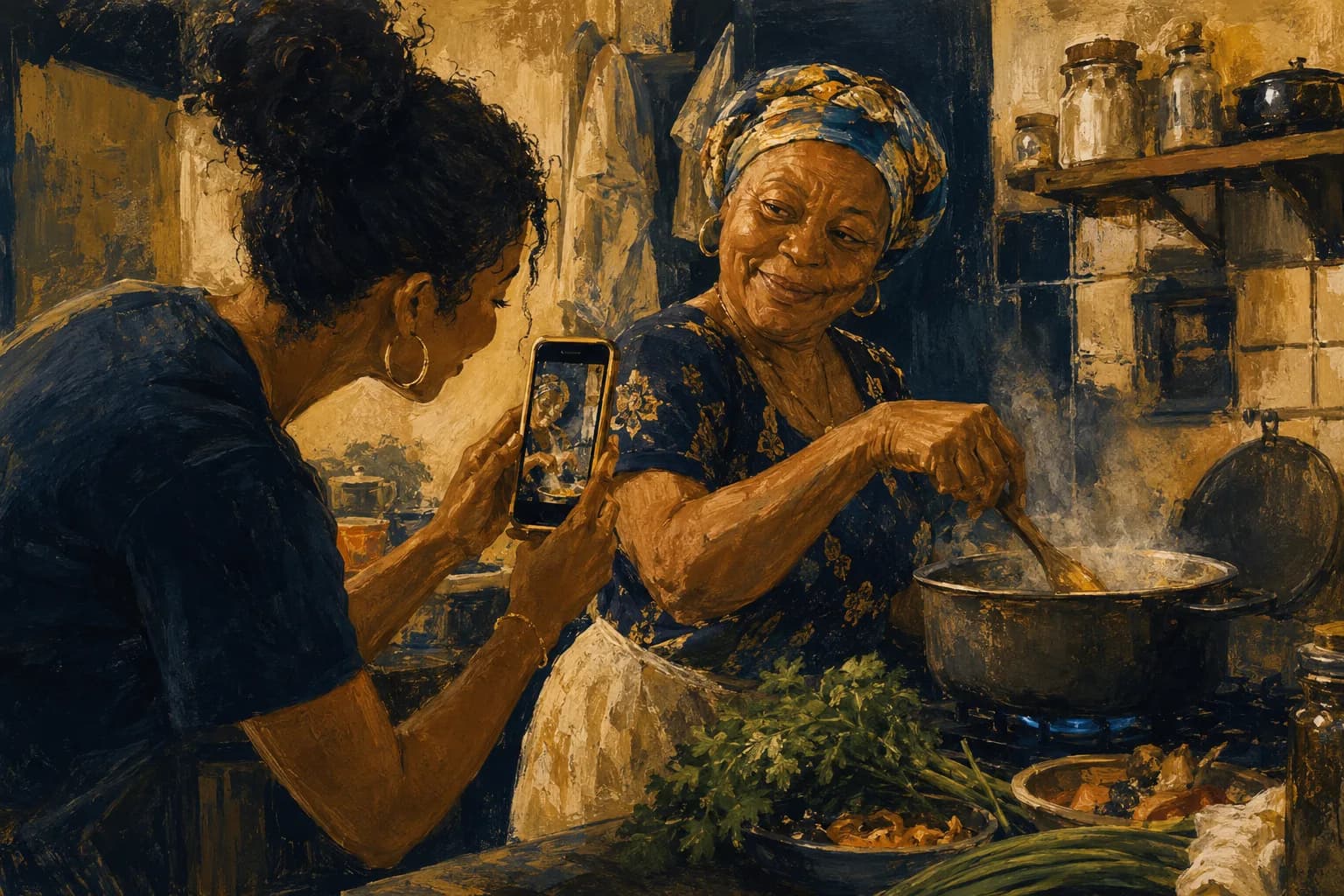
A phone can record a recipe, a rehearsal, a language lesson, or an ordinary street scene. The person filming decides what to show and how to describe it. That shift creates possibilities for Caribbean artists and audiences, but there is no single type of creator or guaranteed way to reach a diaspora.
The Caribbean Development Bank's Cultural and Creative Industries Innovation Fund recognizes creative work as a sector that needs training, research, business development, and funding. Its existence is a useful correction to the idea that attention alone sustains artists. A video may find an audience while the person who made it still pays for equipment, data, transport, editing, and time.
UNESCO's Creative Caribbean programme likewise approaches the cultural economy as work that requires networks and support. Digital publishing can make distribution easier for some people, while connectivity, platform access, rights management, and local conditions vary. There is no evidence that every islands-based creator receives no payment for millions of views, or that every category of creator shares one business model.
Food makers, comedians, musicians, language teachers, photographers, and local reporters may use the same platforms for different reasons. Some sell a product or service; some document a community; others make art with no commercial aim. The maker's stated purpose should lead the description, rather than a stranger's assumption about what their audience wants.
A video can carry culture across borders, but it cannot be equated with an entire oral tradition or with institutional archiving. Captions, permissions, names, and a plan to preserve original files determine whether a recording remains useful after a platform changes. Creators should be credited for their decisions as well as their images.
Follow particular makers, read their own descriptions and credits, and support their work through the channels they actually offer. An invented viral comment section cannot demonstrate a community's response. Real creators, speaking for themselves, are a better place to start.
Sources and further reading
See an error? Send a correction.