DiasporaThe Long-Distance Island: Keeping Caribbean Culture Alive Abroad
The Sunday call, the barrel, the one dish mastered completely — diaspora connection isn't a feeling. It's a set of practices that only survive if someone keeps doing them.
LuxTuris Editorial Desk · May 23, 2026
Imagine a composite Sunday call assembling across Toronto, an island home and London. The precise time zones shift with location and daylight-saving rules, but the ritual is familiar. The phone is propped against the fruit bowl in a Scarborough kitchen where a pot is already going; on the screen, a veranda appears — the grandmother, seated, holding the phone at the traditional angle (forehead and ceiling fan, mostly) — and then a third window blooms: the aunt in London, still in her church clothes. The agenda in this imagined family is familiar: who is sick, who is getting married, what the weather is doing to the mangoes, a child summoned to the screen to be inspected and pronounced too thin. It runs forty minutes. Nothing is decided. Everything is maintained.
That call is one strand of something this guide wants to name properly: diaspora connection is not one thing, and it is not a feeling. It is a set of practices — the call, the barrel, the plate, the playlist, the trip — each doing a different job, all requiring actual effort. Here is the full system, mode by mode.
The call
The Sunday call is the load-bearing wall — the oldest practice, upgraded from the crackling long-distance minutes our parents rationed (when a call home cost real money and was booked like an appointment) to today's bottomless video. Its function is not information; WhatsApp handles information all week. The call's job is presence: the weekly proof, in voice and face, that the ocean has not won. The practice, for those building it deliberately: fixed day, fixed time, treated like church — because a floating call becomes a monthly call becomes a birthday call, and the grandmother on the veranda counts the Sundays.
The barrel
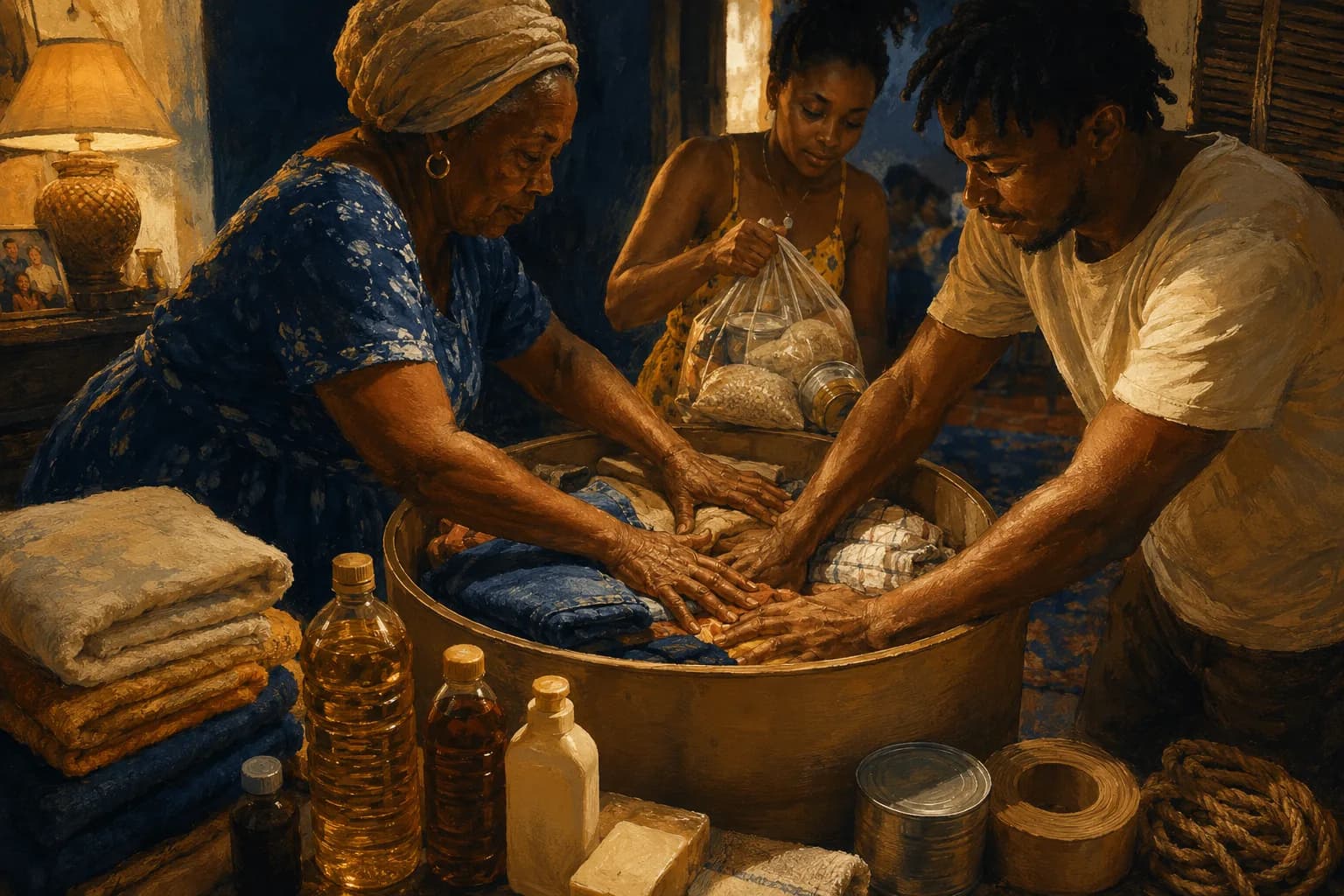
The barrel is the diaspora's love language rendered in cardboard and shrink wrap. Packed over weeks in a hallway that slowly becomes impassable — the school supplies, the sneakers in three sizes, the tinned goods, the toothpaste bought by the dozen on sale, the specific requests relayed through the family switchboard ("your uncle says a size 10, and Nadia wants the hair products") — then sealed, shipped, and tracked with the anxiety of a naval convoy. To pack a barrel is to hold your family's needs in your hands item by item; to receive one is to unpack proof of being remembered, object by object. The reverse barrel matters just as much: the suitcase coming back — seasoning, cassareep, dried bush tea, the pepper sauce wrapped in six bags — home shipped northward, one checked bag at a time.
The food
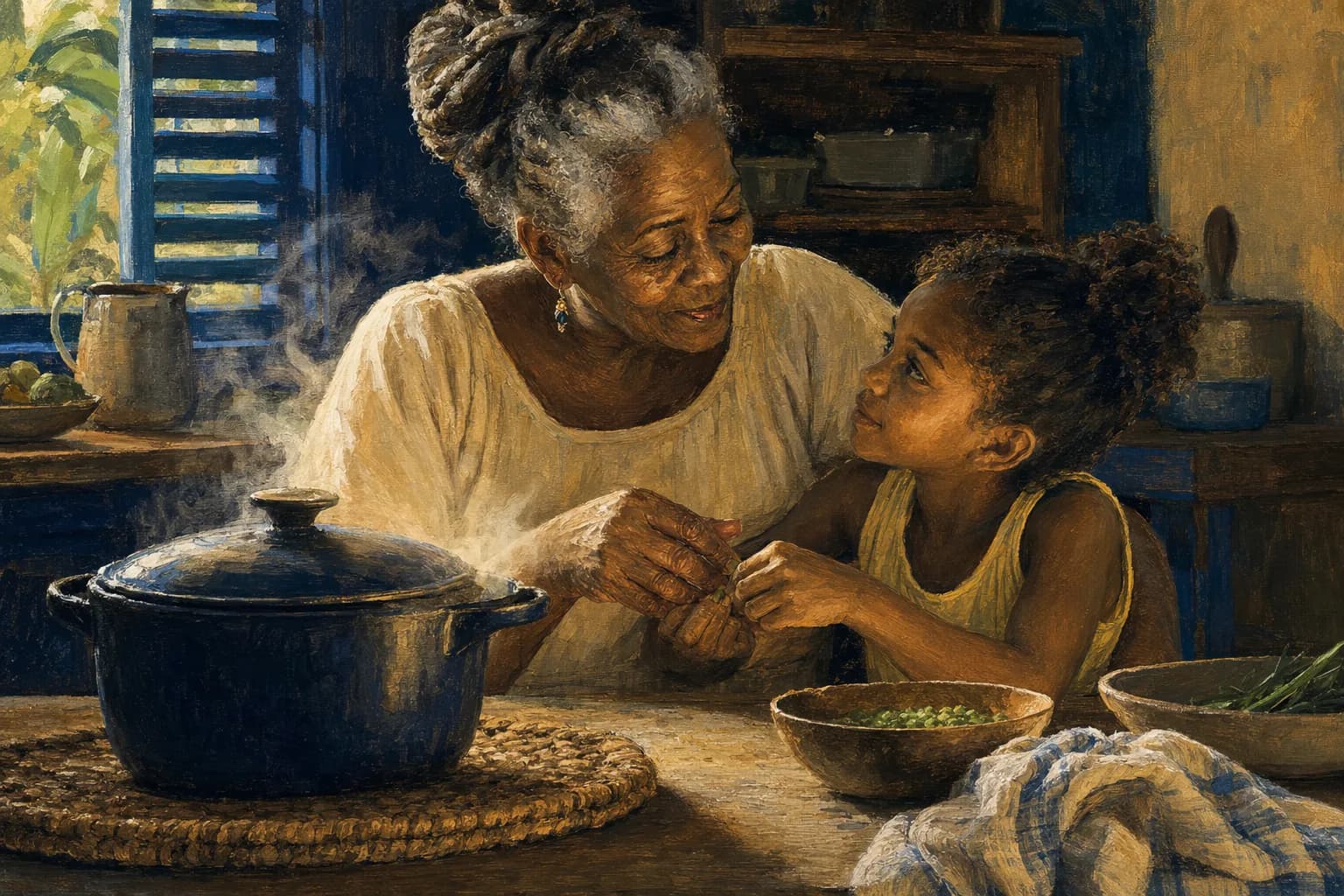
The plate is the most durable mode because it recurs by biological necessity: three times a day, the option to eat your culture presents itself. The infrastructure is the diaspora's proudest civic achievement — the Caribbean grocery districts (Brixton, Flatbush, Eglinton West and their siblings in every hub city) that exist because tens of thousands of households insisted on cooking home food in foreign kitchens until an entire supply chain grew to serve them. The practice for the second generation is blunt and achievable: master one dish completely — the rice and peas, the pelau, the oil down — learned from the relative who owns it, while that relative can still supervise. One dish, done properly, is a passport that never expires; it makes you the person who can produce home on demand, and it obligates the next generation to ask you for it.
The music
The playlist is homesickness management with a dosage schedule. The old soca for the memory, the new releases to stay current (falling behind the season's songs is its own quiet form of drift), the gospel or the roots for Sunday mornings, the specific songs that reconstruct a specific kitchen. Music is the lowest-effort, highest-frequency mode — culture administered through headphones on a gray commute — and it doubles as the connection most easily passed to children, who will absorb a rhythm long before they'll sit for a history.
The gathering
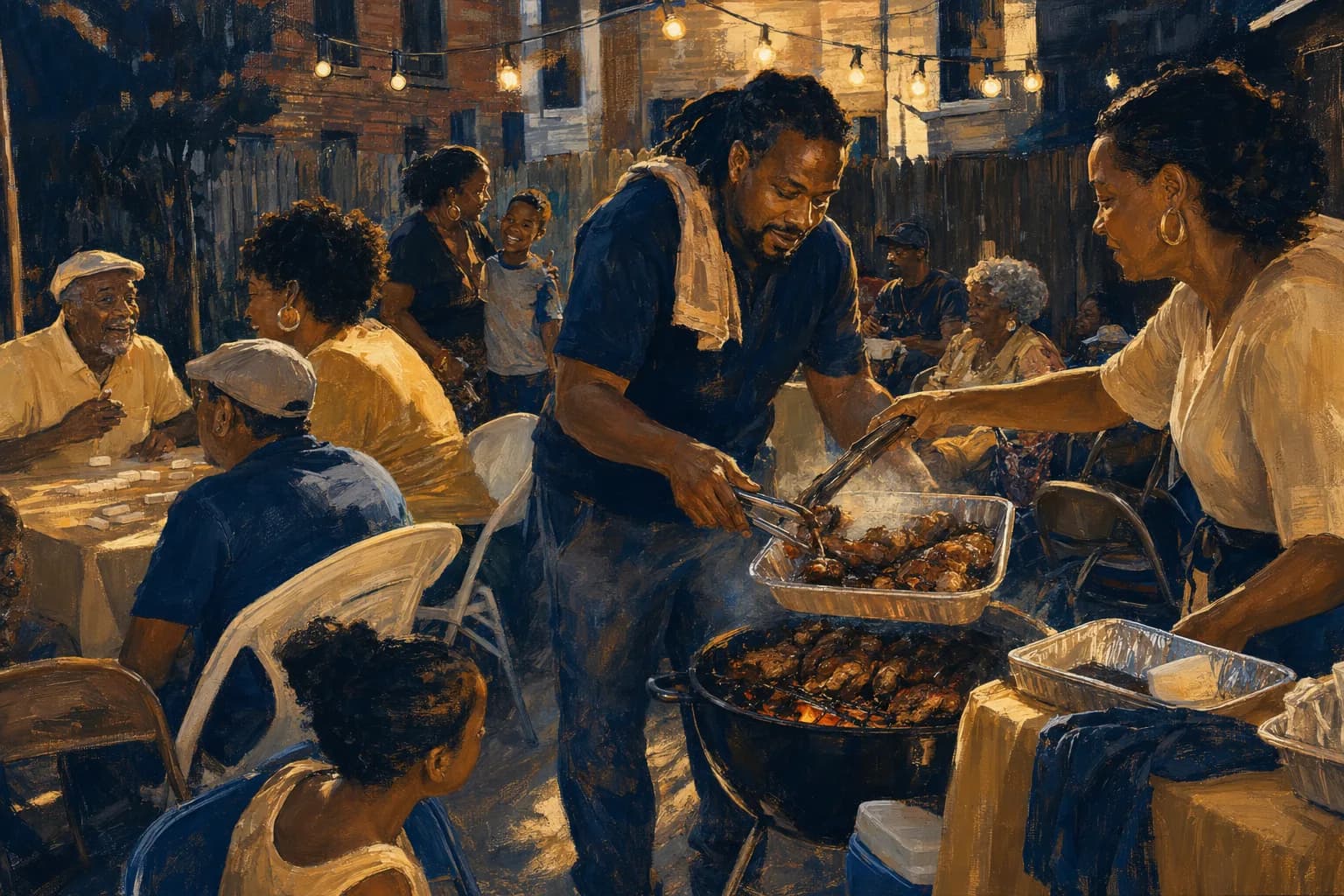
Then the in-person modes: the church whose congregation recreates a parish; the national association dance with its flags and its raffle; the carnival — Labor Day, Notting Hill, Caribana — where the diaspora city becomes, for one weekend, an island suburb; the christening and funeral circuits where the community counts itself. These are the modes that require pants and a commute, which is why they matter: culture practiced only privately thins out. The gathering is where children see that the family's way of being is a people's way of being — hundreds of families deep.
The trip
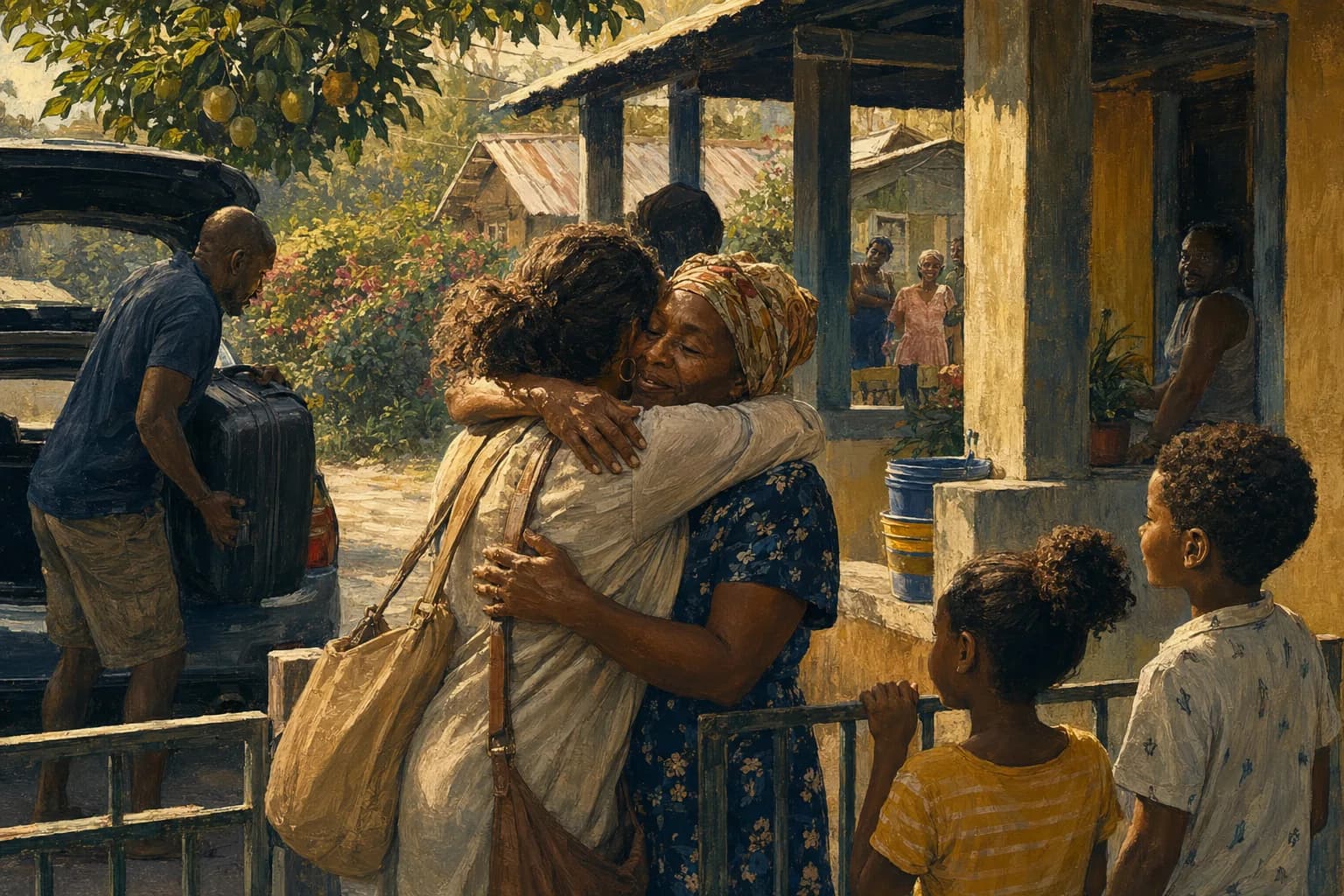
And the anchor tenant: the return itself — the visit that recalibrates every other mode, puts faces to the call, ground under the stories, and (not incidentally) restocks the seasoning. Every practice above is, in one sense, maintenance between trips.
The handoff
Now the hard part, stated plainly. For the first generation, none of this was a program — it was simply life, continued: they cook the food because it is food, call home because it is home, play the music because what else would play. For the second generation, every single mode is a choice. The dish must be deliberately learned, the language deliberately risked, the Sunday call deliberately joined rather than waved at from the couch. Connection converts, between generations, from inheritance into effort — and the conversion is where cultures survive or quietly don't. The parents' job in the handoff is invitation without conscription: the child dragged to every function learns resentment; the child brought into the kitchen as a colleague learns the recipe. The second generation's job is to accept that authenticity is not the entry requirement — your accented patois, your adapted pelau, your partial knowledge are not failures of connection; they are connection, mid-transmission.
The honest section
And because a guide that only celebrates is a brochure: connection is work, and the work has weather. There is connection fatigue — the barrel that strains a tight month, the guilt tax on every unanswered voice note, the exhaustion of being a household's foreign branch office. There are the ones who drift — not from contempt but from overload, the years when career and children and distance win — and the drift compounds quietly, because culture unpracticed doesn't announce its departure; it just stops being there when reached for. If that describes a season of your life, the useful response is neither shame nor surrender but re-entry at the smallest possible door: one call joined, one dish attempted, one event attended. The system was built by busy, tired, broke people across two centuries of migration. It has always accommodated partial effort. It only fails on zero.
Connection as practice
Which is the landing, and the whole philosophy of this publication in one paragraph. Island culture does not survive abroad by being felt strongly. It survives by being done regularly — the Sunday call kept, the pot put on, the barrel packed, the playlist updated, the child taught the grandmother's district by name. Weekly practices, most of them small, none of them optional forever. Done weekly, the culture compounds. Neglected long enough, it becomes a nostalgia — warm, vague, and unable to cook.
The call ends the way it always ends: the grandmother instructing everyone to eat something, the London aunt promising to send photos she will forward within minutes, the Toronto kitchen returning to its pot. Nothing was decided. Everything was maintained. Connection survives through repetition, but also through curiosity, consent and allowing relationships to change. The next call matters because it continues a conversation rather than preserving people in place.
Editorial note
LuxTuris original
This is evergreen editorial context from the LuxTuris desk, not live breaking news or invented social proof.