The Sunday Pot: How Jamaican Dinner Carries Home Abroad
Rice and peas, a main dish and a table that can change with the household: Sunday dinner remains meaningful in Jamaica and abroad.
Kellan Vail · May 30, 2026
Updated September 24, 2026
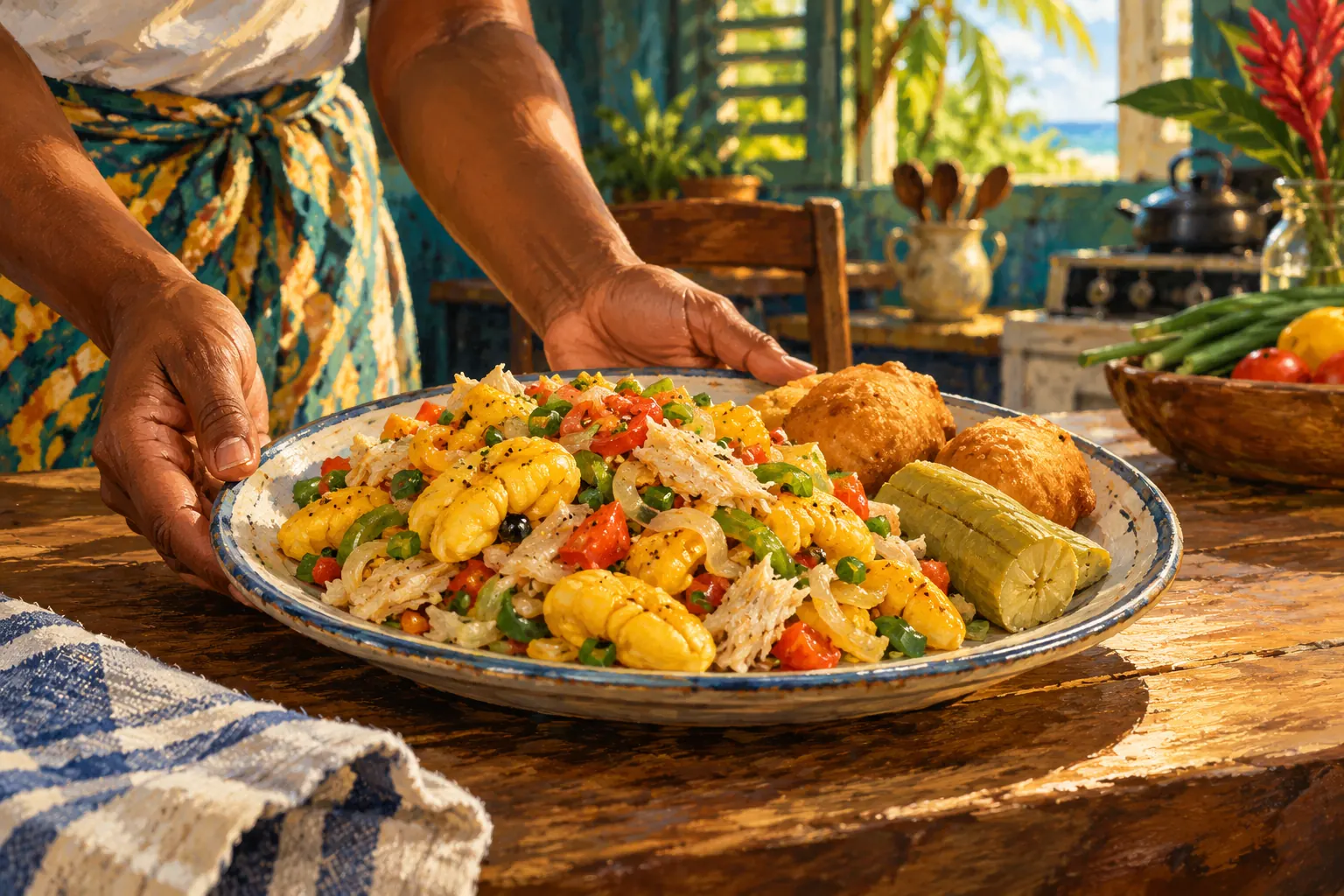
A plate of rice and peas with chicken, goat, fish or another main dish is familiar at many Jamaican Sunday tables. The Jamaica Information Service has reported such meals in community celebrations and in individual accounts. Familiar does not mean universal. People eat at different hours, work on Sundays, live alone, choose different foods or make the occasion when they can.
A meal with room for variation
The Jamaica Tourist Board includes rice and peas among the country's well-known foods. Cooks may use red peas or gungo peas, coconut milk and seasonings according to household practice. The meat, vegetables, gravy and methods also vary. There is no single correct plate enforced by every Jamaican grandmother. The original article gave a fictional family a Dutch pot, a precise timetable and an argument about coconut milk, then offered that scene as the rule.
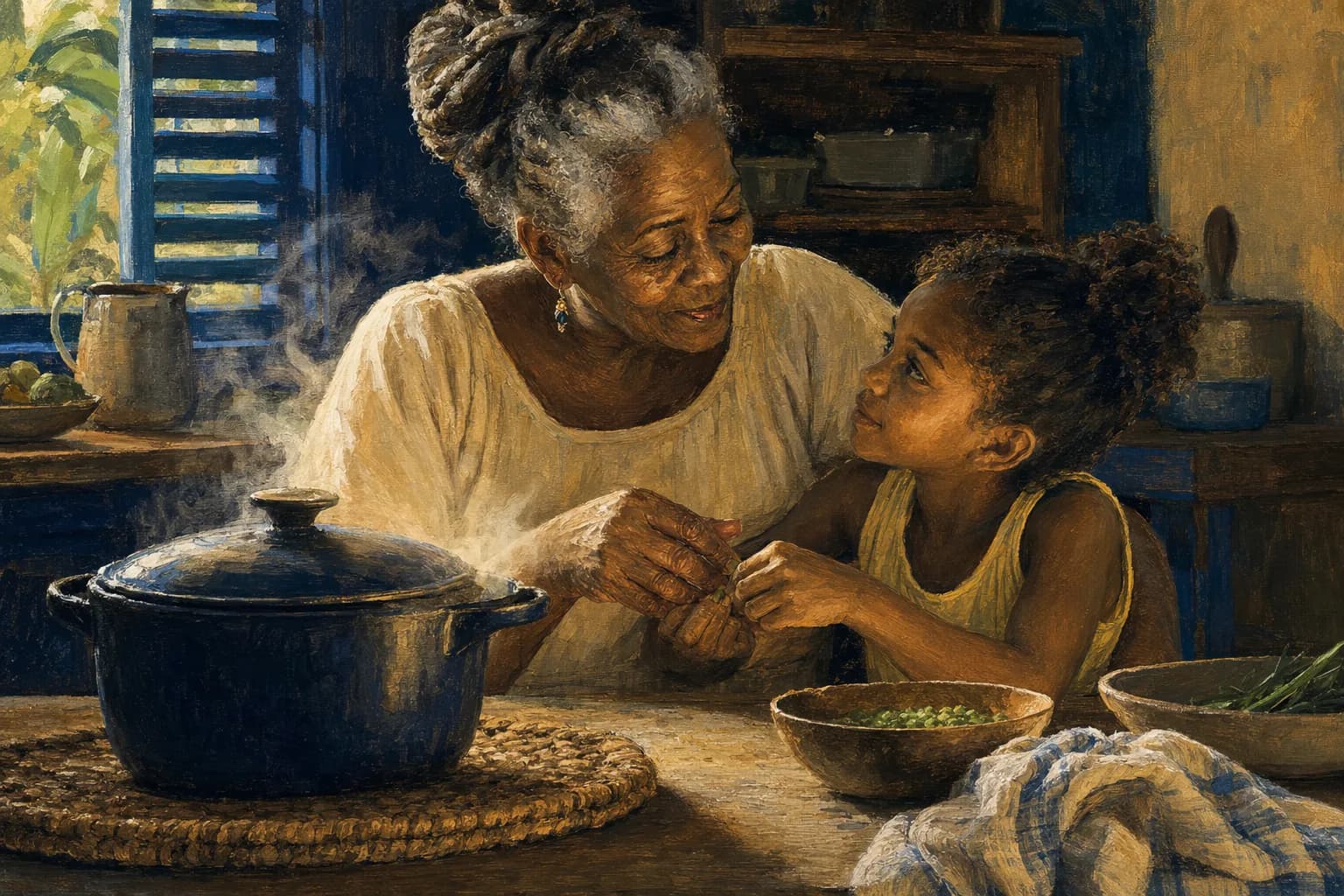
The meal can make room for conversation and care, but claims about what every child learns from a Sunday kitchen need testimony. A child may learn a recipe by helping, hear a relative's story over dinner or simply enjoy a meal. Another household may have no Sunday gathering. The difference is part of the story, not a departure from it.
What travels
Food businesses and home cooks carry Jamaican ingredients and methods beyond Jamaica. The Jamaica Information Service profiled a London restaurateur who described making a childhood Sunday dinner of stewed chicken and rice and peas. That is one documented life, not proof that thousands of households followed the same timetable or sourced each ingredient through the same shop.
A cook abroad may use a tin of coconut milk, a different stove or produce available nearby. Those choices are cooking, not a weaker imitation. Research at University College London on Caribbean garden heritage in Britain also points to ways people carried plants and food knowledge into new surroundings. The practical work of finding, growing, selling and preparing ingredients changes across cities and generations.
The meaning belongs to the people eating
A regular meal can make a place for connection, but neither a weekly reunion nor a certain feeling of home is guaranteed. Some families keep a Sunday pattern; others make it on a weekday or for a holiday. When someone serves a plate, ask how they make it and what matters to them. Their answer tells more than a scripted dispute between invented aunts.
There is continuity in a dish being cooked again, even when its ingredients and company shift. The Jamaican Sunday meal can be a shared practice without asking every household to resemble the same scene. Its strength is the room it gives people to make it theirs.
Sources and further reading
See an error? Send a correction.