The Parade Ends. The Work Doesn't.
Toronto Carnival has become a spectacular expression of Caribbean Canada. But the more revealing story begins with the people who make the spectacle possible.
Kellan Vail · October 15, 2026
Updated October 15, 2026
The parade has a finishing line. The work behind it does not.
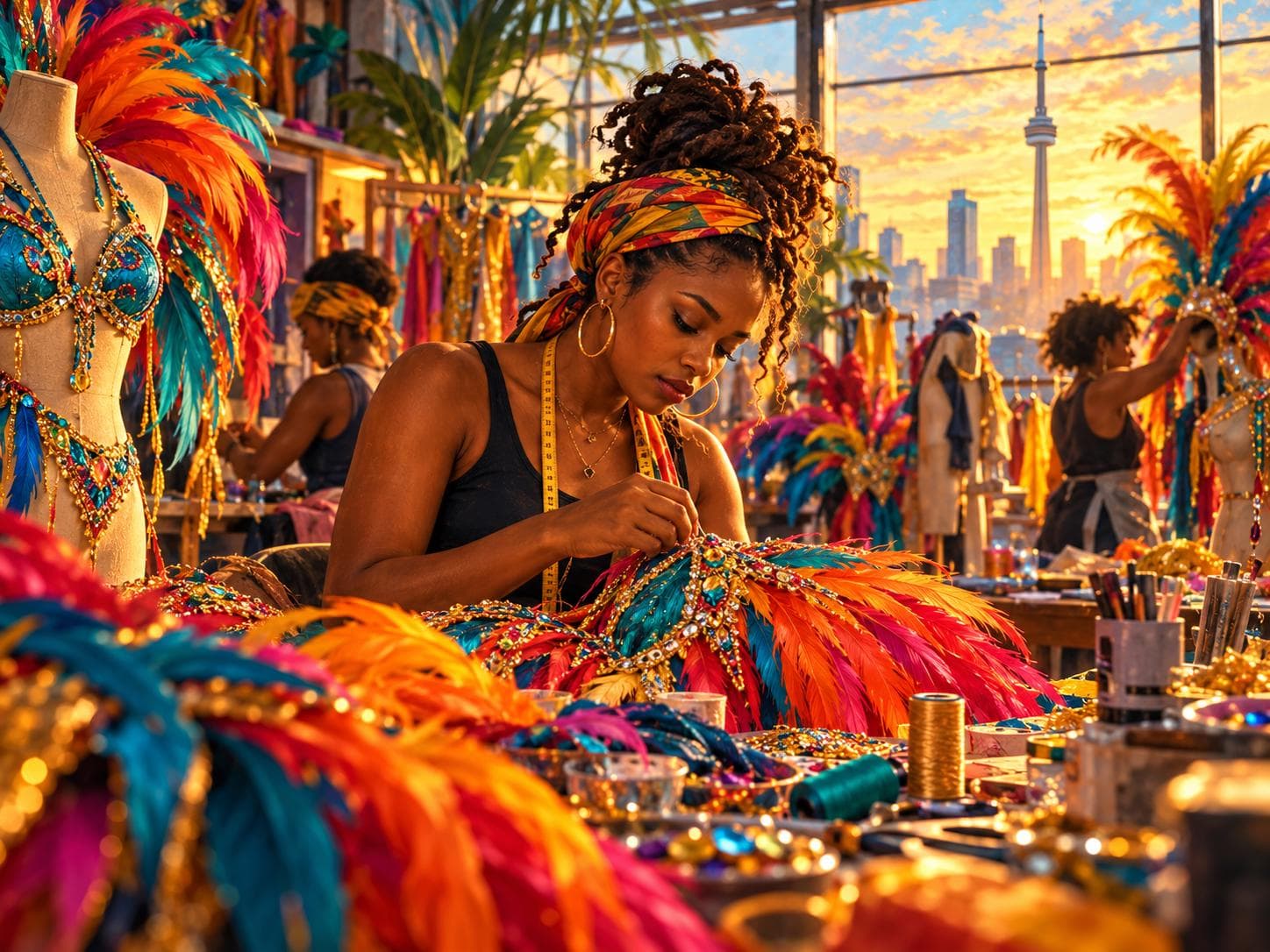
The photographs tend to capture what is easiest to love: color against the city, movement, the collective release of music and masquerade. They are less interested in the months required to make something worth photographing. A costume is a design before it is a spectacle. A steelband is an arrangement, a rehearsal schedule and an argument over what a passage should sound like before it becomes the sound of a crowd. Every moment on the road is standing on a much longer story.
For young Caribbean Canadians, that hidden story may be the most important one. You can grow up knowing Carnival as the day you belong to something enormous, while knowing very little about how to build a future inside the culture you love. Who gets taught? Who gets paid? Who owns the design? And when the crowd goes home, where does all that talent go?
These are not questions that fit neatly inside a parade highlight reel. They are the questions that make the festival worth covering.
The number that doesn't tell the whole story
On August 1, 2026, Toronto Caribbean Carnival's Grand Parade filled its place in the city's cultural calendar. The City of Toronto had proclaimed August Caribbean Carnival Month, recognizing a celebration whose history reaches back to the Caribbean community's contribution to Canada's centennial in 1967.
Three days later, Canadian Heritage announced C$61,000 in federal support for the festival. The announcement described the participation of 9,630 local artists, artisans and heritage performers. Among the work it named were masquerade design, steelpan, calypso, dance and education.
Nine thousand six hundred and thirty. The number is easy to read and surprisingly difficult to imagine. It is not a count of full-time employees, an estimate of artistic income or the festival's entire budget. It is the government's figure for participation. Still, it does something a photograph cannot: it points toward the number of hands, skills and relationships supporting one cultural event.
There is a reason this matters. When we describe Carnival only by how it looks, the people responsible for its appearance risk becoming anonymous. We applaud the finished piece and overlook the maker. We call the sound infectious and forget the arranger. We praise the community and rarely ask how the work is sustained.
The spectacle is real. So is the labor.
An inheritance you can actually enter
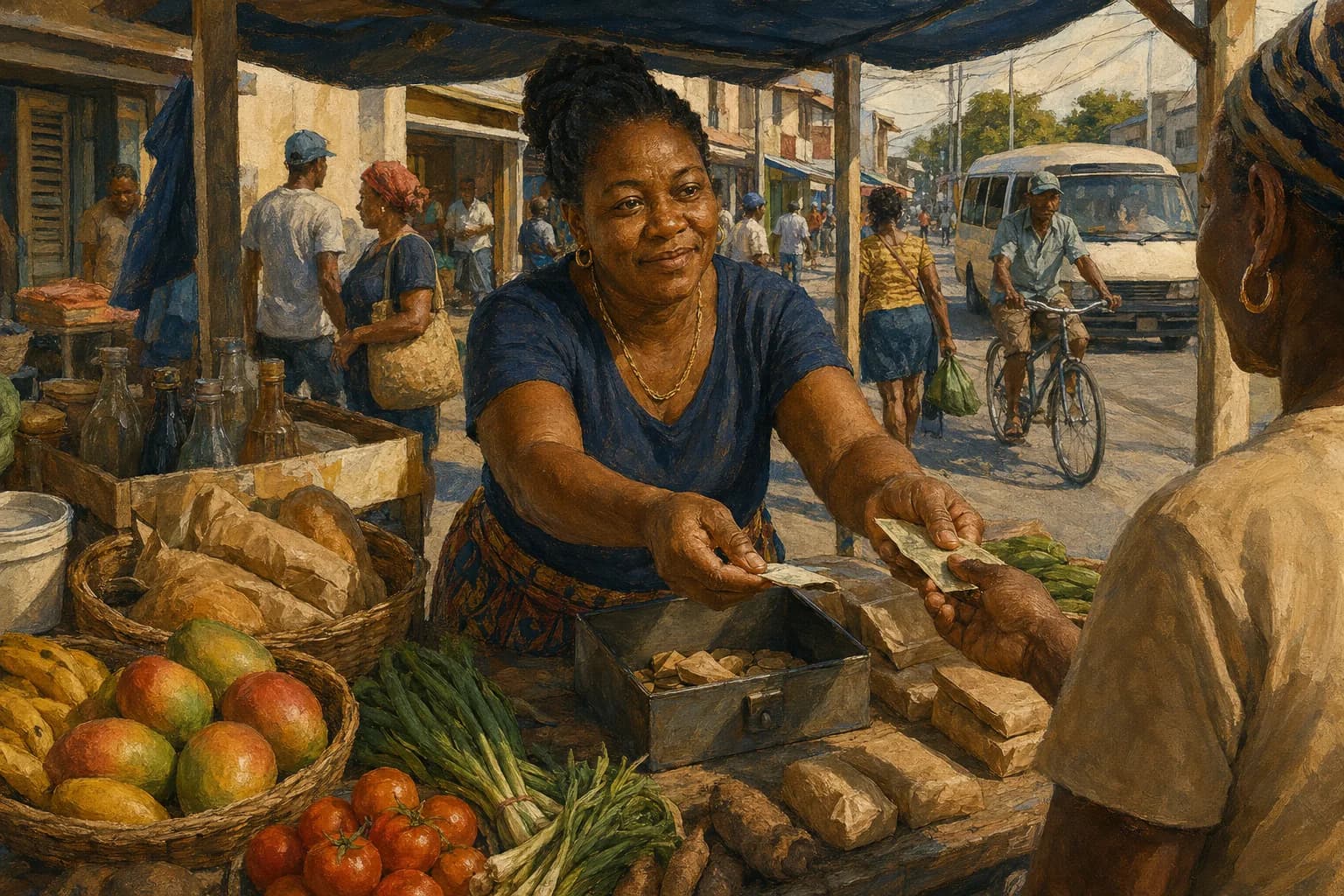
Toronto Carnival's official site reveals a more practical side of that cultural world. It separates pathways for vendors, volunteers, media applicants, people interested in festival careers and mas bands. These are not interchangeable opportunities. A person selling food faces different obligations from someone photographing an event; someone who joins a band is not necessarily becoming a costume designer; a volunteer should know that the role is not a paid contract.
That distinction turns a vague dream of working in culture into a series of decisions.
If you design, look for the bands and makers whose work you want to understand. Find out whether they need assistance, what training exists and whether your contribution would be credited. If you photograph or film, learn the festival's media-access process, then ask individual subjects before recording where consent is needed. If you run a small food or craft business, start with the marketplace rather than assuming that a parade ticket gives you a place to trade. If production interests you more than performance, there are operational roles that deserve as much curiosity as the stage.
The important word is ask. A directory listing does not promise an apprenticeship. A volunteer page does not guarantee a job. An invitation to participate is not an agreement about money, safety or who can reuse creative work. Those terms matter long after the confetti is gone.
For an emerging maker, the questions can be almost embarrassingly practical. Who is supervising this project? Who pays for materials? Will I be credited by name? May I show the result in a portfolio? What happens if the event changes? A clear answer may tell you more about an opportunity than a glamorous promotional video.
The organizer's site has already begun advertising involvement in its 2027 season, including new-band applications. That is a reminder that the next Carnival starts being built before the current one has faded from everyone's camera roll. Application windows and conditions change, so the official source, not an old post, must supply the current details.
The city beyond the parade route
There is another temptation in the way we cover Caribbean Canada: treating Toronto's largest cultural moments as though they explain the whole community. They do not. Caribbean culture travels across neighborhoods and municipalities, through student groups, family networks, independent events and people making work outside a major festival's official calendar.
That is why our developing connections in Oshawa matter as a reporting direction. We have not yet conducted permissioned interviews for this article, and this essay does not present those contacts as sources. The more interesting future report would ask what a young organizer in a city outside central Toronto must overcome to build an event people will attend. Or what a fashion graduate learns when a beautiful design has to become something a body can move in, on a budget, before a deadline.
The answers will differ. Some people may have found opportunities through the festival. Others may have made their own. Both stories belong to Caribbean Canada. Neither should be invented to complete a pleasing narrative.
What we can say now is that the road is only the visible surface of a much larger creative economy, and participation in that economy should not be confused with automatic opportunity.
What should survive the music
A festival can be both a joyous act of memory and a serious place to learn a skill. It can honor the people who brought a tradition to Canada and make room for people whose contributions will change what the tradition looks like next. Those ideas are not in conflict. They may be the most hopeful thing about Carnival.
But hope needs practical form. It looks like an agreement that credits a young designer. A rehearsal where a new musician learns why one passage works and another does not. A vendor who understands the real costs before signing up. A filmmaker who returns with footage they have permission to use, and a deeper understanding of the people in it.
The parade ends. The work does not. If the next generation gets to do more than watch it, that unfinished work could be the most compelling part of the story.
Sources and further reading
See an error? Send a correction.