FoodThe Pot That Keeps Time: Pepperpot at the Guyanese Christmas Table
Cassareep, an Amerindian invention pressed from bitter cassava, is the one ingredient that makes pepperpot pepperpot — and the pot is never finished, only begun.
LuxTuris Editorial Desk · May 18, 2026
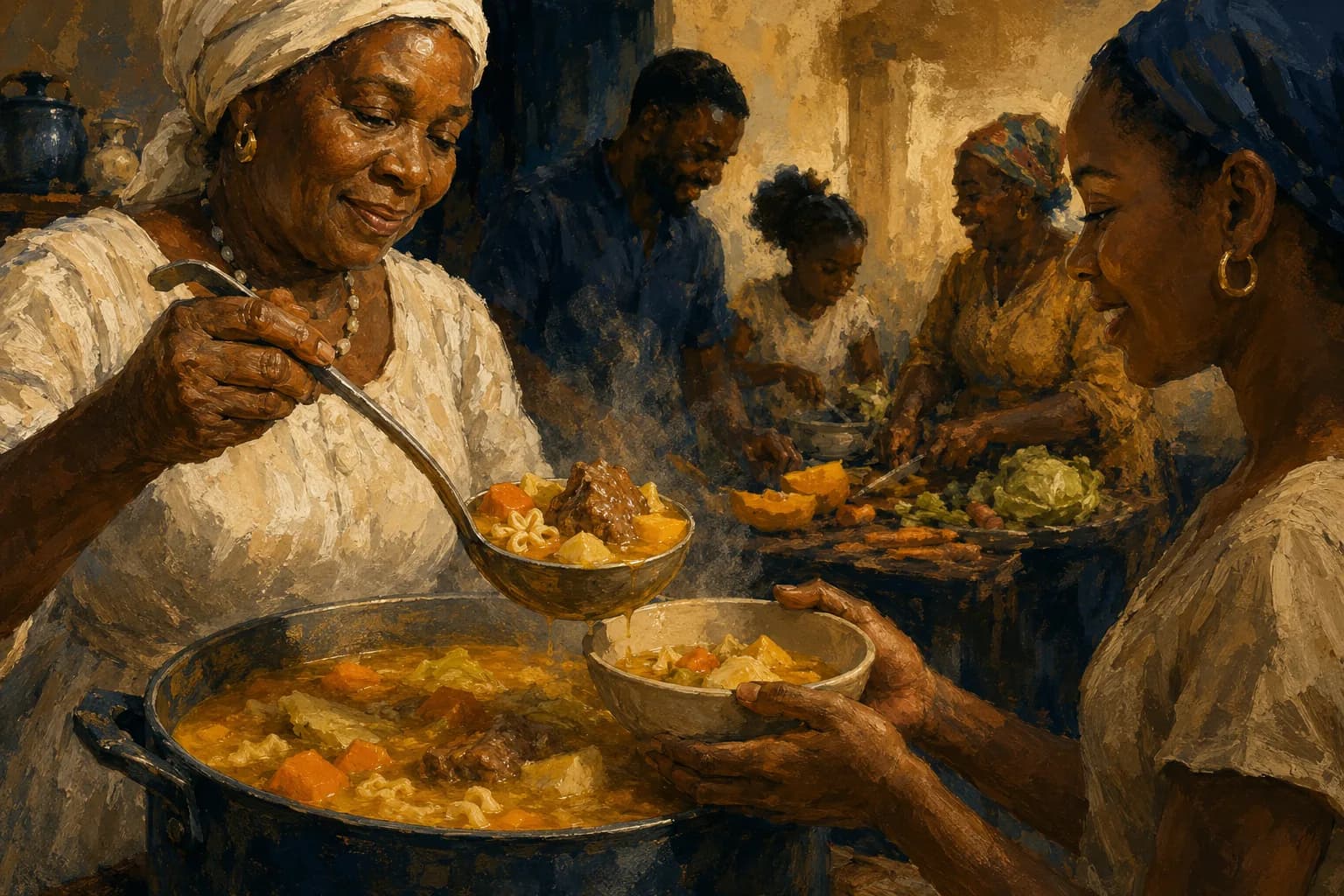
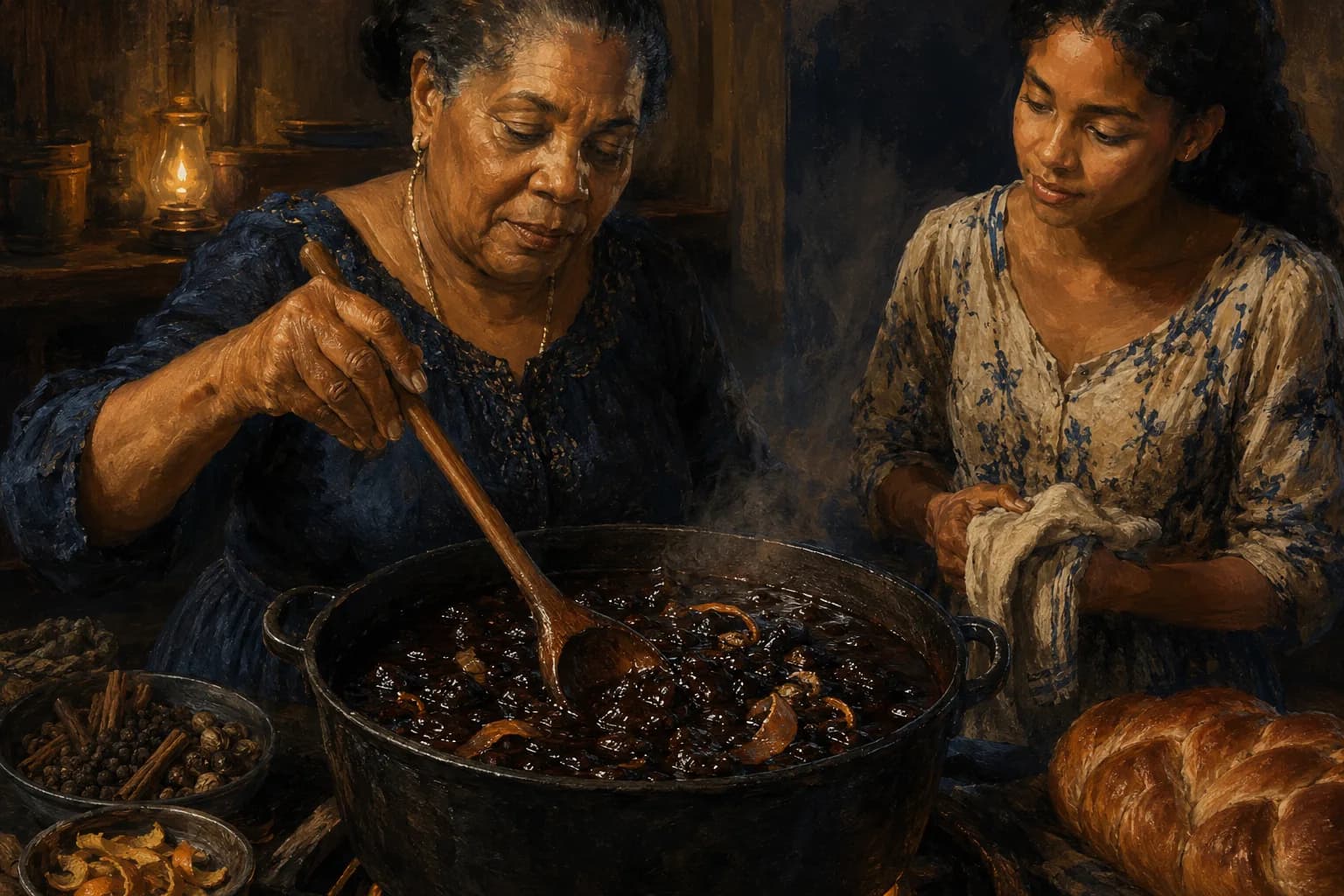
Christmas Eve in a Guyanese house, and the pot has been going since before anyone else was awake. It is not a pot you stir and leave; it is a pot you attend — checked, skimmed, tasted, argued with — and by afternoon it has annexed the entire house. The smell is like nothing else in the Caribbean kitchen: dark, sweet-bitter, faintly smoky, cinnamon and clove riding over something older and deeper, the scent of meat surrendering slowly to cassareep. Children are sent to smell the pot and report back as though checking on a relative. The official line is that it will be ready tomorrow. The unofficial line, muttered by the cook, is that it will be better the day after that, and better still the day after that — and both lines are true, because pepperpot is the rare dish whose recipe includes the passage of time as an ingredient.
That patience is the whole culture of the thing. In a season of instant everything, the Guyanese holiday table is anchored by a dish that flatly refuses to hurry.
Cassareep, the ingredient that is the dish
Everything in pepperpot is negotiable except one thing. Cassareep is the thick, near-black syrup made by grating bitter cassava, pressing out its juice, and boiling that juice down for hours — with cinnamon, clove, and sugar in many versions — until it becomes something between a sauce, a preservative, and a family heirloom. It is what makes pepperpot pepperpot: the color, the bittersweet depth, and the almost magical keeping quality, and generations of cooks have valued its preserving qualities. Historical household practice should not be treated as modern food-safety guidance: storage, reheating and refrigeration should follow current public-health recommendations.
And here is the history payload, worth landing squarely: cassareep is Amerindian. Long before the colonial era, Indigenous peoples in the Guianas developed sophisticated methods for processing bitter cassava, which is toxic when improperly prepared, and for producing cassareep. Specific peoples should be named according to the historical and community sources supporting each account rather than collapsed into a single undifferentiated origin story. Pepperpot draws on that Indigenous cassava knowledge, although its present forms reflect centuries of adaptation. Which means the national dish of Guyana — a dish cherished across many communities in a famously plural country — is Indigenous Guyanese food, surviving intact at the center of the national imagination. Christmas practices vary, but pepperpot has become one of the foods through which many Guyanese households recognize the season. Few countries can point to a plate that old still doing that much work.
The bottle matters accordingly. Real cassareep from home — ideally from the Pomeroon, the river region whose cassareep enjoys the reputation champagne enjoys in France — is guarded, rationed, and requested from every traveling relative. A bottle of Pomeroon cassareep in a diaspora kitchen is not a condiment. It is a document.
The debates, lovingly itemized
Because pepperpot takes days, it generates opinions the way slow things do, and the disagreements are as inherited as the recipe.
The meats, first. Beef is the constitutional floor — brisket, and the cuts with bone and gelatin that reward long cooking. Cow heel is where the debating begins: essential body, say the traditionalists; optional, say the reckless. Pig trotters, oxtail, pork — each household's combination is fixed, defended, and regarded as self-evidently correct. Then sweetness: how much sugar rode in with the cassareep, whether the pot should lean bitter and dark or round and sweet — a spectrum along which entire families can locate their in-laws with sniper precision. Heat, via wiri wiri peppers, the tiny Guyanese cherries of fire: present always, dominant never, calibrated to the eldest tongue at the table.
And the bread question, which is really the question of Christmas morning itself: plait bread — the braided, golden, slightly sweet loaf that exists in a destined marriage with pepperpot gravy — bought from the trusted bakery or made at home, and whether this year's homemade attempt matched Grandmother's, which it did not, which is fine, which everyone will say while meaning the opposite. The correct breakfast on December 25th in a Guyanese household is a bowl of pepperpot and a torn hunk of plait bread, dragged through the black gravy, eaten before presents by order of tradition.
Finally the doctrine on which all factions agree: the pot improves. Day two beats day one. Day three has a case for beating day two. The dish is not finished when it is served; it is merely begun.
The table around the pot
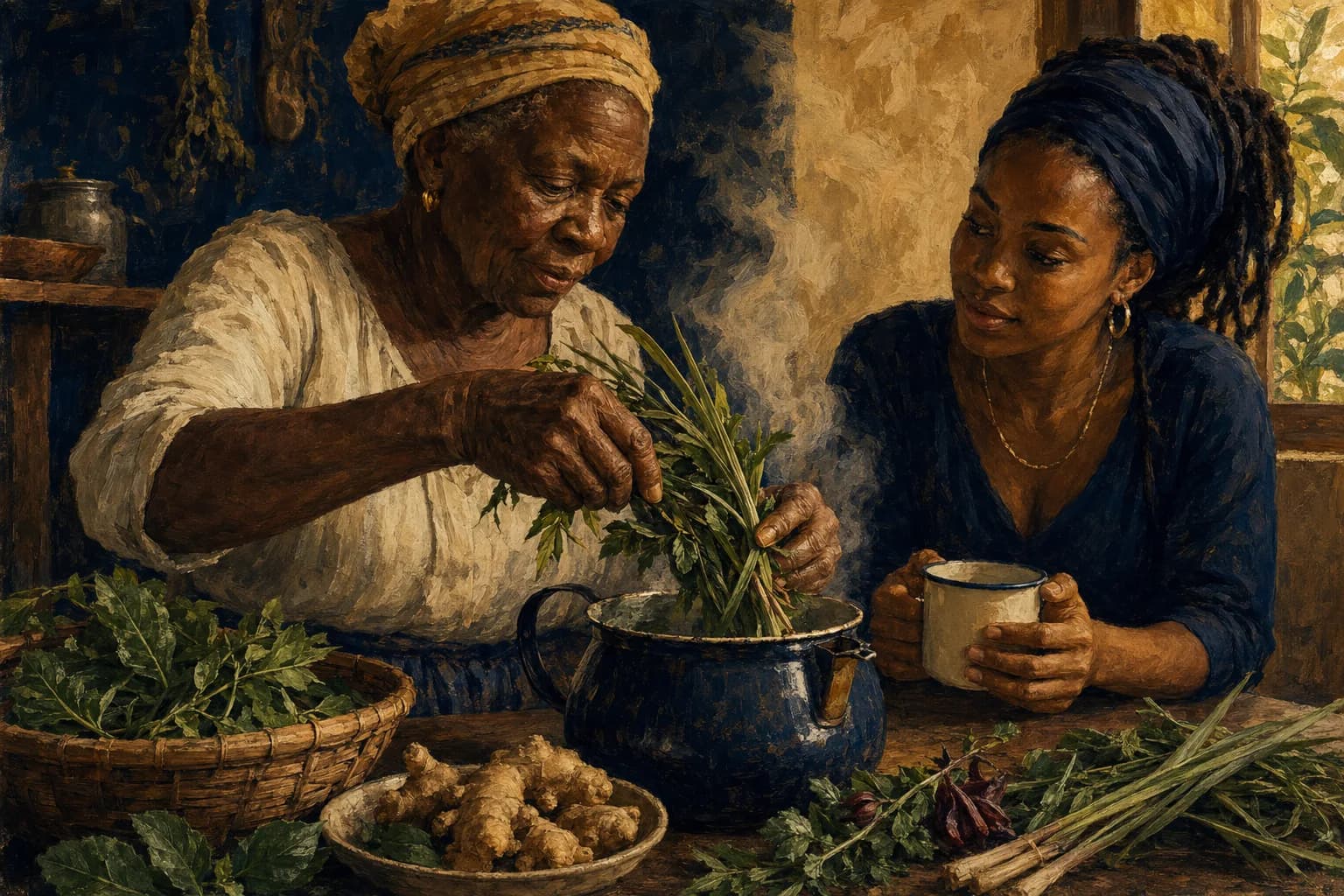
Pepperpot does not sit alone. The Guyanese Christmas table is one of the Caribbean's great composite documents: garlic pork — cubes of pork cured for days in garlic, thyme, and vinegar, then fried — carrying the Portuguese Madeiran thread of the country's story; black cake, the rum-soaked, burnt-sugar-dark fruit cake whose fruits have been soaking since sometime around September, carrying the British-colonial thread rewritten in demerara rum; ginger beer and sorrel brewed at home; the ham; the pepperpot presiding over all of it with its Amerindian seniority. Read the table left to right and you have read the population of Guyana. Nobody at the table is reading it that way. They are asking who is hiding the plait bread.
The pot in foreign
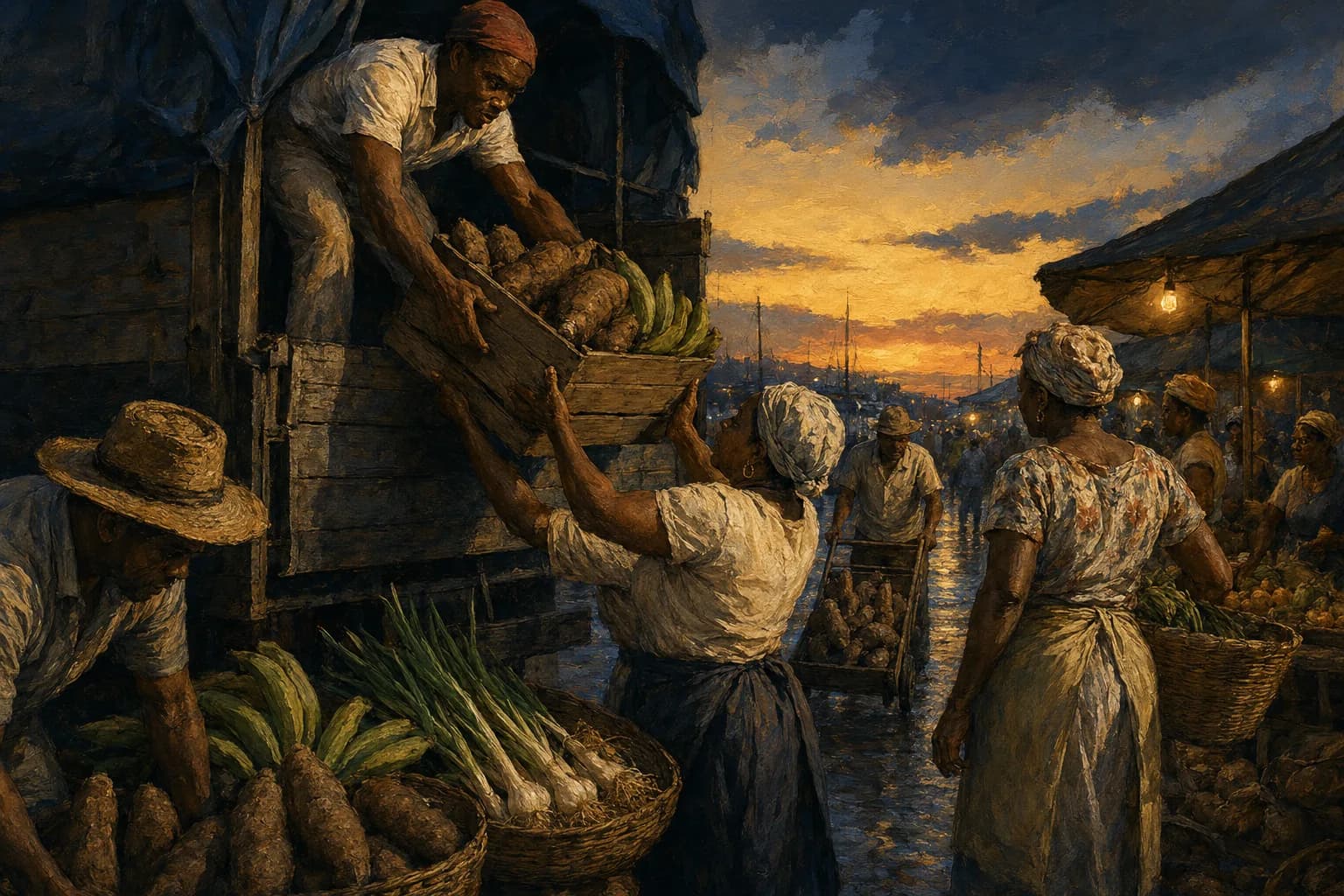
The diaspora carried pepperpot to the places Guyanese go — Liberty Avenue in Richmond Hill, Queens, which functions as Little Guyana with full honors; Scarborough in Toronto; south London — and with it, the cassareep problem. West Indian groceries in these neighborhoods now stock bottled cassareep year-round, and the December shelves empty like a run on a bank. But the connoisseur economy persists alongside the retail one: bottles from home, wrapped in three plastic bags and a prayer, riding in suitcases every November; the Pomeroon bottle presented to a host like wine, except more seriously.
The Queens pot and the Scarborough pot are made in apartments now, on electric stoves, sometimes with brisket from a Polish butcher and plait bread approximated or shipped. The cook may be a granddaughter working from a voice note, a phone call, a photographed recipe card in fading ink. The verdict at the table — close, but not quite Mummy's own — is delivered every year, and every year it is both a criticism and a benediction, because "not quite" means the original is still the reference, still alive in the room, still presiding.
That is what the pot finally is: an heirloom you eat. Most families pass down objects — a ring, a Bible, a clock. Guyanese families pass down a process: days of patience, a bottle of black syrup with a river's name on it, a set of arguments, and a smell that means Christmas on two or three continents at once. The pot outlives its cooks and recruits their children. It keeps time the old way — slowly, and forever.
Boil it up tomorrow. It will be even better.
Editorial note
LuxTuris original
This is evergreen editorial context from the LuxTuris desk, not live breaking news or invented social proof.