The Market at Dawn: How Jamaica's Trading History Lives
Markets hold records of labor, food and trade. Jamaica's higgler history deserves its own evidence and the vendor's own voice.
Kellan Vail · May 9, 2026
Updated September 24, 2026
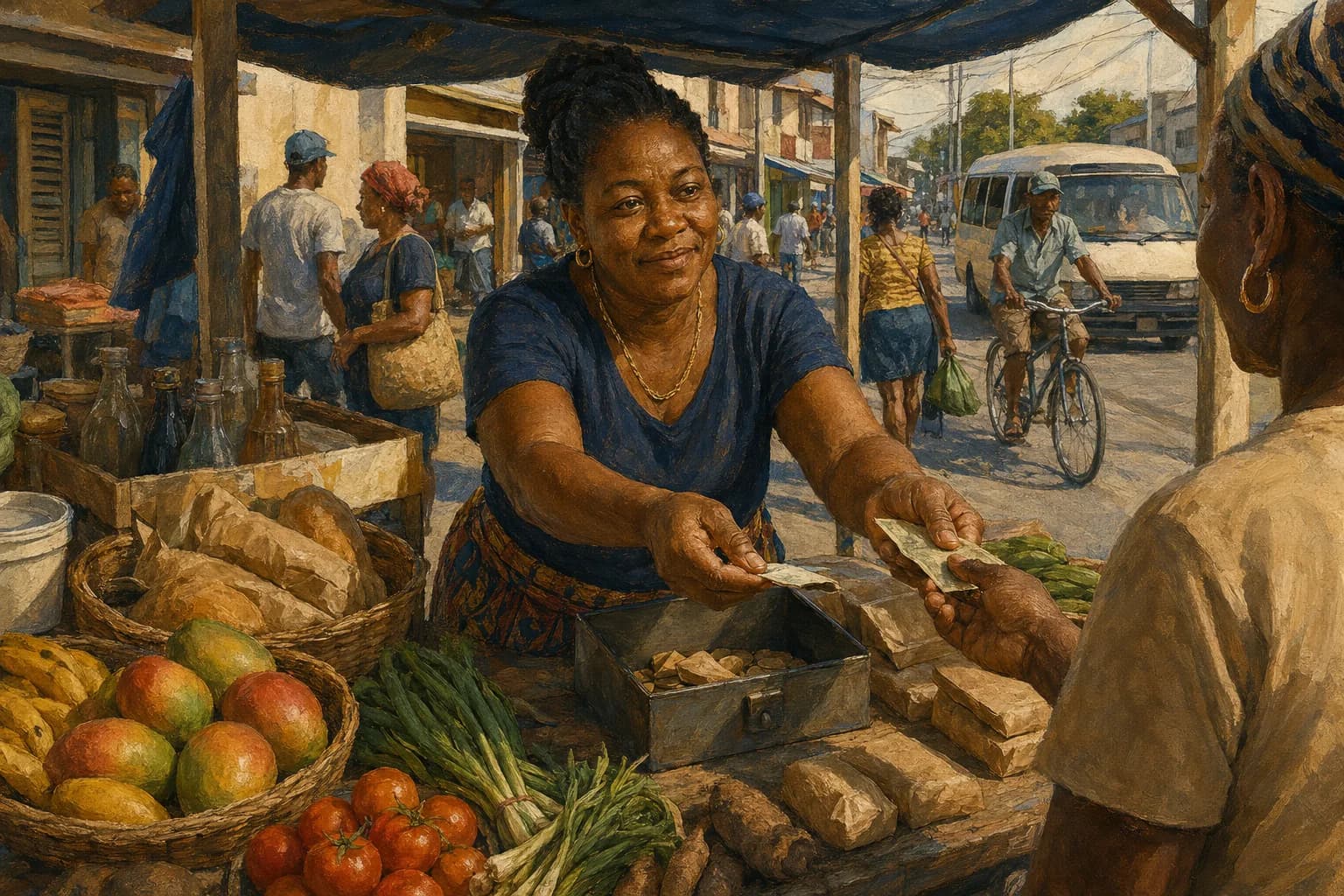
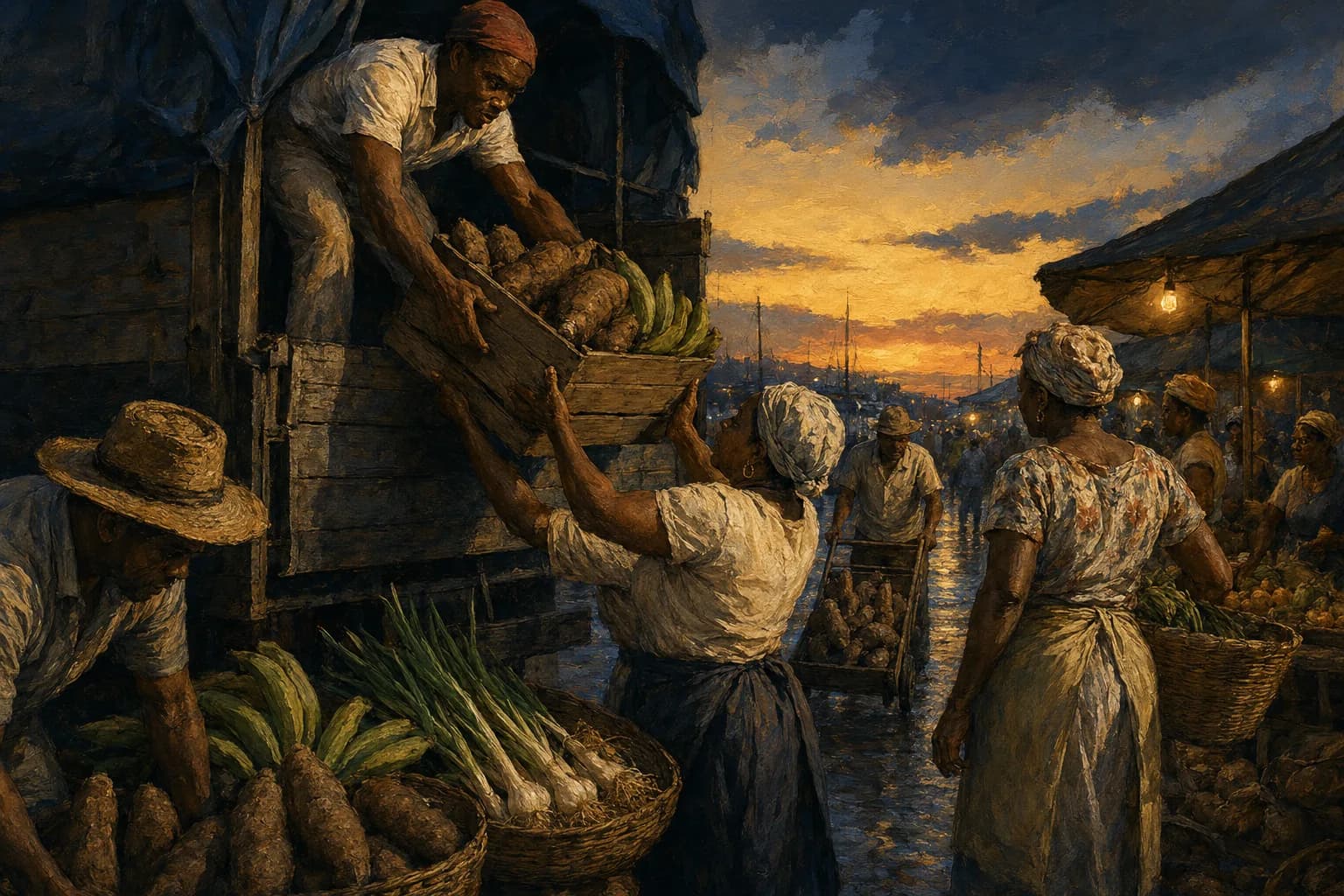
Kingston's Coronation Market is a place to buy food and to see how goods move through a city. The Jamaica Tourist Board includes a guided visit in its cultural itinerary. A market can invite questions about agriculture, transport and commerce. It cannot tell every answer simply by presenting a visitor with a stall of vegetables.
The history behind a crop
Enslaved people in Jamaica cultivated provision grounds for food under the plantation system. British Library research on nineteenth-century Jamaica shows that food growing could be a form of subsistence and limited self-determination under coercive conditions. The history is essential. Yet the yam or cassava on today's stall cannot, by itself, prove which family grew it or trace a straight line through centuries. Ask its seller where it came from rather than writing a genealogy for the crop without evidence.
Higglers have a record
Research published in the Journal of Latin American and Caribbean Anthropology studies Jamaican higglers through fieldwork at Black River market. It documents traders' tactics, precarious livelihoods and historical continuities with provision-ground commerce. The University of the West Indies also records training offered in 1988 to approximately 500 informal commercial importers, described as higglers. Those sources show adaptation in trade, not one timeless job description shared by every market woman.
The original article imagined a vendor's credit decisions and mental ledger before eight o'clock. Nothing in the cited research permits us to assign those exact acts to a person we have not met. A trader may buy and sell produce, import other goods, provide credit or do none of those things. Ask how a business works if the vendor has time and wants to explain.
A working place in the present
Jamaica's Information Service reports ongoing plans to modernize public markets and points to the role women play in them. That record makes current conditions part of the story too: infrastructure, services and vendors' work cannot be frozen in a colonial-era picture. Prices may respond to supply, transport, weather and many other factors. One price change does not prove a particular drought or customs delay.
For a visitor, a guided market visit can provide local context. Pay fairly, ask before photographing people and do not obstruct a sale to seek a history lesson. Opening times and access conditions should be checked with the guide or market management, rather than assuming every market opens at dawn six days a week.
Food, labor and commerce connect past to present, but the connections need documents and conversations. The market offers questions worth asking. The people who work there should be allowed to supply their own answers.
Sources and further reading
- Jamaica Tourist Board: Kingston cultural itinerary
- British Library: Food and freedom in nineteenth-century Jamaica
- Journal of Latin American and Caribbean Anthropology: Higgler Tactics
- University of the West Indies: training for informal commercial importers
- Jamaica Information Service: public market modernisation
See an error? Send a correction.