FoodBeyond Flying Fish: What Barbados Eats on an Ordinary Tuesday
The cutter, the fish cake, Saturday souse — Barbados's real food culture lives in the everyday lunch line, not the festival plate.
LuxTuris Editorial Desk · May 22, 2026
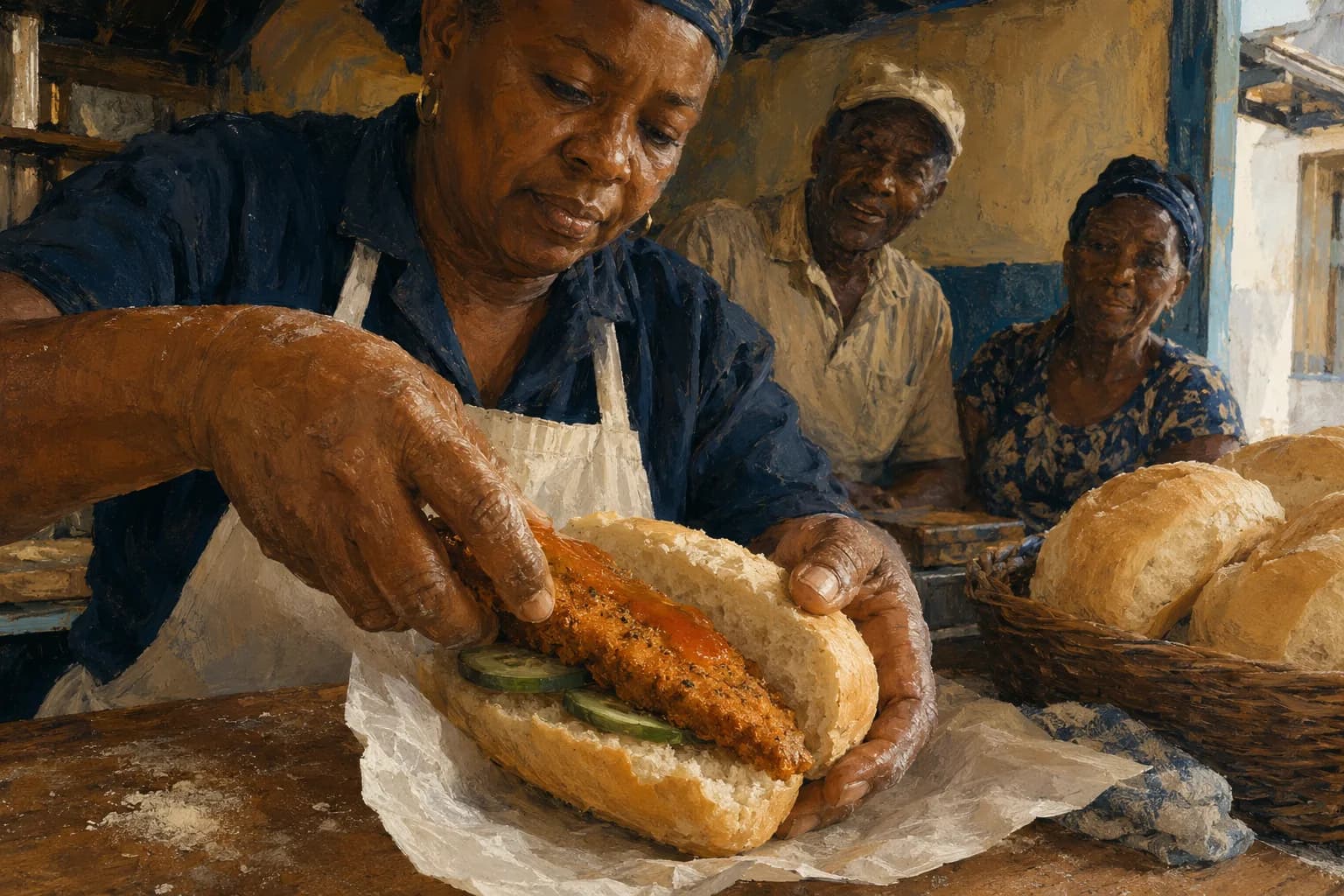
Picture quarter past twelve on a weekday, when the line at a neighbourhood counter settles into its familiar order: the man from the hardware store, two women from the government office up the road, a fellow in paint-flecked overalls, a schoolboy sent with exact money and instructions. What they are waiting for is a cutter — a salt bread roll, dense and slightly sweet, split and filled with fried flying fish, or ham, or cheese, or egg, dressed with Bajan pepper sauce applied at a personal risk tolerance the counter lady has memorized for her regulars. Nobody in this line is having an experience. Nobody will photograph anything. They are having lunch, the same lunch as last Tuesday, and that is precisely the point.
Food writing about Barbados tends to reach for the festival plate and the fine-dining strip. But the truth of Bajan food culture lives here, in the everyday favorites — the dishes eaten so routinely that locals barely think of them as cuisine at all. And it is exactly that routineness that makes them the real record of the place.
The everyday canon
Start with the cutter itself, because the cutter has laws. The bread must be salt bread — the Bajan roll with the crisp shell and soft crumb, from a bakery that has been making it since before anyone can establish — and a cutter made on any other bread is a sandwich, which is a different and lesser thing. Fish cutters reign, but the ham cutter and the bread-and-two (salt bread with two fish cakes wedged in, the working person's masterpiece) hold their own dominions.
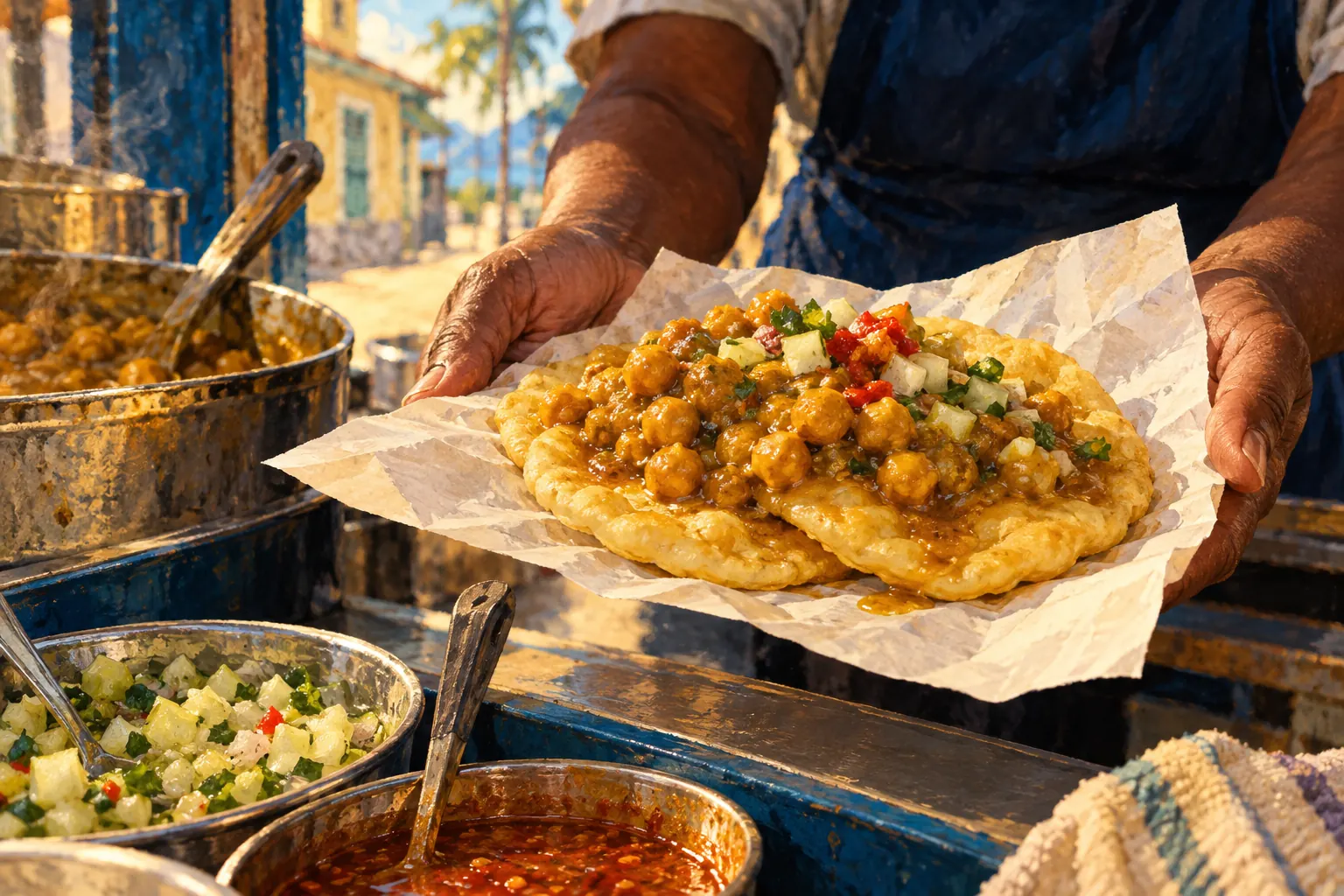
The fish cakes deserve their own paragraph: salt fish beaten into a seasoned batter with herbs and pepper, fried into golden knuckles, sold by the bag at rum shops, bakeries, bus stands, and any gathering of more than four Bajans. They are the national snack, the church-function currency, the thing every household makes and every household makes differently, and the standard by which somebody's grandmother is publicly ranked.
Then the flag dish: flying fish and cou-cou — the fish steamed down in a Creole gravy of tomato, onion, and thyme, laid over cou-cou, the cornmeal-and-okra turn that must be stirred smooth with the wooden cou-cou stick and served with a well of gravy pressed into its crown. It is the national dish, but note when it appears: Friday, classically, in ordinary homes and ordinary lunch spots — a weekly rhythm, not a performance.
And Saturday belongs to pudding and souse, which is not a dish so much as an institution with a fixed day of the week. Souse — pickled pork, lime-bright, with cucumber, onion, and pepper — beside pudding, the steamed sweet-potato preparation, collected at the same vendor or shop every Saturday by people who would sooner switch banks than switch souse ladies. Say "souse" to a Bajan abroad and you have not named a food; you have named Saturday itself.
The rum shop and the village bakery
Everyday food depends on everyday institutions, and two remain especially important in Barbados.
The rum shop — and there are said to be more rum shops than churches on an island with a great many churches — is wildly misnamed for a visitor's purposes. Yes, rum is sold and dominoes are slammed. But the rum shop is also the village's lunch counter, corner store, parliament, and archive: the place where a cook in the back sends out plates of the day's food, where fish cakes appear in the afternoon, where the news of the district is processed at the same tables it has been processed at for fifty years. A rum shop lunch — whatever the pot has, a cold drink, twenty minutes of the ongoing conversation — teaches more about Barbados than any curated tour.
The village bakery is the quieter partner: the source of the salt bread on which the entire cutter economy rests, plus turnovers, lead pipes, and the sweet breads of the Bajan afternoon. These are businesses of astonishing continuity — same families, same ovens, same four o'clock smell drifting down the same road — and their persistence is the infrastructure of the everyday canon. No salt bread, no cutter. No cutter, and Barbados would need to be reinvented.
The seasoning is the signature
Running under all of it is Bajan seasoning — the green, herb-dense marinade of scallion (eschallot, a Bajan will say), thyme, marjoram, onion, garlic, pepper, and lime that goes into and onto essentially everything with the ambition of being eaten. Families blend it differently, and cooks defend those differences with the seriousness reserved for inheritance. Jars of it are ground on Saturdays, stored like currency, and packed — this is not a metaphor, this is luggage inspection fact — into the suitcases of departing relatives, because Bajan seasoning is the transportable soul of the kitchen. The island's flavor is not a restaurant secret. It is a household argument, bottled.
What Bajans abroad miss first
Ask Bajans in London, Brooklyn or Toronto what they miss, and everyday foods often surface before the festival plate. It is the salt bread — genuinely difficult to replicate, mourned with real feeling, approximated with hard dough bread and honest disappointment. It is Saturday souse, faked at home for special occasions but never casual again, never collected on the way past. It is the particular fish cake of a particular shop. The diaspora rebuilds what it can: seasoning shipped or packed within customs rules, fish cakes fried for every christening, cou-cou managed when the okra can be found. But the everyday foods were never only recipes — they were routines attached to places and days — and a routine is the one ingredient that cannot be posted in a barrel.
Which is the final argument for paying attention to them. The festival plate tells you what a place celebrates. The everyday plate tells you what it is — how it works, eats, waits in line, and organizes its Saturdays. Visitors and returning families who want the honest version of Barbados should skip one show meal and instead ask a simple question: where do you eat when it's just a normal Tuesday? Then go stand in that line, behind the man from the hardware store, and order what he orders.
The pepper sauce is a choice. The ordinary meal is the point.
Editorial note
LuxTuris original
This is evergreen editorial context from the LuxTuris desk, not live breaking news or invented social proof.