The Cup in the Yard: Bush Tea and Caribbean Memory
The names of bush teas carry family knowledge. Their medical effects and safe use still require evidence.
Kellan Vail · May 25, 2026
Updated September 23, 2026
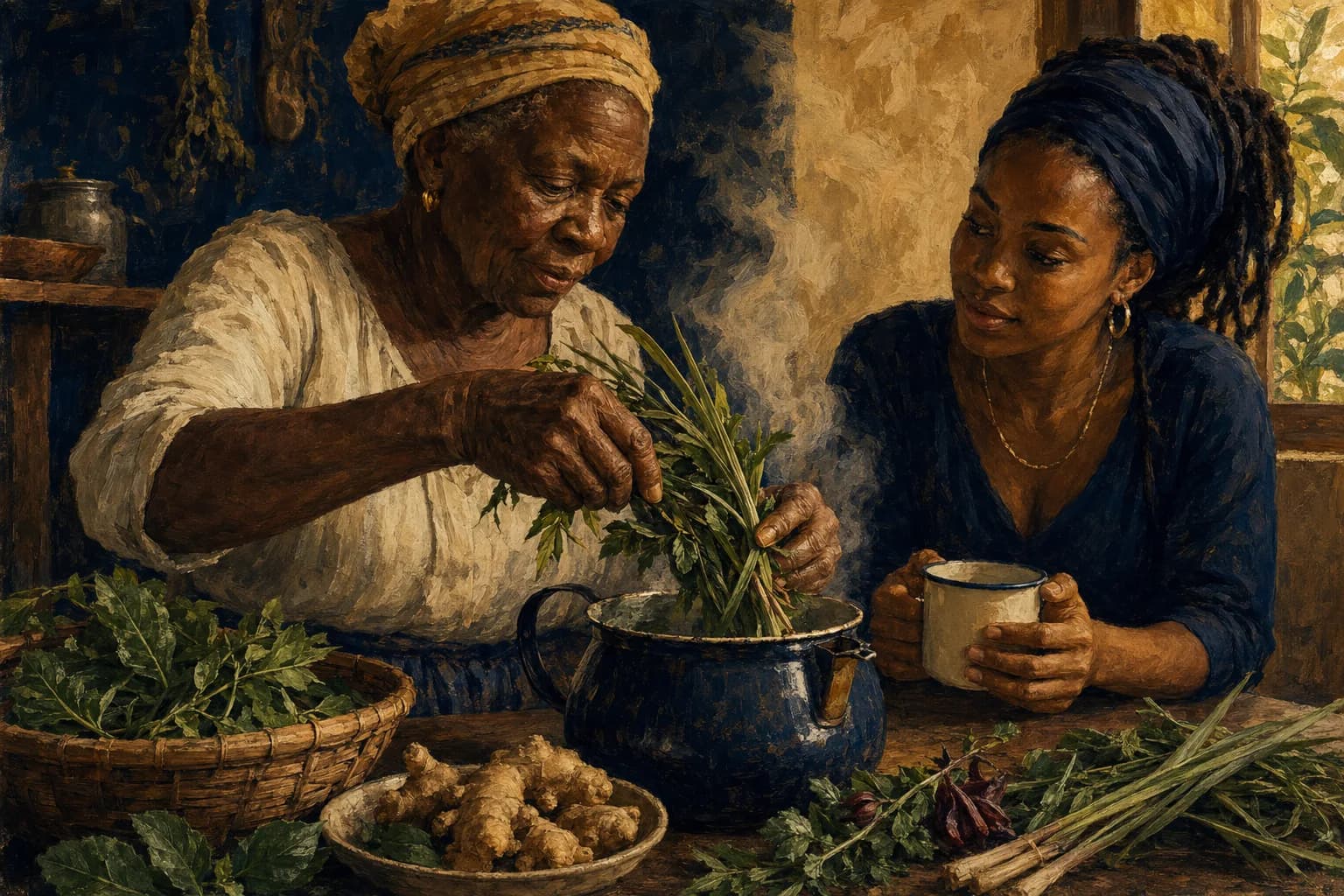
Bush tea can be a way of looking after someone. A relative names a plant, remembers who grew it, and makes time to prepare a cup. The gesture may carry family history as clearly as its taste. It can also be mistaken for medical proof. A practice can be culturally important without establishing that a particular herb treats an illness or is safe for everyone who drinks it.
Names that travel
Cerasee, fever grass, ginger, peppermint, lime leaf and soursop leaf appear in a University of the West Indies study of bush teas consumed by households in central Jamaica. Those names are familiar across parts of the Caribbean, though the plants people use and the ways they prepare them differ by island, family and circumstance. Saying which plant belongs to a particular home requires talking to that home's keepers, not inventing a grandmother's recipe.
Jamaica's African Caribbean Institute has documented the passing on of herbal knowledge through families. The cultural record includes more than plant names. People learn what a relative called a leaf, where it grew and who showed them how to prepare it. Migration can change that chain: a familiar plant may no longer grow nearby, while dried bundles and packaged teas become available in shops. These are ways of carrying a practice, not a guarantee that every family uses the same method.
Knowledge and limits
The University of the West Indies study measured cadmium in plants and hot-water brews collected from particular Jamaican communities. The researchers found that the estimated contribution from a cup was below the provisional tolerable weekly intake they examined, while some plants exceeded the concentration recommended for medicinal plants. Those results do not certify bush teas generally as safe. They show why the plant, its growing conditions and its preparation matter.
The institute's public guidance also urges caution with medicinal plants. Some can interact with medicines or be unsuitable for a person with a particular condition. Tradition alone cannot establish an effective dose or rule out harm. This article offers no recipe, dosage or treatment recommendation. If someone is pregnant, takes medication, is caring for a child or has a health concern, a qualified clinician or pharmacist is the appropriate source for individual advice.
What the cup can still mean
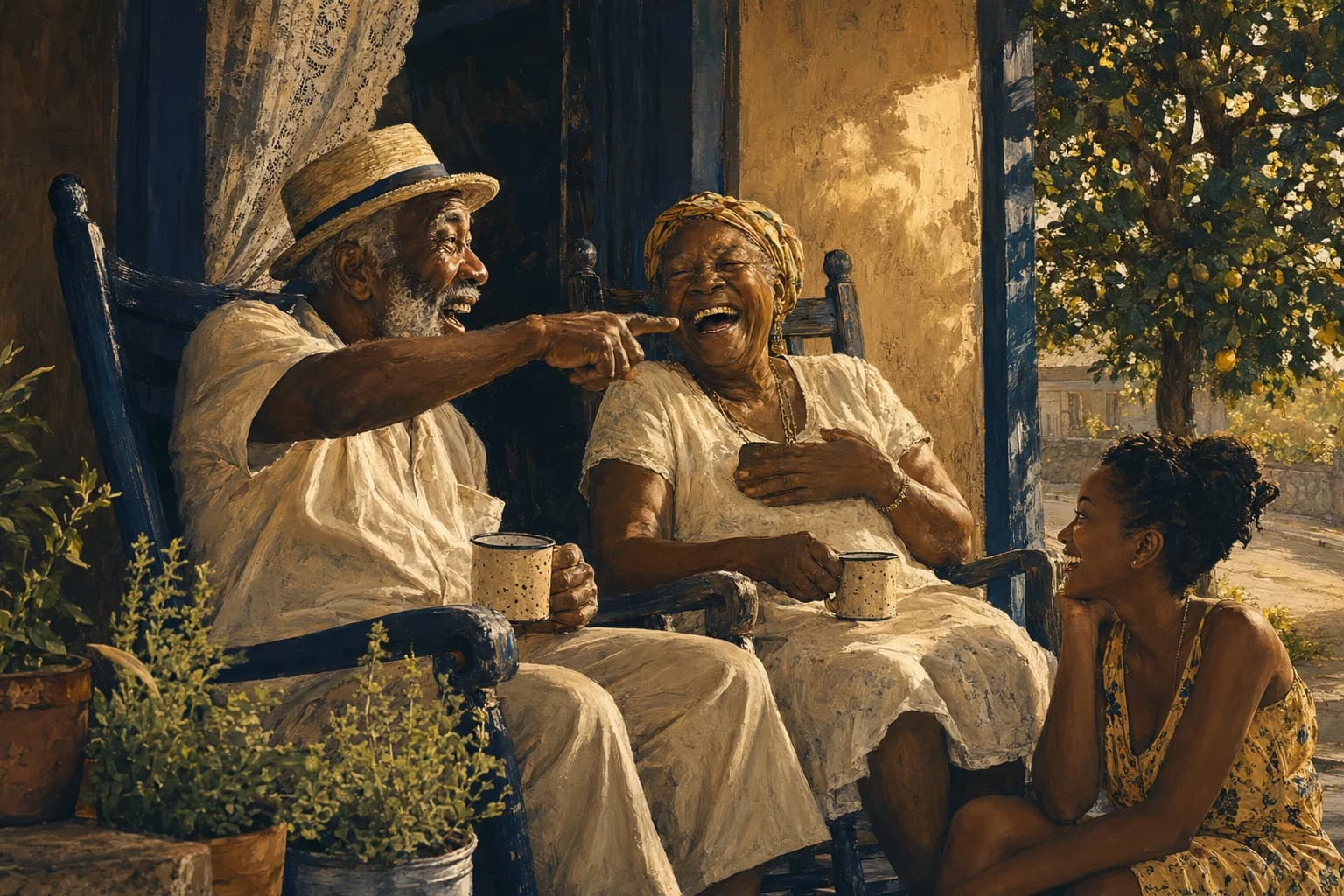
A cup may represent attention, hospitality and the memory of a yard even when no medical claim is made for it. That meaning is worth documenting on its own terms. It asks us to listen to the people who hold the knowledge, record differences between households, and leave room for evidence to test claims about health.
The strongest way to honor bush tea is to keep both kinds of care in view: respect for a living tradition and care in what we tell readers it can do. Neither a story about a plant nor a loved one's confidence makes a diagnosis. The memory remains valuable without asking it to carry that burden.
Sources and further reading
See an error? Send a correction.