Freedom in the Pot: Soup Joumou and Haitian Memory
A Haitian Independence Day tradition that turns a once restricted dish into a shared symbol of freedom.
Kellan Vail · May 17, 2026
Updated September 23, 2026
On January 1, Haiti marks its independence with soup joumou. The bowl carries two histories at once: a dish associated with the colonial table, and a tradition Haitians made their own after winning freedom from France in 1804. UNESCO describes the soup as a symbol of dignity, resilience, and belonging. Its place on the first morning of the year gives that history a recurring place at the table.
A dish claimed as freedom
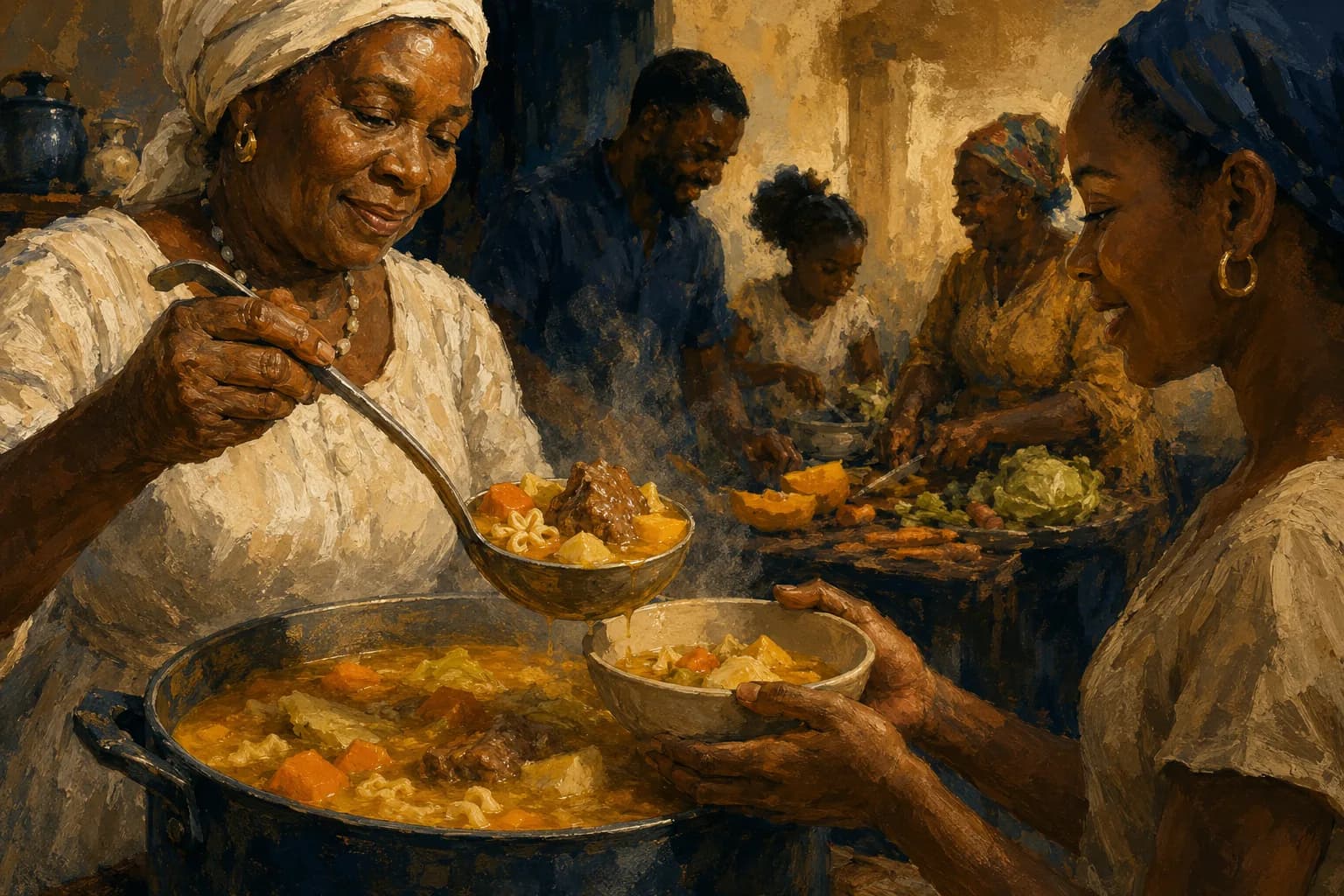
Joumou is a Haitian soup made from giraumon, a Caribbean variety of squash, with vegetables, plantains, meat, pasta, and spices. UNESCO's account says the dish was originally reserved for slave owners. After independence, Haitians took ownership of it and made it a symbol of their freedom. The point is the change in who could prepare, share, and enjoy the meal.
The soup is bound to January 1, the anniversary of Haiti's 1804 declaration of independence. UNESCO describes it as the first meal of the year and also as a traditional Sunday breakfast. Calling the soup a national holiday confuses a dish with the day it commemorates. Independence Day is the holiday; soup joumou is one of its most visible and meaningful traditions.
The work of making it
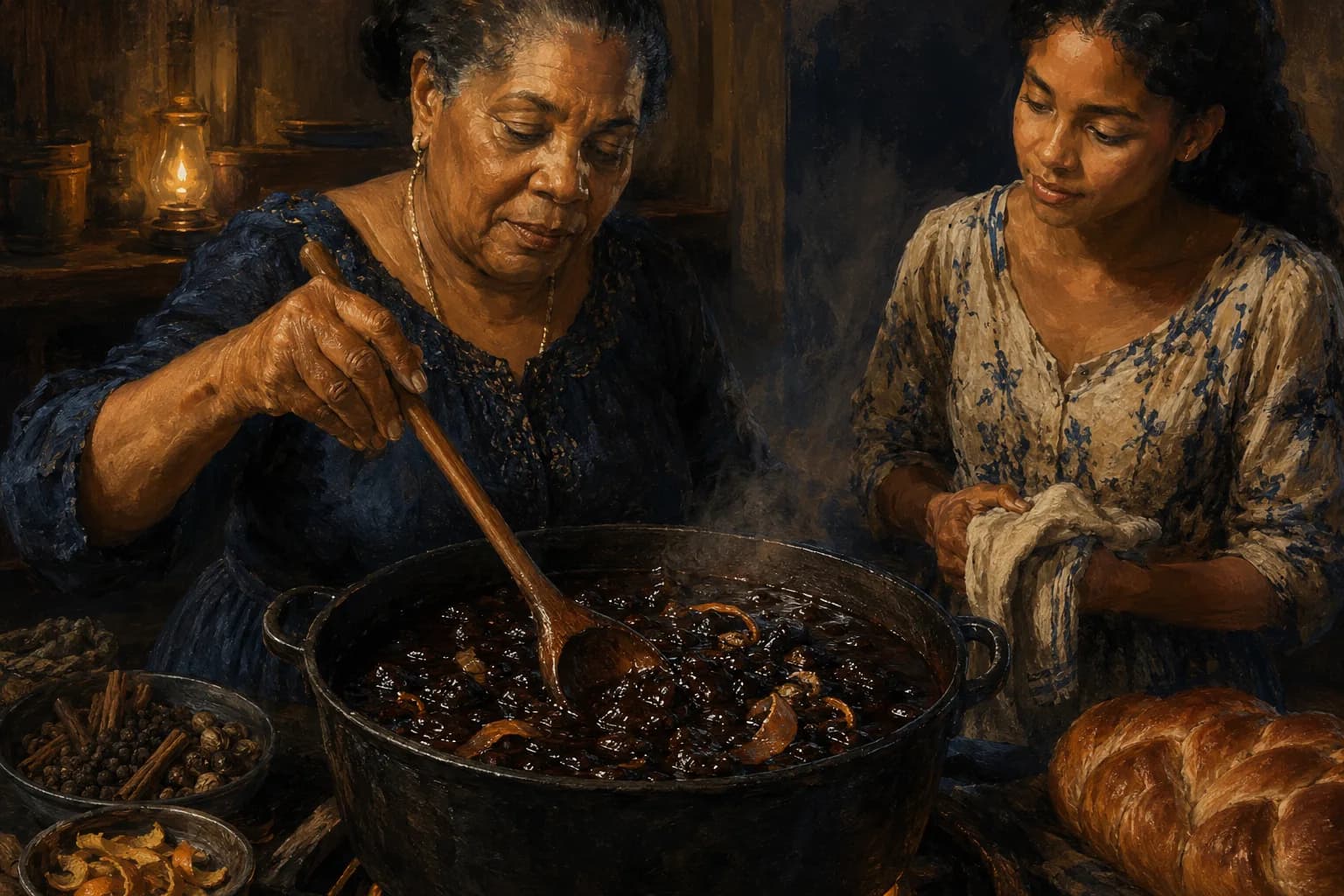
A bowl begins long before it reaches the table. Vegetables must be prepared, the squash cooked, ingredients combined, and a large pot tended. UNESCO describes the preparation as a family and community affair and notes that recipes are passed on mainly at home, as well as through books, cooking schools, social networks, and public events. The knowledge lives in repeated practice as much as in a written list of ingredients.
There is room for variation. UNESCO names the dish's main ingredients but does not prescribe a single definitive recipe. One cook may emphasize a particular vegetable, another the texture of the squash or the balance of spice. Those choices matter because a living food tradition changes hands while retaining the link between its preparation and the day it marks.
What recognition can do
In 2021, UNESCO added joumou soup to the Representative List of the Intangible Cultural Heritage of Humanity. The inscription recognized a practice already sustained by Haitian communities. The committee's decision describes the soup's role in social cohesion and the transmission of culinary knowledge. Recognition can make the tradition more visible to people outside Haiti, but its meaning comes from the people who continue to prepare and share it.
The inscription also locates the dish within a longer Caribbean history. UNESCO notes that giraumon was cultivated by the Indigenous peoples of the region. In the soup, that ingredient belongs to a Haitian practice shaped by colonial rule, revolution, and generations of cooks. Keeping those layers in view makes the dish more specific than a shorthand for resilience alone.
The first meal of the year
January 1 returns each year, and so does the opportunity to make and share the soup. The calendar does not make every household's experience identical, and no single bowl can stand for every Haitian. Yet the practice connects an ordinary act of cooking with an extraordinary political anniversary. A dish once associated with exclusion became a way to mark freedom in company.
That is why the soup's place at the table matters. It does not require a reenactment of a particular meal in 1804 or an invented account of who first served it. The documented tradition is strong enough: Haitians claimed the dish after independence and continue to prepare it for Independence Day. The history is present each time the pot is made, shared, and remembered.
Sources and further reading
See an error? Send a correction.