The Language of Home: Creole, Identity, and Caribbean Confidence
Jamaican, Haitian, Saint Lucian, and Aruban language stories show distinct paths to public recognition.
Kellan Vail · May 21, 2026
Updated September 24, 2026
There is no single Caribbean Creole language. Jamaican Creole, Haitian Kreyòl, Saint Lucian Kwéyòl, and Papiamento have different histories, communities, spelling practices, and positions in public life. Calling them by name is the first step toward taking each seriously.
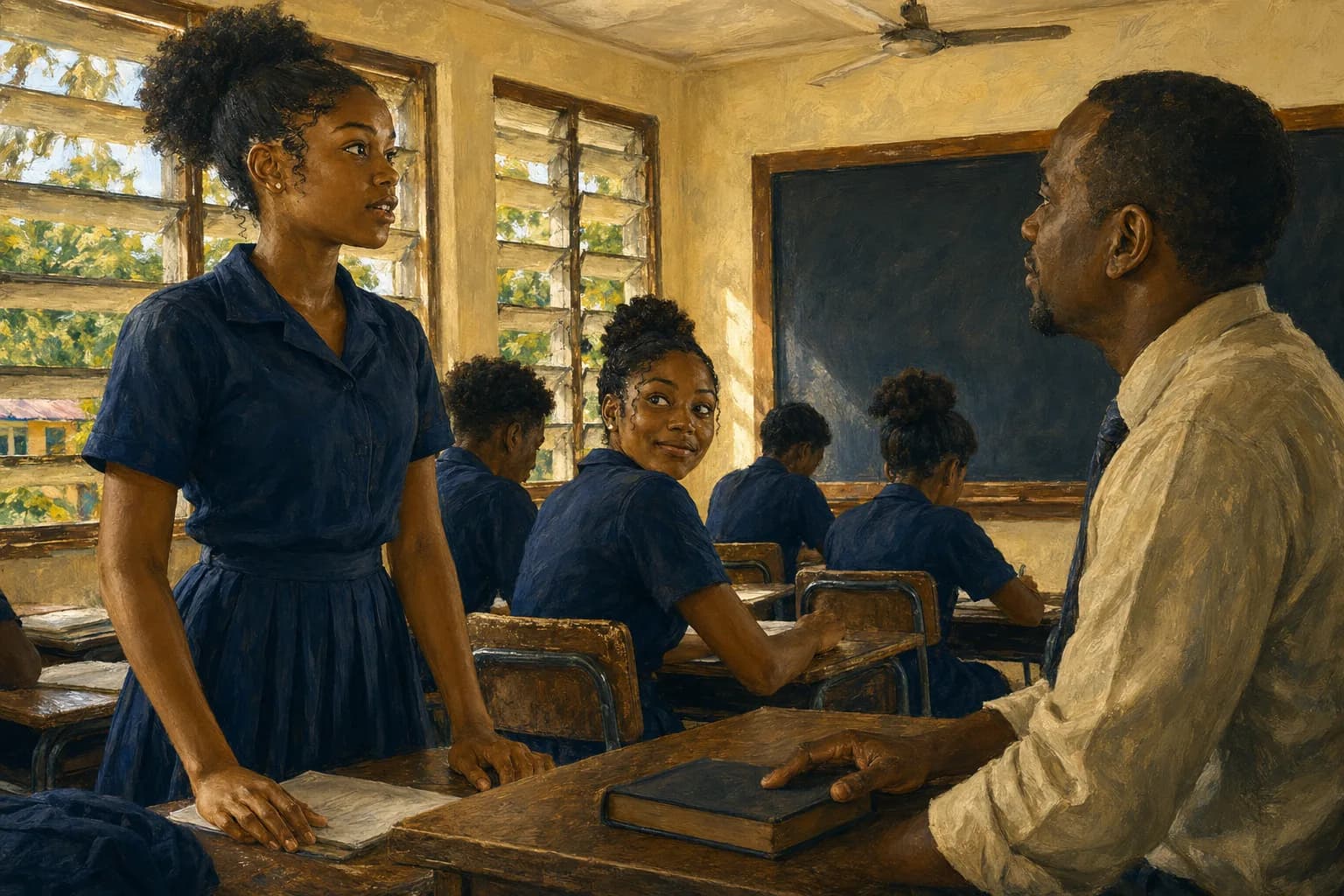
In Jamaica, the National Library's exhibition on Louise Bennett-Coverley records how Miss Lou made Jamaican language central to poetry, theatre, and performance. At the University of the West Indies, the Jamaican Language Unit has worked on bilingual education. These are concrete examples of language in art and teaching. They do not mean Jamaican Creole has the same legal status as every other language discussed here.
Haitian Kreyòl has a different institutional position. UNESCO's education work describes Kreyòl alongside French in Haiti's school and public-language questions. Recognizing a language in law does not by itself settle whether every child can learn in it with adequate materials and support. Policy and classroom experience must be examined separately.
On Aruba, the tourism authority notes Papiamento's official recognition alongside Dutch in 2003. In Saint Lucia, government accounts of Jounen Kwéyòl and Creole Heritage Month show organized efforts to celebrate and preserve Kwéyòl. These are separate stories of public recognition. A festival, an education initiative, and official-language status are not interchangeable.
Caribbean language discussions also include languages outside the Creole category. Garifuna, for example, is an Arawakan language according to UNESCO. Putting it on a list of Creoles would misdescribe it. Care with labels honors people whose language histories do not fit a broad regional slogan.
A person may speak a heritage language fluently, understand some of it, be learning it, or have no access to it at all. Diaspora family histories are equally varied. Confidence grows when speakers and learners can meet a language without shame, but no child owes fluency as proof of belonging. Listen to the communities using these languages now: their poems, lessons, policies, and everyday choices tell richer stories than a single imagined encounter ever could.
Sources and further reading
See an error? Send a correction.