The History in the Shoebox: Caribbean Family Albums as Archives
Family photographs can preserve names, places, and choices when the people who know them add context.
Kellan Vail · May 8, 2026
Updated September 24, 2026
A family photograph can answer a question only if we know enough about it. Who is in the frame? Where and when was it made? Who kept it, and why? A portrait might record a migration or a celebration, but the image alone cannot tell us which one. Begin with what is visible, then ask the people who know.
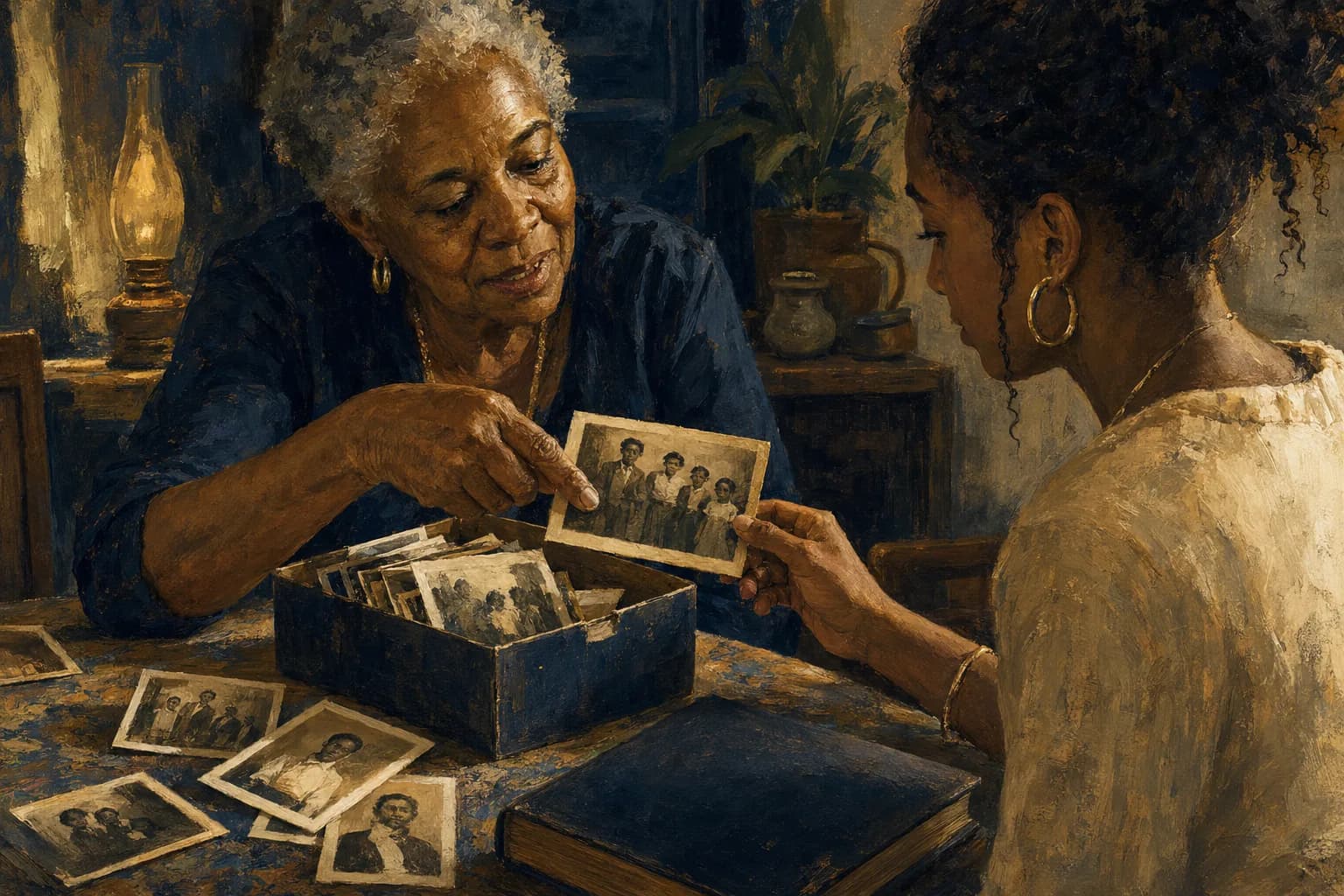
Albums, loose prints, and digital images can preserve details absent from other records. A photograph of a kitchen, school, family gathering, or arrival may help a relative recall names and places. Memory is evidence of how someone understands a moment; label that account with the speaker and date rather than presenting every guess as settled fact.
The U.S. National Archives advises people digitizing family photographs to capture identifying information such as who, what, where, and when. It also advises keeping the originals after scanning: digital files can be lost. A photograph of the back may preserve writing and a studio mark that a cropped image leaves out.
Handling matters. The Library of Congress recommends suitable storage for photographs and careful attention to materials and conditions. Do not force a fragile album flat for scanning. Move treasured originals away from harsh light and unstable storage, and seek a conservator's advice if they are damaged.
For digital copies, use descriptive file names, keep multiple backups, and note who has the files. The National Archives describes a three-copy, two-media, one-off-site backup approach. A family can adapt the principle to the tools it trusts. A messaging thread is a convenient way to share a picture, but it is not a complete preservation plan.
Ask before recording someone's memories or posting an image of other people. Some photographs contain private circumstances, and a family may disagree about what should be public. The point is to keep both the picture and its context available to the people entitled to them. An afternoon spent identifying a few images carefully is a good beginning, without pretending every shoebox tells the same story.
Sources and further reading
See an error? Send a correction.