Writing for the Road: The Hidden Craft of Soca Songwriting
Calls, choruses, rhythm, and arrangement help some soca songs meet the crowd, while writers use many other approaches too.
Kellan Vail · May 19, 2026
Updated September 24, 2026
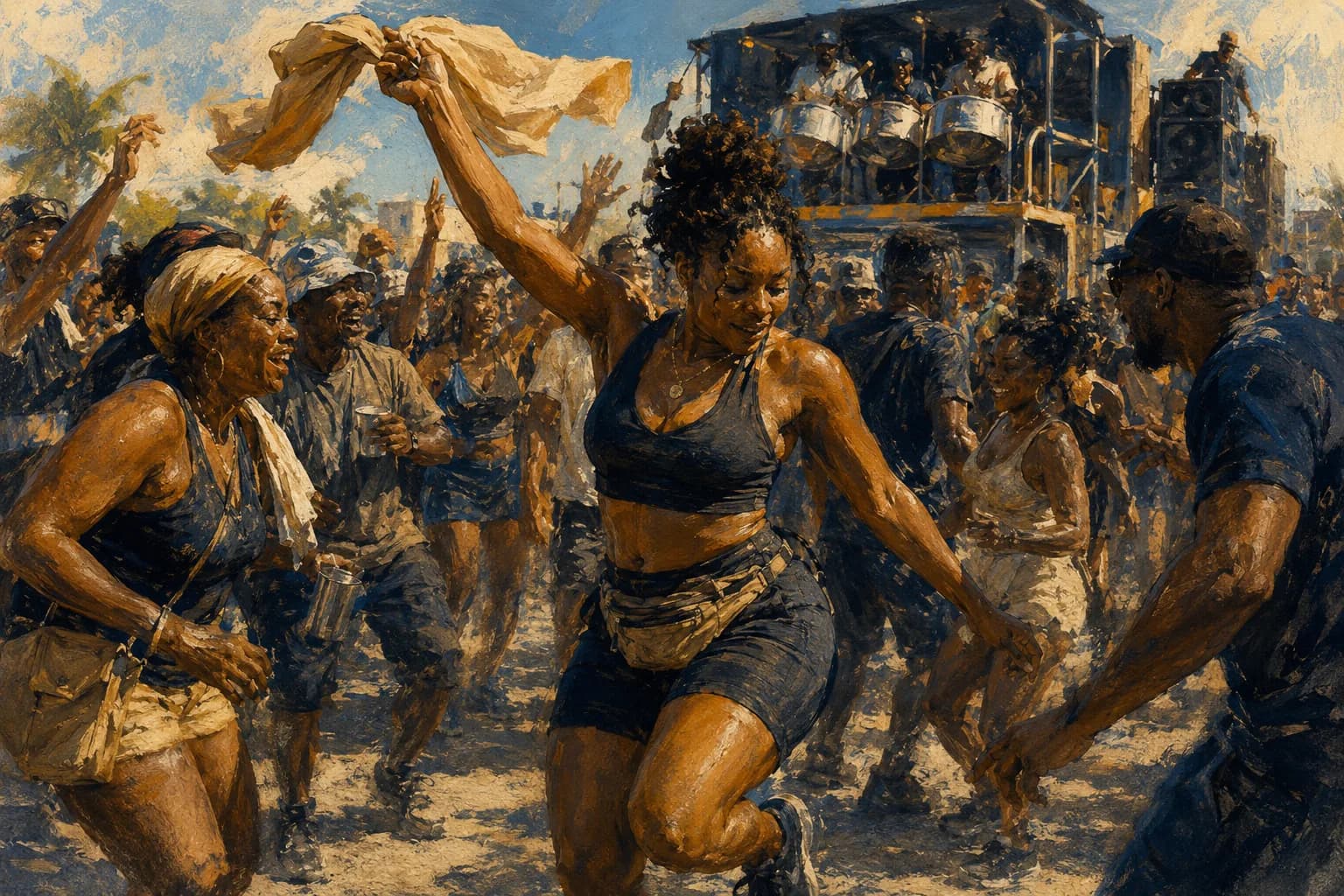
A phrase designed for a crowd may look plain on a page and sound different when thousands of people sing it back. That is one possible strength of soca songwriting. The melody, arrangement, performer, band, and audience all affect whether a call becomes a shared moment. No single formula governs the genre.
A University of the West Indies essay places Superblue's 1991 recording of Get Something and Wave in a longer history of fete singers, crowd chants, and rhythms. It explicitly names predecessors who developed those devices. Superblue's record became an important example of this approach; saying he invented or patented every instruction song would erase the work that preceded it.
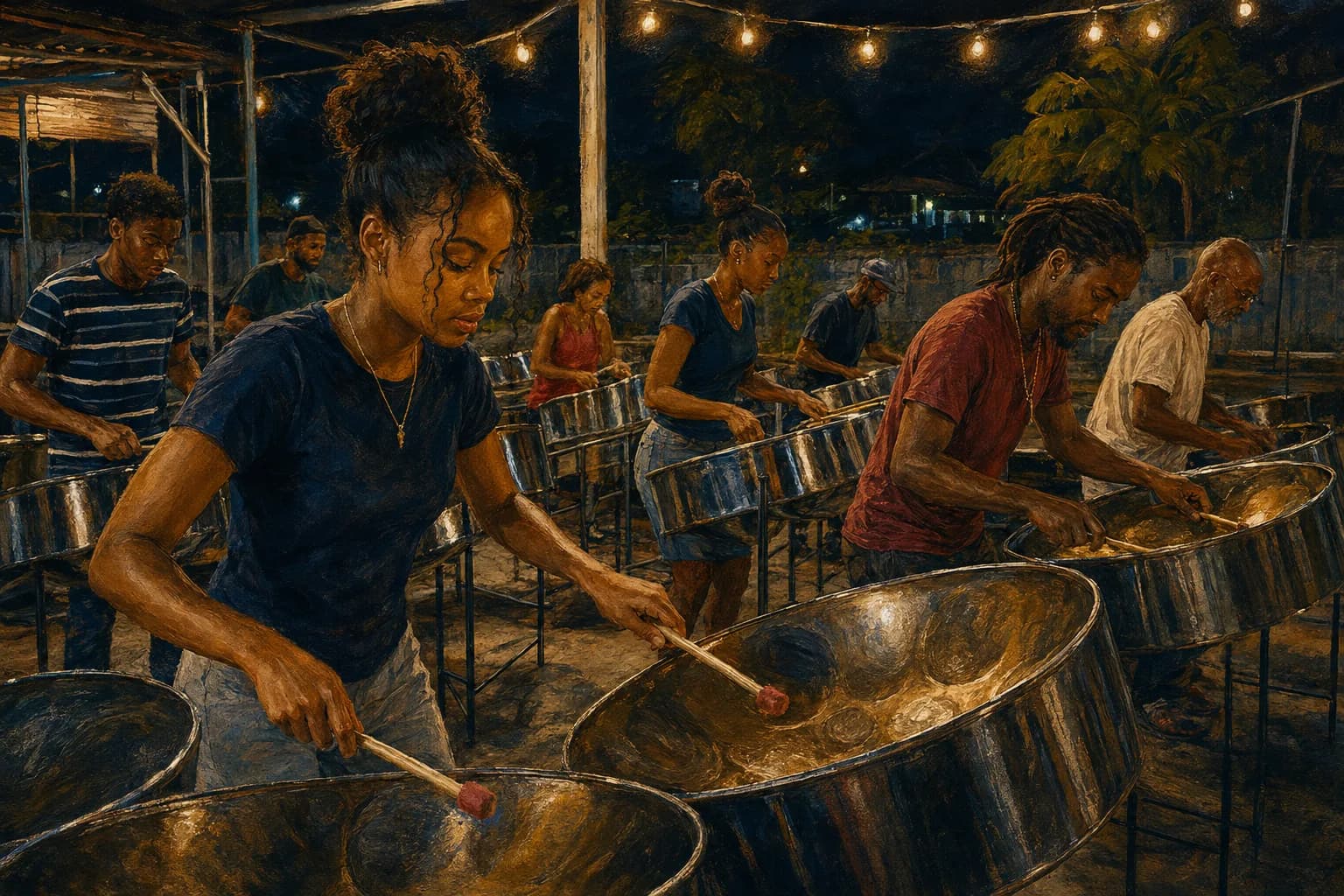
Repetition can give a crowd a place to enter a song. A short call may leave room for an answer, while a change in drums or harmony can create contrast before a chorus returns. Those are listening observations rather than a universal production recipe. They also depend on what musicians actually play and how people respond in a particular setting.
The same UWI account explains that power soca and groovy soca became labels for different approaches to pace, with the marketing distinction taking shape later. Faster is not automatically better suited to a road event, and a slower song need not be less forceful. Shadow's music, discussed in the essay, complicates that easy divide.
Soca writing also includes stories, humor, personal feeling, and commentary. Trinidad and Tobago's National Library situates soca in the wider calypso tradition, which has long made room for social observation. Writers may address a masquerade, a particular person, or a listening audience beyond Carnival. An analysis that recognizes only commands misses much of the writing.
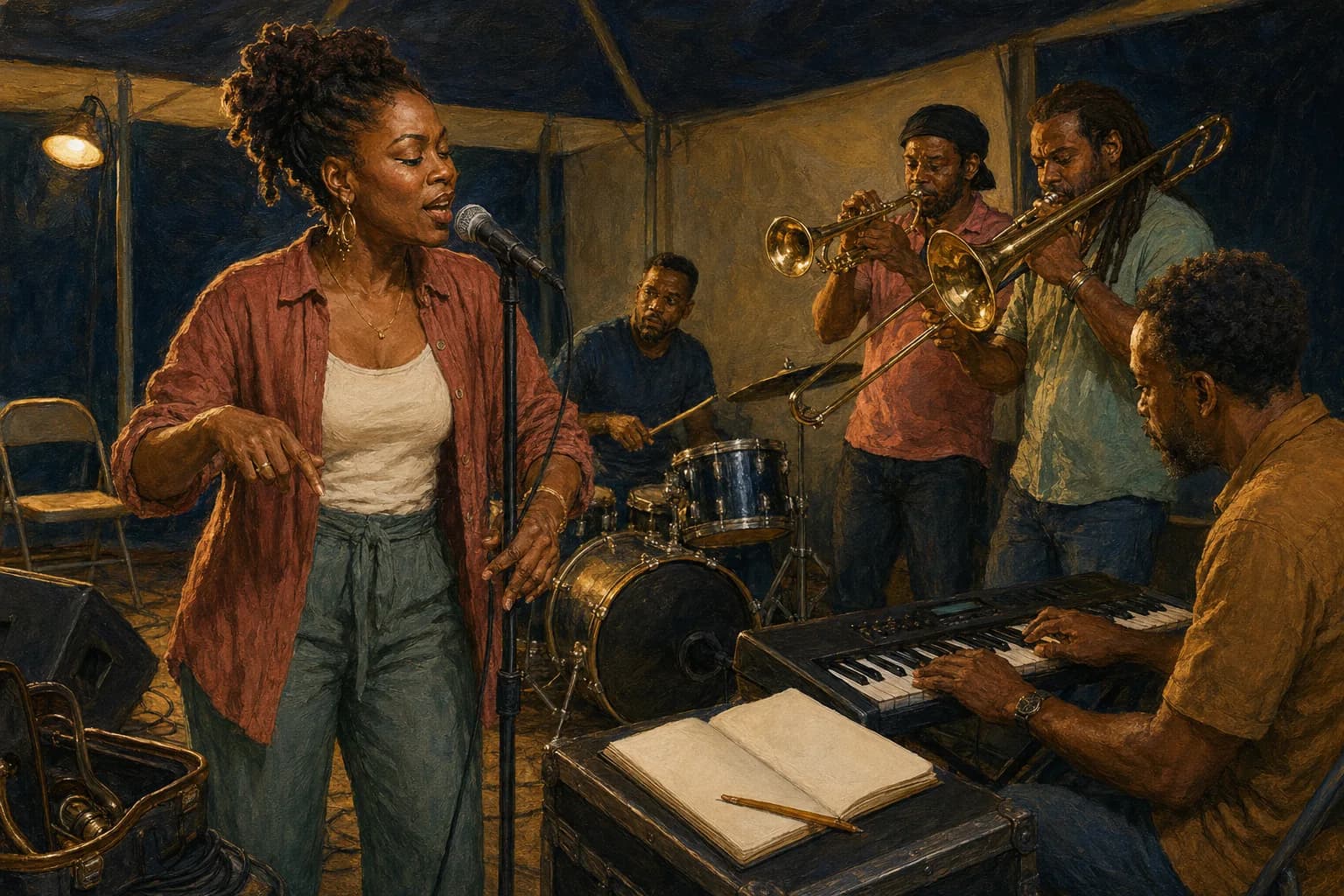
Follow a song beyond its hook: credit the writers and producers, hear the recording and a documented live performance, and notice where singers invite a reply. The craft is shared across a team. An imagined songwriter on a truck cannot show what that team actually did.
Sources and further reading
See an error? Send a correction.