
The Beat Went Global. Did the Credit Go With It?
Caribbean music crosses borders with astonishing ease. Getting every creator recognized for the work behind it is a different kind of journey.
Kellan Vail · October 15, 2026
Updated October 15, 2026
A song can travel farther in a weekend than its maker may travel in a lifetime.
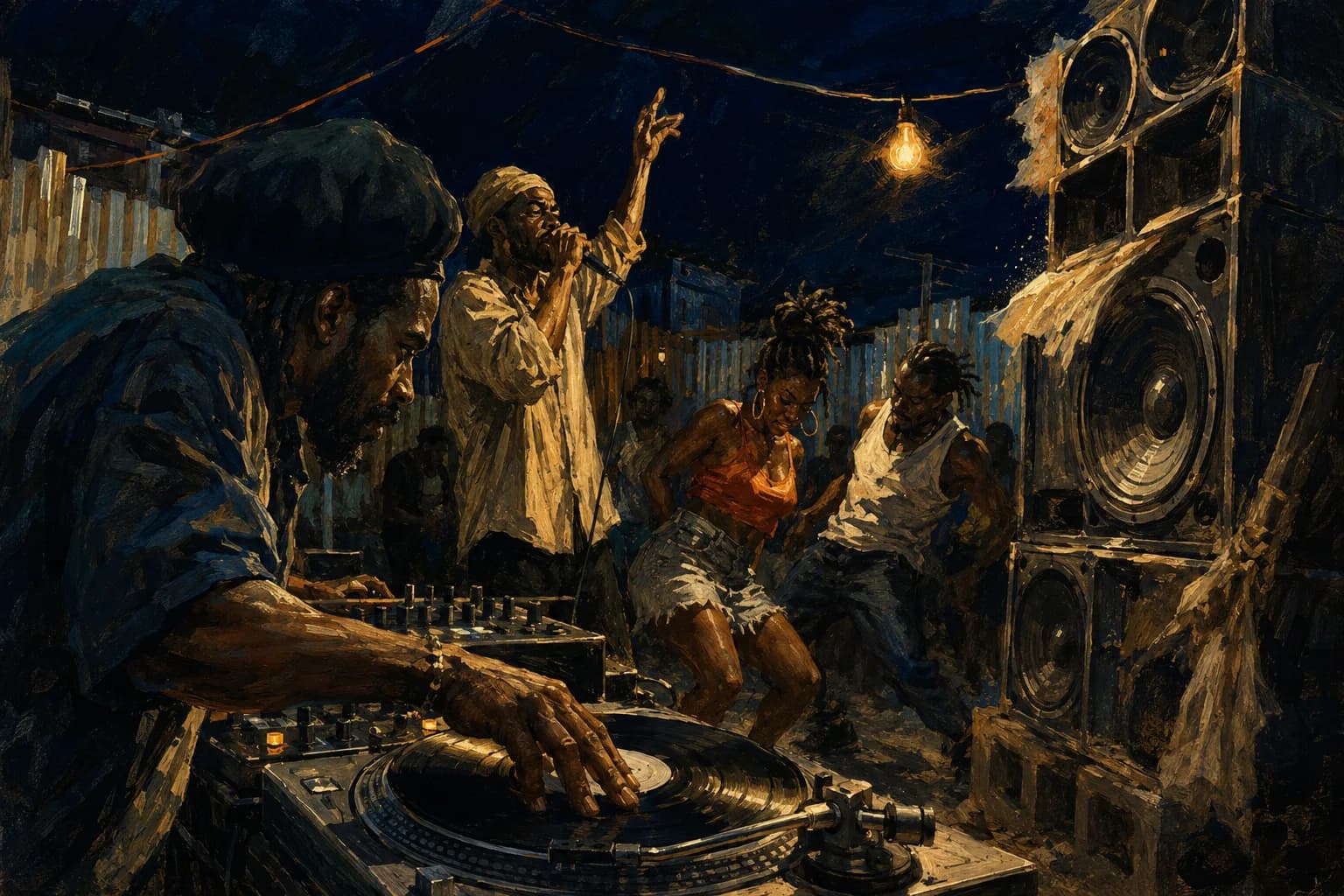
A rhythm leaves a studio, finds a dance, moves into a new recording and eventually reaches an audience that has never heard of the place where it began. The listeners may know the hook by heart. They may even know the singer. What is much harder to hear is the list of people whose decisions made the record possible.
The producer. The songwriter. The arranger. The musician who changed how a passage felt. The engineer whose contribution gave the recording its shape. Their roles are not identical, and not every role automatically creates the same legal entitlement. But the distance between a famous song and an invisible contributor raises a question Caribbean music has lived with for decades: when the sound goes everywhere, do the people behind it go anywhere with the money or recognition?
It is the kind of question that can turn quickly into a familiar online argument. Someone hears an international hit, recognizes a Jamaican influence and declares that something must have been stolen. Sometimes there is a rights dispute worth investigating. Sometimes the connection is stylistic. Resemblance alone cannot tell us which. What can tell us more is the less glamorous record of who made, owned, registered and licensed the music.
There is an unexpected amount of culture hiding in that paperwork.
The moment an idea becomes somebody's record
The World Intellectual Property Organization visited Jamaica in May 2026. During the visit, Director General Daren Tang met with leaders and creative-industry representatives, and WIPO reported an agreement to work toward a national intellectual-property strategy. The discussion included technology, entrepreneurship and creative industries.
That is significant, but not because a meeting instantly changed who gets paid. A proposed strategy is not an enacted statute or a cleared royalty account. Its importance is the question it puts in public view: how can an economy famous for cultural invention build systems that recognize the value of invention?
For a young music maker, the answer begins much earlier than government policy. It begins before the song is released, when the people in the room still remember who contributed what.
Consider how many things we collapse into the single word song. There is the composition, with its music and lyrics. There is a particular recorded performance. There may be a master recording controlled under a separate agreement. There are licences, distribution arrangements, publishers and rights-management organizations. WIPO explains these distinctions in its guide to music intellectual property. They are not a maze invented to keep artists out. They are different pieces of a complicated creative object.
Imagine a producer and a vocalist collaborating on a track. That is a hypothetical example, not a reported session. If they agree about the sound but never clarify their writing roles, their master agreement or whether any sampled audio was authorized, enthusiasm can outpace the record of what they actually made. The unanswered questions do not disappear when the file is uploaded. Success can make them more expensive.
And then there is the instrument that every music maker should learn to take seriously: the registration form.
A remarkable little form in Jamaica
Visit the Jamaica Association of Composers, Authors and Publishers website and look at its Notification of Works form. Beneath the familiar fields for song title and stage name are questions that refuse to let creativity remain vague. The form requests an International Standard Recording Code, named rights holders, and percentages for performing and mechanical rights.
The fields are deceptively ordinary. Each asks a creator to turn a conversation or agreement into something traceable.
Who wrote what? Who is claiming which share? Under what name should the work be recognized? Those answers are not automatically supplied by the loudest person in a room or the artist whose face appears on a cover. They need to be determined with the people who did the work and supported by relevant agreements.
The form has also stepped directly into a new cultural argument. It asks whether AI tools contributed to the work, whether the work was entirely AI-generated and which creative tasks involved AI. JACAP states in its declaration that a fully AI-generated work may be recorded for reference but is not eligible for its royalty distribution under its policy. That is a rule stated by this particular organization, not a simple description of copyright law everywhere.
It is difficult to think of a clearer picture of where the music business stands. A Caribbean society built to recognize human creative work is now asking how to document creativity when machines participate in making it. The question of who did what is becoming more urgent, not less.
The name behind the rhythm
There is a powerful difference between being influenced by a tradition and using someone else's specific protected work. Dancehall's history includes riddims that have carried different vocal performances; their lineage can be traced through recordings, labels, producers and release credits. But hearing something familiar in a crossover pop song does not establish whether a sample was used, whether a composition was interpolated, or whether a licence was secured.
Those are factual questions. They deserve better treatment than a viral accusation.
A serious listener can begin by opening the credits on two related recordings. Name the writers and performers. Look for the producer and original label. Follow the recording back as far as the documentation permits. If a name is absent, resist filling the gap with a guess. The discovery is sometimes who appears in the record. Sometimes it is who does not.
A creator needs a similar habit, but with higher stakes. Keep a private record of the actual work, the full and stage names of contributors, their agreed composition shares, who controls the master, permissions for outside audio, and where those agreements are stored. Before a release, compare that record with the information sent to the distributor and relevant rights organizations. Any conflict is easier to resolve before the track is everywhere.
This is not an argument that paperwork makes art better. It is an argument that good art deserves a better memory than a disappearing group chat.
The sound is not the whole inheritance
The promise of global reach is enormous. Caribbean music can influence how people dance, dress, speak and hear popular culture without asking anyone at a border for permission. But influence is not a substitute for a reliable record of the individuals who made particular works. Nor is public recognition a guarantee of payment.
Jamaica's 2026 intellectual-property discussions may lead to future institutional changes. Existing registration and rights systems already give creators decisions to make today. They should make those decisions with accurate information, proper agreements and professional advice where needed, especially across jurisdictions.
The next generation of Caribbean musicians will inherit a world in which a track can be released to an international audience almost immediately. That is an extraordinary freedom. It makes careful attribution and ownership more important, because a song can leave home faster than a mistake can be corrected.
The beat may belong to the moment. The people behind it deserve a place in the record.
Sources and further reading
See an error? Send a correction.