
The Caribbean Is Not Waiting for AI to Define It
The technology can borrow our voices, organize our businesses and remix our culture. The question is whether Caribbean people will shape what it becomes.
Kellan Vail · October 15, 2026
Updated October 15, 2026
A machine can imitate the sound of a voice. That does not mean it understands what the voice is carrying.
It might produce a convincing recording, translate a sentence or generate a beautiful image of an island it has never seen. It may even give a confident explanation of a proverb whose meaning changes according to the speaker, the household and the moment. The output can look finished while the question underneath it is barely understood.
This is the tension at the heart of artificial intelligence and Caribbean culture. The technology is becoming easier to use. That does not mean the people whose language, music and histories help give the world its richness are guaranteed a say in how those things are represented.
There are two ways for a community to enter this new era. One is to become an endless source of material for systems developed elsewhere. The other is to build the skills, rules and institutions to decide what should be preserved, what should be shared and what should remain in human hands.
The Caribbean has already begun arguing for the second. The most revealing evidence comes not from a robot demonstration, but from people who work with words.
The word the machine almost understands
In February 2026, the United Nations in the Caribbean published a report on AI and translation. It drew on the expertise of people whose professional lives depend on understanding meaning across languages, including Dr Rossana Herrero-Martín at UWI Cave Hill, Eric Maitrejean at UWI St Augustine and translator Lyndell Logan-Salina.
The concern was not simply whether a computer could process sentences faster. It was what happens to meaning, register and cultural context when a machine treats translation as the movement of words between boxes. A term may have a formal meaning, a local meaning and a meaning that can only be understood through the situation in which it is spoken. Under-resourced Caribbean languages also face the problem of limited digital material from which systems can learn.
This is reporting by the UN, not interviews conducted by LuxTuris. But the underlying question is ours as much as anyone's. What happens when the technology can repeat the language of a culture more easily than it can understand the people who use it?
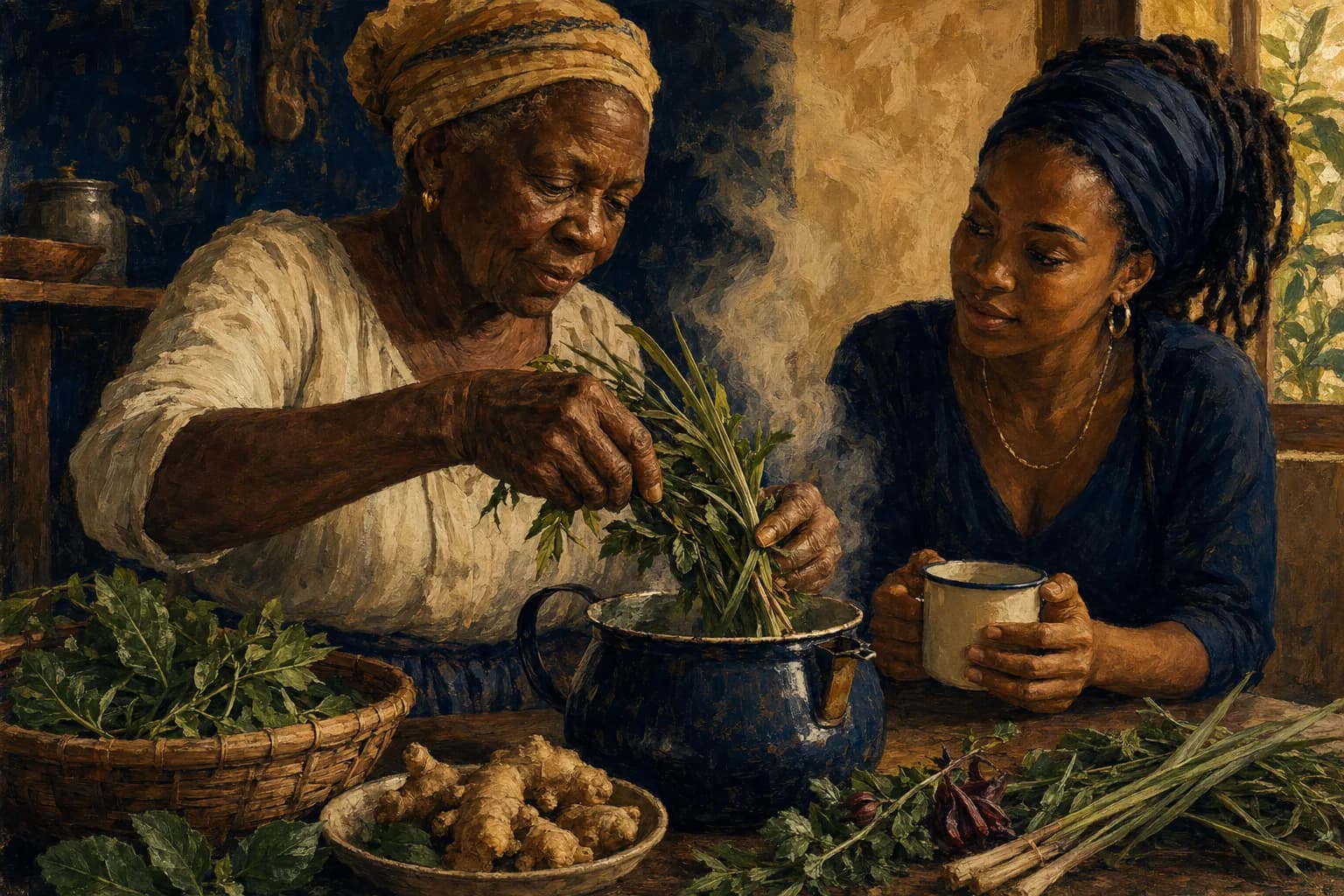
Think about a family recipe. To someone outside the household, it may be a list of ingredients and times. To the person teaching it, the recipe may also be a set of judgments: what the mixture should feel like, which substitution is acceptable, when to stop stirring, whose version is being remembered. A transcription tool can help save the instructions. A person who knows the recipe must decide whether the record is right.
That difference is not a failure of progress. It is a reminder of what progress must be answerable to.
The region is entering the conversation
In 2024, UNESCO published a Caribbean Artificial Intelligence Policy Roadmap. It did something that deserves more attention than another prediction about jobs: culture and creativity appeared among its central priorities, alongside governance, skills and resilience.
In July 2026, the roadmap received regional support from CARICOM's COTED-ICT. Later that month, a Caribbean AI Forum convened by the Caribbean Telecommunications Union and the University of the West Indies helped launch a task force report covering infrastructure, education, public services and economic change.
These are important public commitments. They are not evidence that a policy has been enacted everywhere, that a promised project has already changed lives or that access is equal between islands. Their significance is more basic: Caribbean institutions are trying to influence the conversation before the rules are written entirely for them.
At UWI St Augustine, the Artificial Intelligence Innovation Centre, inaugurated in December 2025, is another part of that effort. UWI reported work toward a Caribbean-focused AI model in February 2026, describing it as under development. The centre later announced an industry skills partnership with AMCHAM Trinidad and Tobago. The announcements point to work being attempted; they do not establish a product's release or the results of an unmeasured rollout.
There is an important shift in the attitude beneath these developments. The Caribbean is not simply asking how fast its people can learn to use somebody else's tool. It is asking what the tool ought to know, whom it ought to serve and who has the authority to correct it.
There is more to build than a better prompt
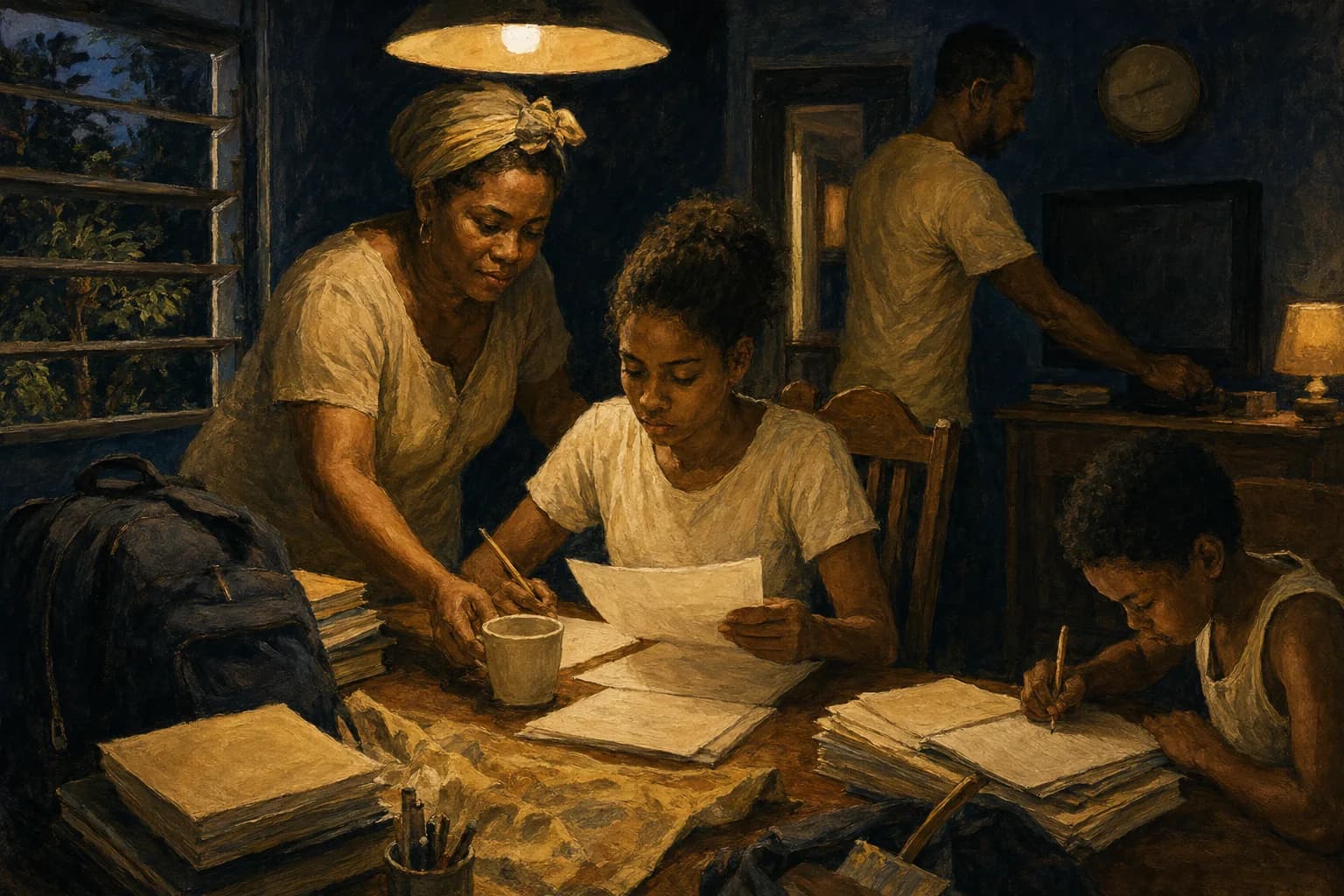
The first opportunities may look surprisingly small. A family has an audio recording it does not want to lose. A community organization has decades of photographs with names missing from the backs. A young Carnival organizer has a notebook full of tasks and no reliable schedule. A musician is trying to keep track of credits and permission for work that may travel across borders.
AI can assist with all of those tasks. But the responsible version of each begins with a human decision.
For a family archive, a consenting speaker can choose what is recorded, what a transcription service may process and who gets to keep or share the result. The best output is not the fastest transcript. It is the one the speaker has checked and corrected, with the original safely preserved.
For a cultural event, a tool can turn notes into a draft run-of-show or vendor checklist. That may save time. It cannot confirm the price of a venue, the accuracy of a safety rule or the terms in a contract. The organizer remains responsible for those facts. A useful schedule is one that someone can actually follow.
For a student or independent researcher, AI can generate an initial set of questions about a festival or an instrument. The real work begins at the library, in the records and, where permission allows, in conversation with practitioners. A bibliography with verified sources is worth more than a beautifully confident invented quotation.
The point is not to keep humans involved as a ceremonial gesture. Human knowledge, consent and judgment are what make the projects valuable in the first place.
Who gets to own the future?
AI has already made it easier to produce something that looks like cultural expression. A synthetic voice, an imagined heritage scene or a machine-generated song can feel familiar without having any relationship to the people it seems to represent. That creates opportunity for experimentation and plenty of room for confusion.
A culture cannot be protected by forbidding imagination. It can be treated with more seriousness, though. Know whose material entered a system. Decide whether the person agreed to that use. Give credit to human contributors. Clearly distinguish an illustration from a photograph and an invented example from a recorded one. Ask what a model gets wrong about the languages and places it imitates.
Those questions matter to young programmers as much as artists. Imagine how useful it would be to build a language tool in collaboration with actual speakers, or a searchable archive whose owners control access and corrections. These are possible directions, not claims of completed LuxTuris projects. They demand expertise from the community rather than just another glossy product launch.
They also demand realistic expectations. ECLAC's review of Caribbean AI readiness acknowledged gaps in available evidence. Connectivity, training, cost and data quality are not equal across the region. An impressive demonstration does not tell us whether a small business can afford the service or whether a language model works well for the people it was supposedly designed to help.
The future will not be fair merely because its software is clever.
A small test worth remembering
Before you give an AI tool a piece of your culture, ask who owns the material, where it will be stored, who can check what comes back, who should receive credit and what useful result you expect. These are five ordinary questions. Their answers can keep a family recording private, stop an invented quotation from becoming history, or prevent a creator's contribution from vanishing into the finished product.
The Caribbean has never lacked people who invent, adapt and make something useful out of changing circumstances. There is no need to romanticize that history or claim every new tool is a blessing. Some things should be shared widely. Others belong to a family, a maker, a ceremony or a moment that the internet has no right to own.
Artificial intelligence may help us remember more. It should not get to decide what our memories mean.
The machine can imitate a voice. The future belongs to the people who know why it matters.
Sources and further reading
- United Nations Caribbean, AI and translation, February 2026
- UNESCO, Caribbean Artificial Intelligence Policy Roadmap
- United Nations Caribbean, July 2026 regional endorsement
- UWI, Caribbean AI Forum and task force report
- UWI, Artificial Intelligence Innovation Centre
- UWI, industry partnership, April 2026
- UWI Today, regional AI model under development, February 2026
- ECLAC, AI readiness in the Caribbean
See an error? Send a correction.