CarnivalThe Discipline of Joy: How to Pace Saint Lucia Carnival
Saint Lucia Carnival is routinely misfiled as a scaled-down Trinidad — but Dennery Segment bass and a Sunday rest day it insists on make it its own festival entirely.
LuxTuris Editorial Desk · May 15, 2026
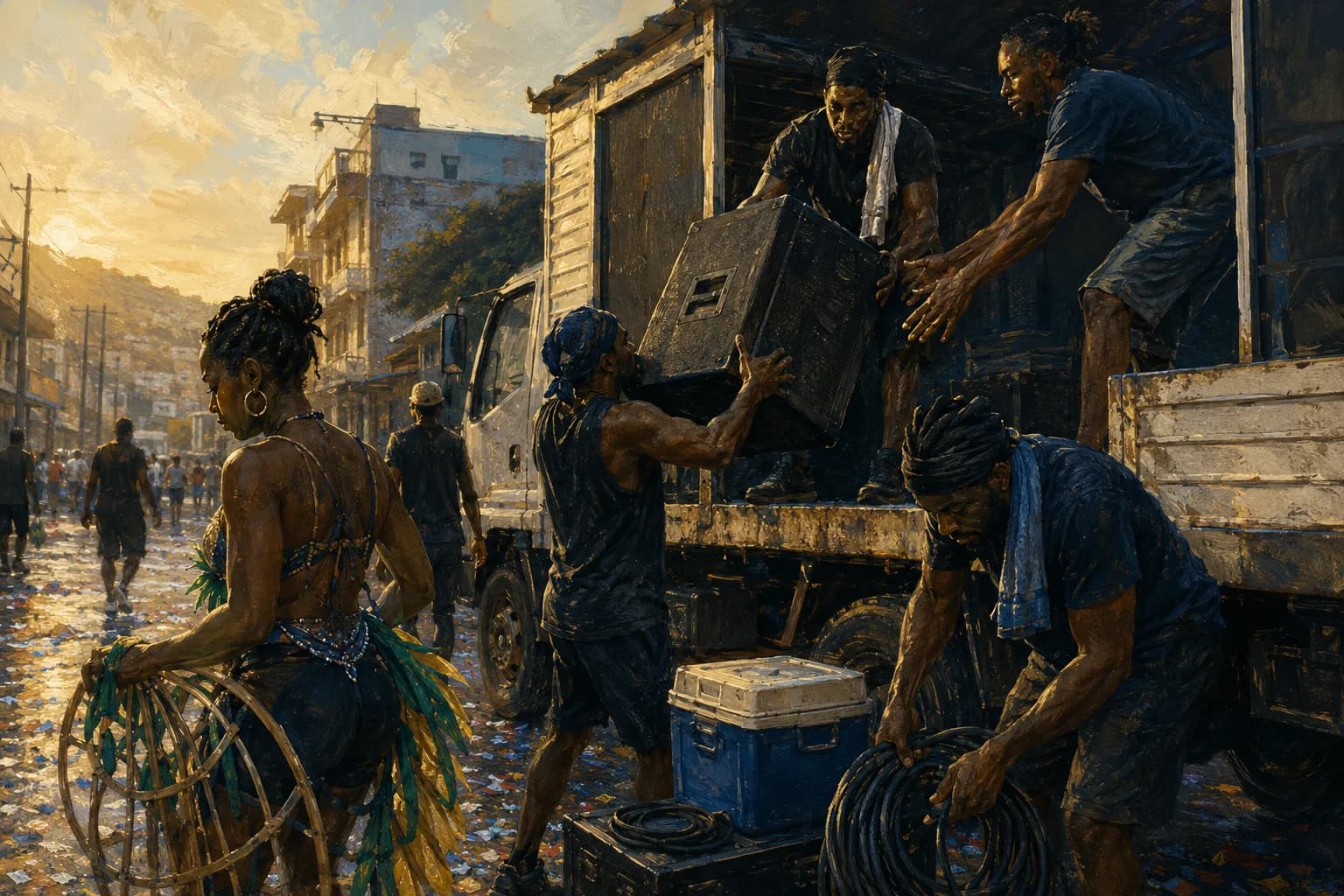
Consider a composite festival casualty. He landed with an itinerary too dense to survive contact with heat, travel, late nights and the road: a fete Friday, two Saturday, J'ouvert before dawn Monday, both road days, and more events than recovery allows, because he flew four hours for this and sleep, he announced at the airport, is for after. It is now Sunday afternoon. He is horizontal in his accommodation with the curtains drawn, sunburnt on one side, unable to face a third consecutive night of music, doing triage on the very road days that were the entire point of the trip. The fetes won. The festival hasn't even properly started.
Every carnival produces versions of this exhausted traveller, and Saint Lucia's densely programmed July season produces its share. Which is why the most valuable planning skill for this particular festival is not budgeting or booking. It is pacing. Saint Lucia Carnival rewards the visitor who treats the week like a distance race, and quietly ruins the one who sprints.
Not a mini-Trinidad
First, understand what you are pacing for, because Saint Lucia's carnival is routinely misfiled as a scaled-down Trinidad, and the misfiling does it wrong. Yes, the format rhymes — fetes, J'ouvert, two days of pretty mas — and the festival moved from its pre-Lenten slot to July (a shift made in 1999) partly so it would no longer compete with Trinidad's dates, which had the happy effect of turning it into a summer festival the whole region and diaspora can attend.
But the island has stamped it thoroughly. The music has its own accent: alongside the season's imported soca power, Saint Lucia runs its own engine — most famously the Dennery Segment, the raw, bass-heavy, Kwéyòl-voiced sound that erupted out of the fishing village of Dennery and gave the island a genre the rest of the Caribbean now borrows. The scale is human: the road through Castries is big enough to feel like a real carnival and small enough that you can find your friends, reach the fence, and breathe. And the culture around it is unmistakably Lucian — Kwéyòl in the lyrics and on the road, a friendliness in the crowd that veterans of bigger festivals remark on, and the standing institution of the Gros Islet Friday night street party, which predates and outlasts every season. This is a carnival with its own passport. Come for what it is.
The week, paced
Here is the model itinerary as a narrative rather than a checklist — one honest version of doing the week right.
Arrive Wednesday or Thursday, a full cushion before the climax weekend. Spend the first day doing almost nothing carnival: settle in, find your bearings between Castries and the Rodney Bay–Gros Islet strip in the north (where most visitors stay, and where staying puts you near the event gravity), eat a proper meal, sleep. Friday, ease in — and Friday offers the perfect on-ramp: the Gros Islet street party, where the village turns into an open-air fete of grills, speakers, and locals doing what they do every Friday of the year. Go, eat bakes and grilled fish off the coals, and leave before you've spent tomorrow's energy.
Saturday, pick one marquee fete — one, not two — and do it fully. Sunday is the sacred rest day, and this is the whole doctrine: J'ouvert begins in the pre-dawn dark of Monday, so Sunday is for the beach, for a long lunch, for the slow morning the island does better than almost anywhere — coffee, sea, the Pitons on the horizon if you venture south, no bass. The visitors dancing hardest on Tuesday are the ones who were horizontal on Sunday.
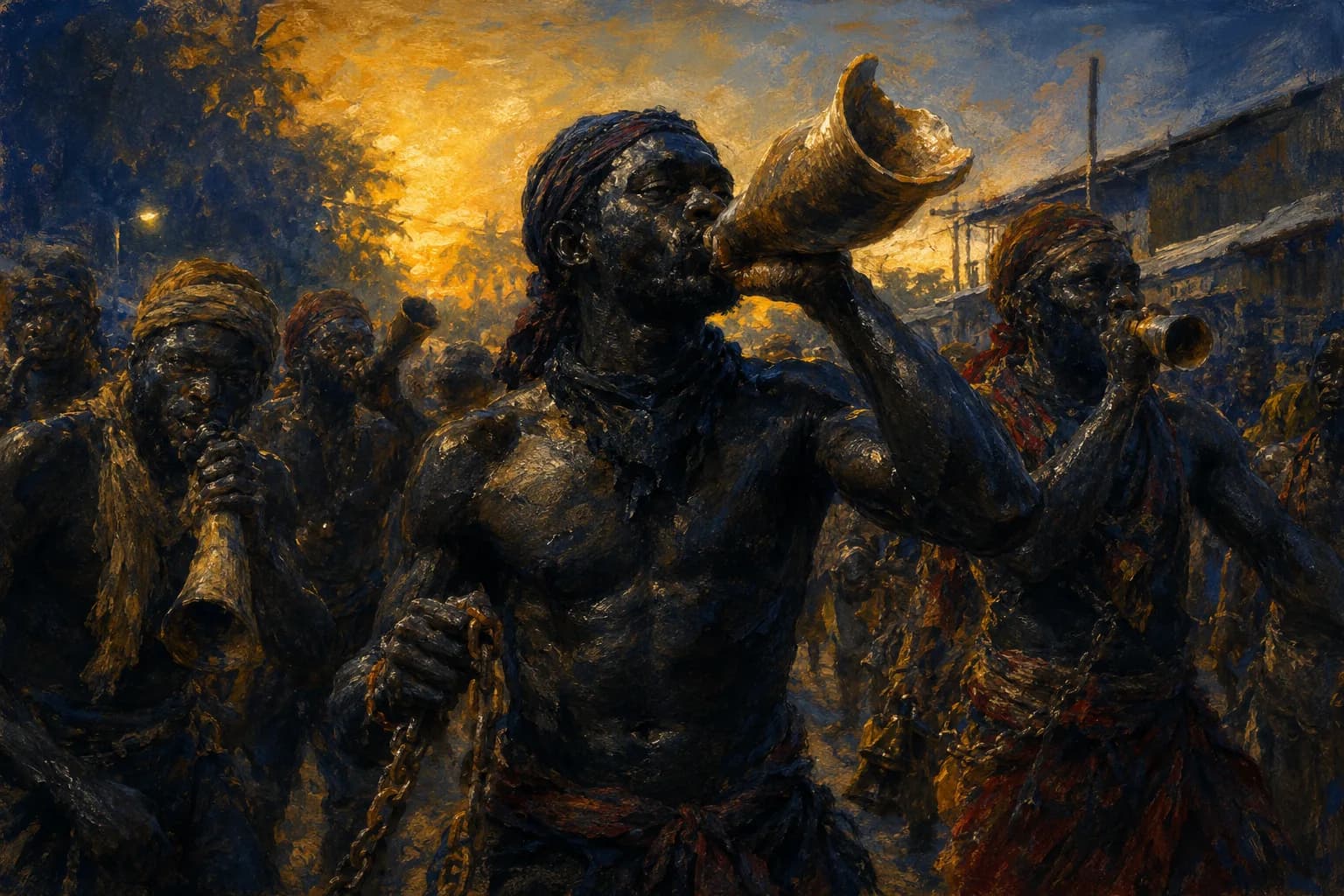
Monday: J'ouvert in the dark — paint, powder, and the Dennery bass at 4 a.m. — then the first day of the road, taken at cruising speed. Tuesday: the full road, the costume, the last-day abandon; this is the day you were saving yourself for, and if you paced the week, your body will actually be present for it. Wednesday: do not fly out. Recovery day, sea swim, one last plate. Thursday, go home a functional human.
The count: two fetes, one street party, J'ouvert, two road days, two rest days. That is not a cautious itinerary. That is the winning one.
The practicals, in prose
Getting around is taxis and pre-arranged drivers; distances look short but the roads wind, so build in real travel time between the north and Castries, and lock in your road-day and late-night transport before you need it — the 3 a.m. scramble is a rookie tax. Stay in the Rodney Bay–Gros Islet corridor for event access, or closer to Castries if the road itself is your priority. On money: Saint Lucia runs gentler than Trinidad, but a realistic week — costume with a band (commonly in the US$300–600 range depending on band and section), a couple of fete tickets at US$50–150 each, lodging, transport — still wants a real budget; the savings versus the bigger carnivals are meaningful, not magical.
Food is a genuine event of its own: get accras (saltfish fritters) and bakes wherever locals are queuing, and make one sit-down date with the national dish, green fig and saltfish — green bananas and salted cod, seasoned the Lucian way — which tastes best somewhere unfancy. And the thing locals do that visitors miss: they treat the whole season as carnival, not just the climax week — the panorama and calypso shows, the Kwéyòl events, the weeks of Dennery riddims building on the radio. You can't attend a season on a week's trip, but you can borrow its temperament: locals never try to consume the festival in three nights, because they know it isn't going anywhere. Neither should you.
Pace as respect
Here is the reframe that makes pacing more than self-care. A packed itinerary treats the island as content to be cleared; a paced one treats it as a place you are actually in. The rest day at the beach, the slow morning in Gros Islet, the unhurried plate of green fig and saltfish — these aren't gaps between the festival. They are the parts of the trip where Saint Lucia, rather than just its event calendar, gets to happen to you.
The casualty behind the curtains flew four hours to attend a carnival and mostly attended his own exhaustion. The paced traveller reaches the road with enough energy to remain present, with Dennery Segment and other Saint Lucian sounds in the mix — present, finally and fully, for the exact thing they came for. The difference was not discipline for its own sake. It was protecting the experience from the itinerary.
Editorial note
LuxTuris original
This is evergreen editorial context from the LuxTuris desk, not live breaking news or invented social proof.