Fewer Islands, Deeper Travel: How to Plan a Caribbean Itinerary
Pick a transport corridor, verify each connection and leave room for weather. An island's map position is only the start of an itinerary.
Kellan Vail · May 12, 2026
Updated September 23, 2026
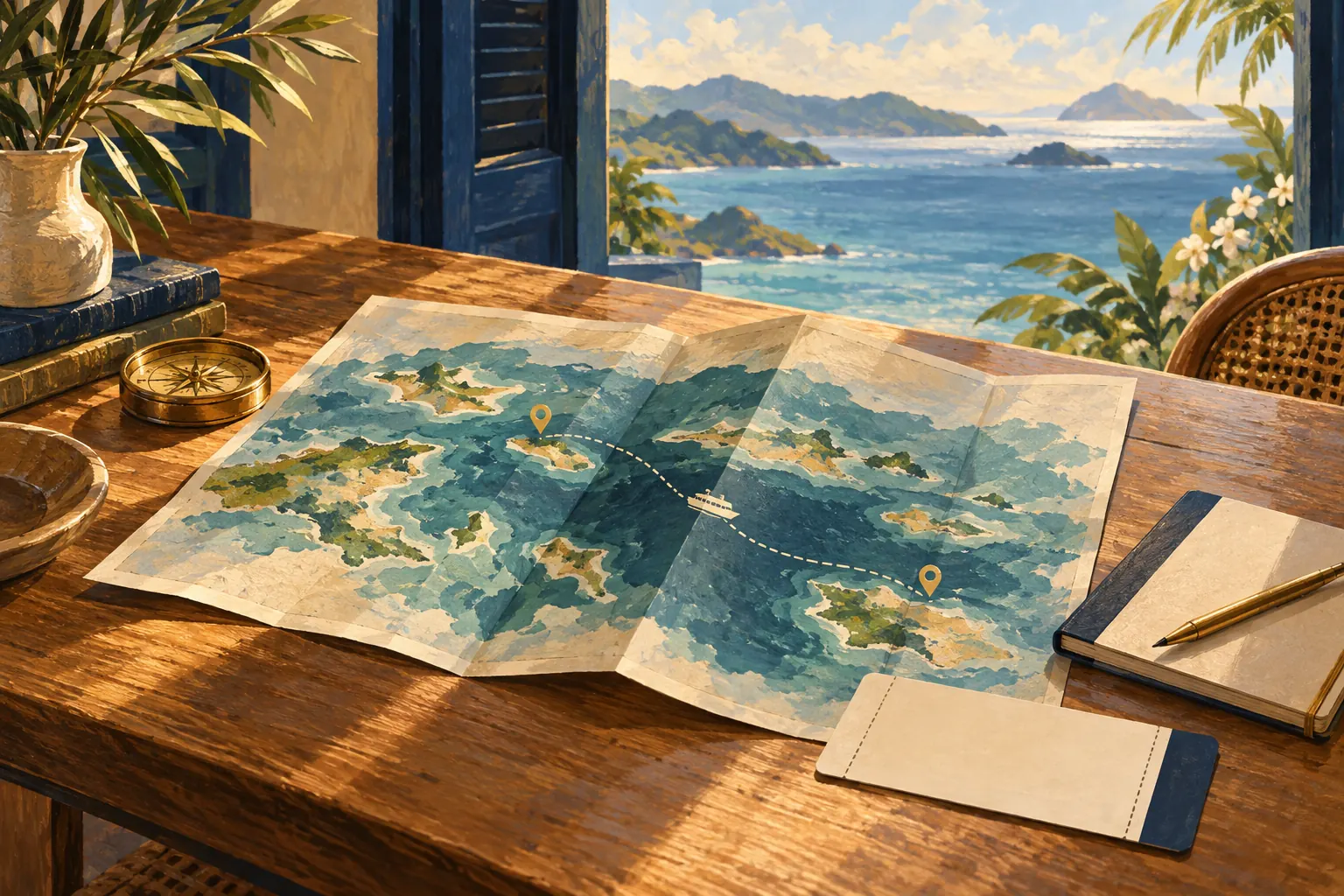
Five islands in ten days can look simple on a map. The route may require connections, separate tickets, immigration checks and full days spent between accommodations. Before counting islands, count the actual transfers. Their timetables, costs and weather exposure determine how much of the trip is left for being somewhere.
Build from an operating route
Choose a pair of destinations or a short corridor served on your dates. FRS Express des Îles publishes timetables for a corridor linking Guadeloupe, Dominica, Martinique and Saint Lucia, with frequencies that vary by route and season. An advertised network does not mean that every pair has a direct sailing on every day. Check the date, port, direction, baggage allowance and cancellation terms before booking accommodation around a crossing.
A Trinidad and Tobago trip offers another clear starting point: the Trinidad and Tobago Inter-Island Transportation Company publishes the ferry schedule and booking details. In the Bahamas, a second island may involve a flight or a ferry, depending on the destination. Check the individual operator's timetable and the return journey before promising yourself a particular day trip.
A flight can be the right connection too. Regional routes and frequencies change, so search for the full origin-to-destination journey, including airport changes, check-in time and ground transport. Do not infer a nonstop flight from how near the islands appear. Price baggage and separate tickets; a missed first leg may leave you responsible for rebooking the next.
A manageable ten-day shape
As a planning example, give one island four or five nights, allow a day to change bases, and give the second island the remaining nights. If a third stop is important, verify both connections first and keep it only if the schedule leaves several full days in each place. The best count depends on the actual timetable and what you hope to do.
For the FRS corridor, you might start with Martinique and Dominica, then consider Saint Lucia only if the sailings align with your dates. That is a proposed route, not a claim that a through-service or a particular duration is guaranteed. Confirm ports, border entry requirements for your passports, and onward transport for every leg. Leave a buffer before an international flight; a ferry or small-aircraft cancellation can erase a tight connection.
Plan for conditions and people
NOAA dates the Atlantic hurricane season from June 1 to November 30. Monitor forecasts and carrier notices, and understand insurance terms and cancellation policies. Weather disruptions can happen outside those months as well. Booking flexible nights around transfers can be worth more than squeezing in a third island.
Time in a place also has its own value. Learn the local transport rules, visit cultural institutions, use guides where their knowledge matters and pay for their work. Two islands with room to change plans can make a more satisfying journey than an itinerary assembled for the number of stamps. Begin with the live timetable, then decide how many places fit.
Sources and further reading
See an error? Send a correction.